Reviewed · BARCELONA TOURS
Barcelona: Take your portrait with a 19th century process
A photograph that appears on a metal plate, made by hand in a darkroom, is a very different souvenir from another picture on your phone. In this private Barcelona session, Martí Andiñach shows you how an early photographic process works, then makes your portrait the old-fashioned way.
I like two things especially: you see the whole process, including the chemistry and development, and you leave with a physical portrait made just for you. Martí’s explanations are a big part of the experience. The main consideration is the wait: the image needs washing, drying, and varnishing, so you may need to return to collect it.
What makes this portrait session special
- A real metal-plate portrait: The standard portrait is made on a 4-by-5-inch plate, giving you a small, tangible keepsake rather than a digital file.
- About 20 seconds of stillness: The exposure asks you to hold a pose longer than a modern snapshot. That constraint is part of the history, and part of the fun.
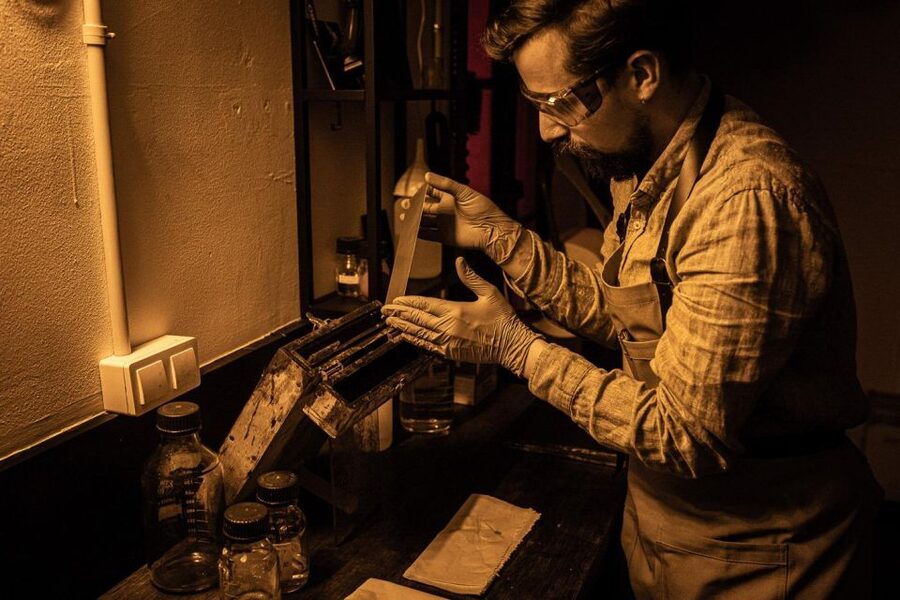
- Chemistry, camera, and darkroom: You watch Martí prepare the plate, take the picture, and bring the image into view with developer.
- A private session for up to four: You can book for yourself, as a couple, or as a small group. The experience is not shared with a public group.
- Plan around the finishing time: The portrait may take about an hour after the session to wash, dry, and varnish, depending on Martí’s availability.
- A process with limits: Very young children aged one to three and pets can have trouble staying still long enough for a sharp exposure.
A small studio, an old photographic method
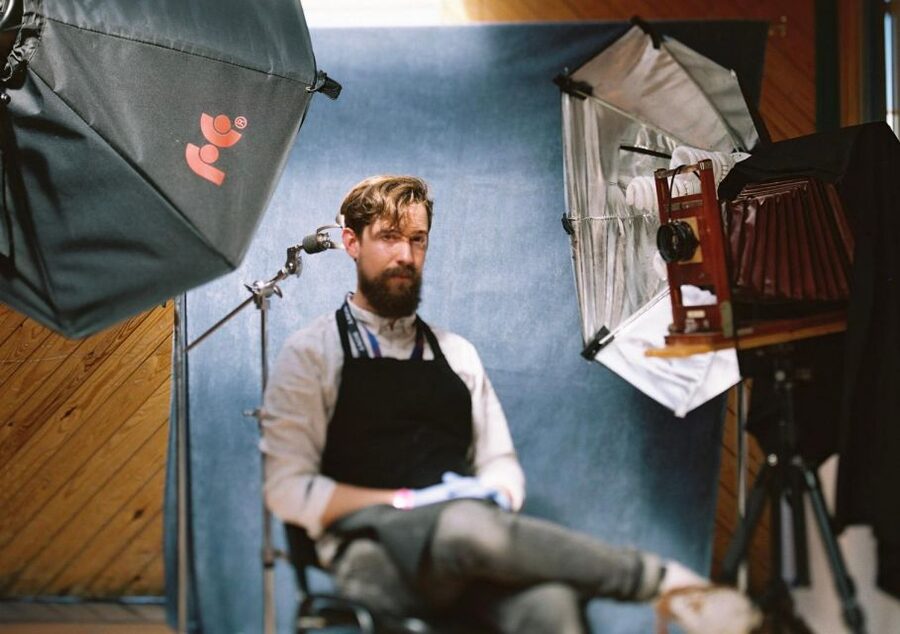
The session takes place in a dedicated studio and darkroom in Barcelona’s Gothic Quarter. The location puts you in the historic heart of the city, but the main attraction is indoors: the camera, plate, chemistry, and hands-on demonstration. This is not a walking tour of the neighborhood, so plan it as a focused studio activity rather than a way to see several sights.
The process dates to 1851, and the session is built around showing you what taking a portrait meant in that period. You are not simply asked to sit, smile, and wait for a print. You see the work that goes into making the image, from preparing the plate to developing it.
Martí Andiñach leads the session in English, Catalan, or Spanish. His passion for the process and clear explanations are central to its appeal. That matters here: the chemistry and steps can feel mysterious if you only watch them from a distance. A good explanation turns the demonstration into a story you can follow, even if you have no background in photography.
The private format makes the experience easier to tailor to your group. With a maximum of four people, you can share the process without having to wait behind a large crowd. You can arrange a single, couple, or group portrait, or more than one portrait. If you have a particular group setup in mind, it is sensible to discuss it with Martí beforehand.
More tours and experiences in Barcelona:
- Barcelona: Sagrada Familia Entry Ticket with Audio Guide
★ 4.6 · 105,312 reviews - Barcelona: Park Güell Admission Ticket
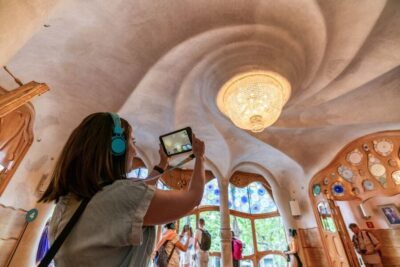
★ 4.4 · 76,534 reviews - Barcelona: Casa Batlló Entry with Self-Audioguide Tour
★ 4.7 · 25,359 reviews
Preparing the plate, one careful step at a time
The first part is the preparation of the plate that will hold your portrait. You see the chemistry being mixed and used by hand, and learn the basics of a photographic method that predates modern cameras and instant digital review.
This is where the experience earns its place as more than a novelty photo. The image depends on a series of practical, careful steps. You get to watch those steps unfold rather than receiving a finished object with no sense of how it was made. If you enjoy craft, photography, or learning how everyday technology once worked, this part should be especially rewarding.
The demonstration also gives you a useful sense of the trade-offs involved in early photography. You cannot take dozens of quick shots and pick the best one later. The plate has to be prepared, the subject has to hold still, and the image has to be developed. That changes the mood of having your picture taken: you are taking part in a process, not just posing for a camera.
The session is described as lasting about 90 minutes, while the activity is scheduled for two hours. The extra time is useful to keep in mind, especially if you are arranging other plans around it. The portrait’s later washing, drying, and varnishing can take about another hour, subject to Martí’s availability. Confirm the pickup arrangement in advance rather than assuming the finished plate will be ready the moment the session ends.
Holding still for a 20-second exposure
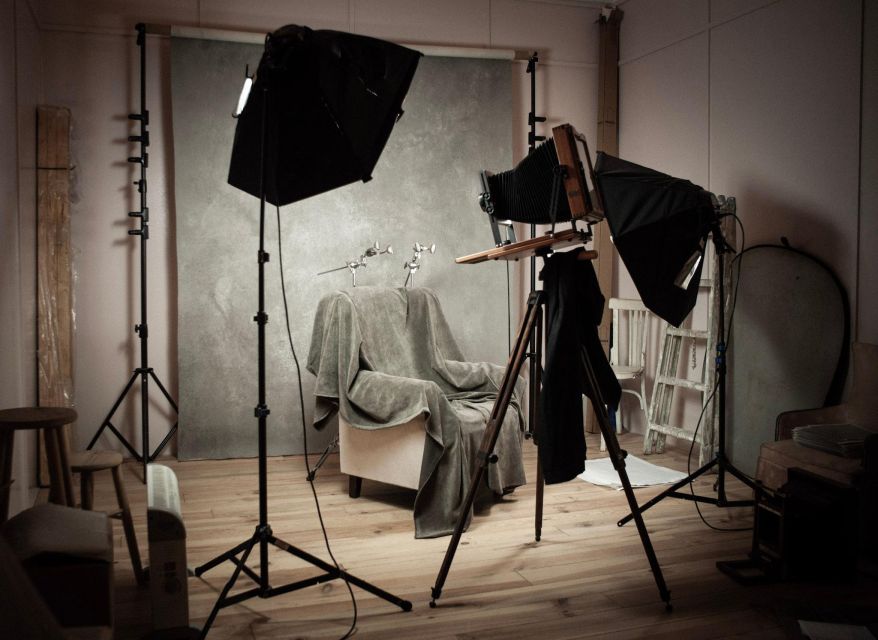
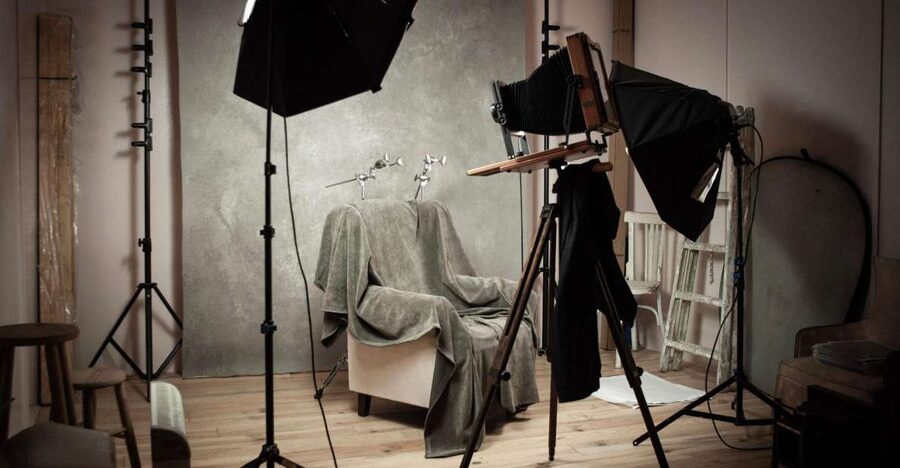
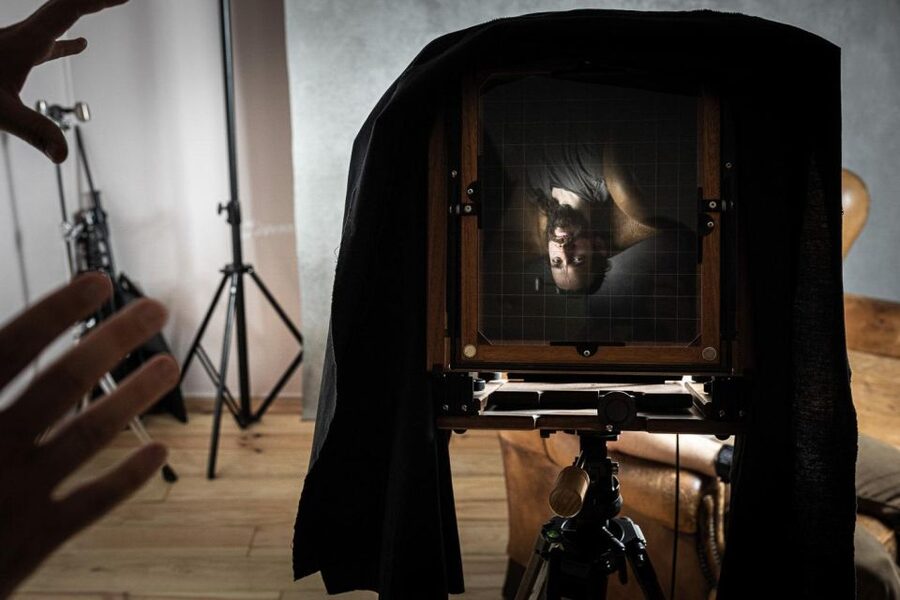
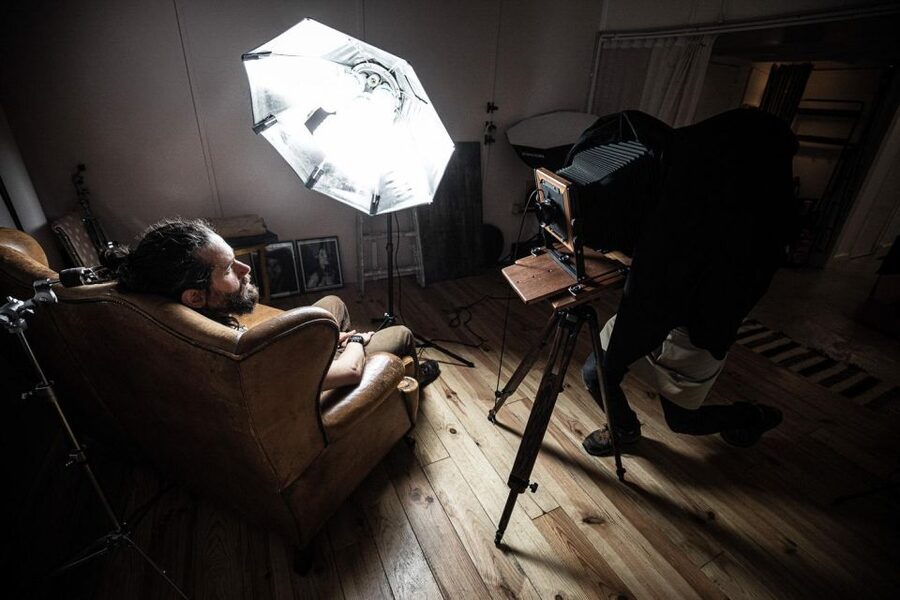
When it is time for the portrait, Martí works with you on the pose and seats you at the posing chair in front of an old wooden camera. The exposure can last around 20 seconds. That may sound brief, but it is long enough that you need to stay as still as you comfortably can.
This is the most direct way to understand how different portrait-making once felt. A modern camera catches a passing expression in a fraction of a second. Here, you have to settle into a pose and maintain it. The process gives the photograph a deliberate quality, and the long exposure is part of what makes the session memorable.
It also sets a practical limit. Children aged one to three may find it hard to remain still for the exposure, and pets can be difficult subjects for the same reason. The results may not be as expected if your subject moves. If you are hoping to include a toddler or an animal, treat it as a possibility with some uncertainty rather than a guaranteed portrait.
You do not need to arrive with a practiced pose. The session includes working together on how to sit for the picture. Still, it helps to think of the moment as a quiet portrait rather than an action shot. Choose a pose you can hold comfortably, and follow Martí’s guidance.
Watching the image appear in the darkroom
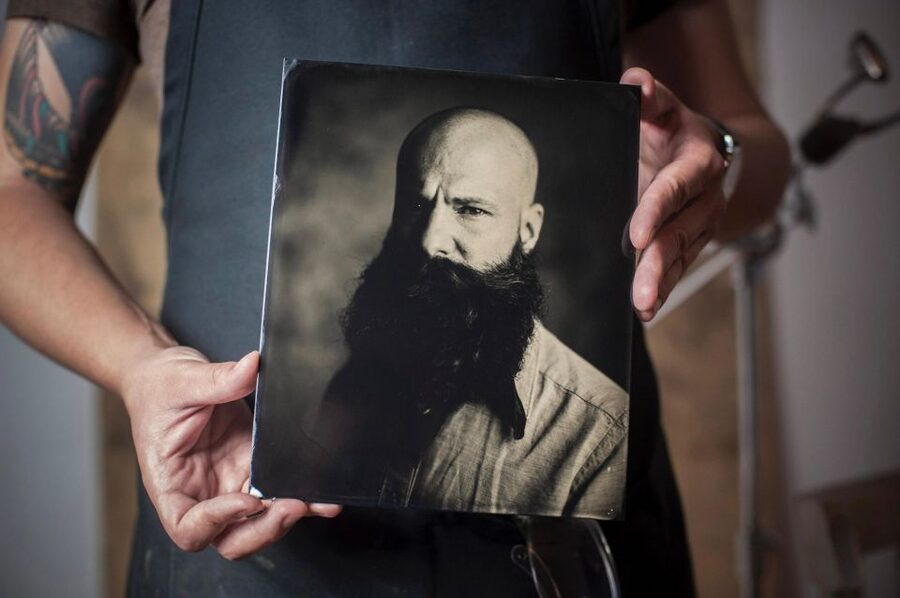
After the exposure, you watch Martí develop the plate. The portrait appears under the developer, turning the process into a small reveal. Rather than looking at an image on a screen straight away, you see it take shape on the prepared surface.
That moment is a particular pleasure of this experience. It makes the process visible and immediate: the portrait is not just the end result, but the evidence of all the careful work that came before it. You also get a clearer sense of why early photography demanded patience and skill.
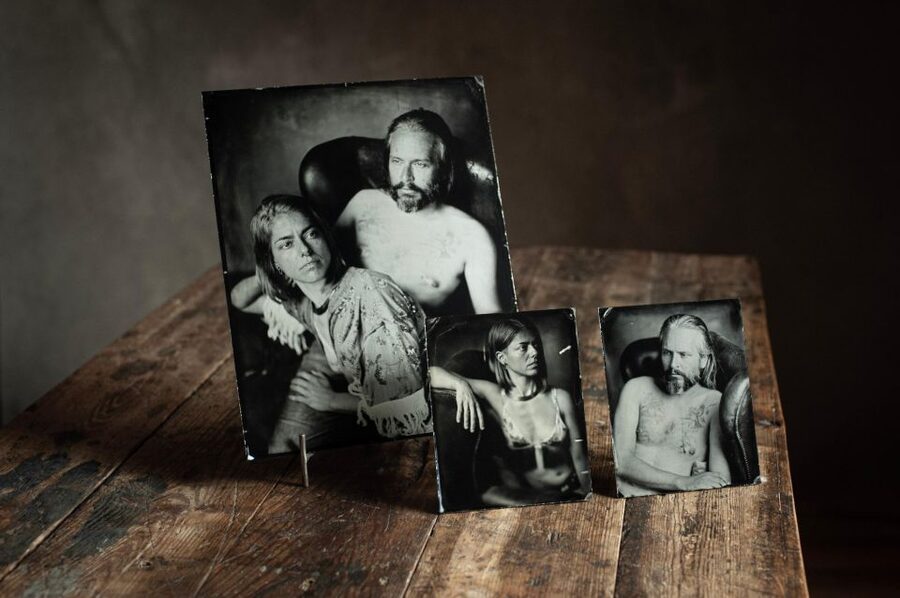
The finished object is a metal plate, not a conventional paper print. The standard size is 4 by 5 inches. Larger plate sizes are available as an upgrade, but they are not included in the stated price. If size matters to you, check the cost before booking so you know what the final keepsake will involve.
Once developed, the portrait still needs to be washed, dried, and varnished. That finishing work protects the result, but it takes time. Local pickup at the studio is included when the portrait is ready. If you cannot collect it during your stay, shipping to your hotel reception or home can be arranged for an extra fee. Shipping is not part of the base price.
Not quite it? Here is another way to spend the day:
- Barcelona: 24 or 48-Hour Hop-On Hop-Off Bus Tour
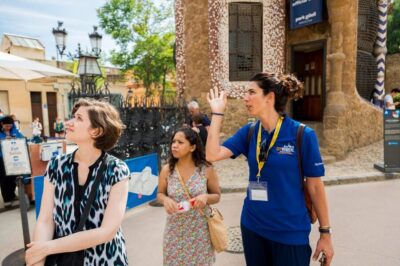
★ 4.4 · 20,872 reviews - Barcelona: Park Guell Guided Tour with Skip The Line Entry
★ 4.7 · 17,563 reviews - Barcelona in 1 Day: Sagrada Familia, Park Guell,Old Town & Pickup
★ 5.0 · 13,541 reviews - Barcelona Aquarium: Entry Ticket
★ 4.3 · 13,335 reviews
Is $118 good value for your group?
The price is $118 for a private group of up to four people. That makes the cost more attractive when shared: a couple pays the same group price as a solo participant, and a group of four can divide it among everyone. The fee includes the studio reception, preparation of the plate, the portrait session, development, finishing, and local pickup.
You are paying for both an activity and a handmade object. The experience takes about 90 minutes, with two hours set aside for the session, and it includes a close look at a process you are unlikely to encounter in an ordinary photo studio. The resulting portrait is one of a kind, rather than a mass-produced souvenir.
The value depends on what you want from the outing. If you only need a quick portrait or a low-cost photo, this is more time and money than you need to spend. If you like craft demonstrations, analog photography, or souvenirs with a story attached, the combination of learning and making can justify the price.
Remember to account for the time needed to collect the finished plate. If your schedule is tight, ask about timing before you book. Shipping is possible for an extra fee, but it adds to the cost and is not included in the $118.
Who will enjoy the slow pace
This is a good fit for couples, friends, and families with older children who can sit still for the exposure. It also suits anyone curious about photographic history, studio craft, or the gap between a quick digital picture and a carefully prepared image.
The small group size keeps the experience personal, while the guided demonstration gives you something to follow even if you do not want to be in front of the camera the whole time. You can watch the chemistry and development, learn how the process works, and take part in the portrait itself.
It may be less suitable if your plans leave no room for a return visit, if you are bringing a very young child or pet, or if you expect a fast photo session. The slow exposure and finishing time are not side issues. They are part of what makes this method distinctive, but they also require patience.
The activity is wheelchair accessible, and the guide speaks English, Catalan, and Spanish. It is offered as a private group experience. Flexible booking options include reserving now and paying later, with free cancellation up to 24 hours in advance.
Should you book Martí’s Barcelona portrait session?
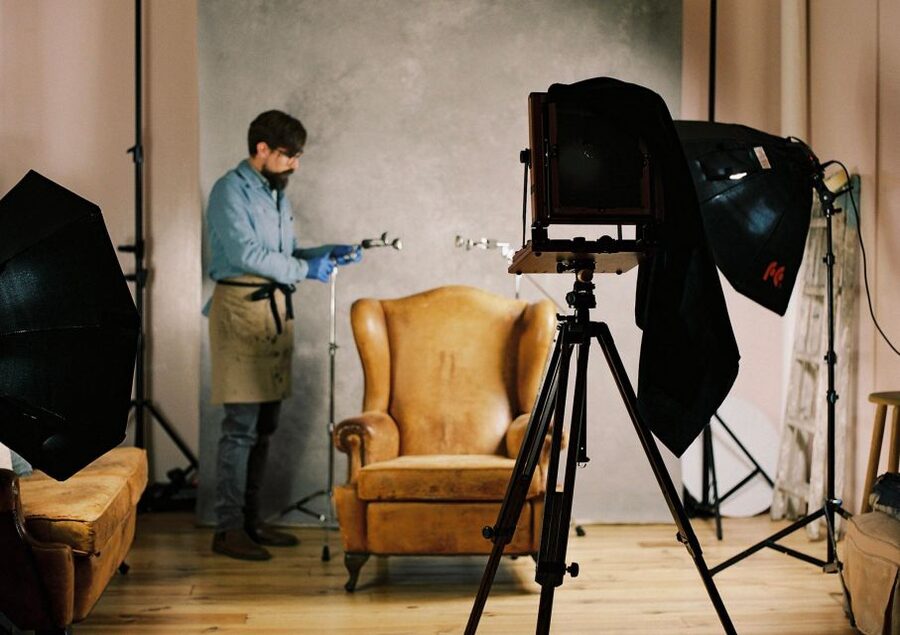
Book it if you want to understand how an early photograph was made and would value a handmade metal-plate portrait as a keepsake. Martí’s clear, enthusiastic teaching, the chemistry demonstration, and the moment the image appears in the darkroom give the session more substance than a standard photo appointment.
Think twice if you need a quick activity, cannot return to collect the portrait, or want to photograph a toddler or pet. For everyone else, this is a thoughtful, distinctly local way to spend part of a Barcelona visit, with a small piece of photographic history to take home.
FAQ
How long does the experience last?
The activity is scheduled for two hours. The portrait session itself is described as about 90 minutes, and finishing the plate may take around another hour after the session.
What is included in the $118 price?
The price covers a private group of up to four, reception at the studio, preparation of the plate, the portrait, development, washing, drying, varnishing, and local pickup once the plate is ready.
What size is the standard portrait?
The standard plate is 4 by 5 inches. Larger plate sizes are available as an upgrade, but they are not included in the price.
How long do I need to hold my pose?
The photographic exposure can take around 20 seconds. You should stay as still as you can during that time.
Can I bring a young child or a pet for the portrait?
You can, but children aged one to three and pets may have difficulty staying still for the exposure. The results may not be as expected.
Can the finished portrait be shipped?
Shipping is not included. If you cannot pick up the portrait during your stay, it can be shipped to your hotel reception or home for an extra fee.
Which languages does Martí speak, and is the studio wheelchair accessible?
The session is available in English, Catalan, and Spanish. The activity is wheelchair accessible.
Reviewed this season in Barcelona
- Two Hour Luxury Sailing Experience with Open Bar★ 4.8 · 13 reviews
- Sunset from a private Classic Yacht★ 5.0 · 3 reviews
- Stories, Legends and Mysteries of Barcelona★ 5.0 · 14 reviews
- Skip-the-Line Barcelona & Montserrat Tour with Pick-up★ 4.6 · 47 reviews
- Skip-the-line Montjuïc Castle Tour with a Cable Car Ride★ 4.7 · 7 reviews
- Barcelona: Old Town & Seafront Segway Tour★ 4.9 · 145 reviews
- Shore Excursion of Barcelona★ 4.9 · 4 reviews
- Barcelona Highlights Half Day Small Group Tour★ 5.0 · 4 reviews
Barcelona Tours, compared.
Sagrada Familia Entry Ticket with Audio Guide
Read our review →

Park Guell Guided Tour with Skip The Line Entry
Read our review →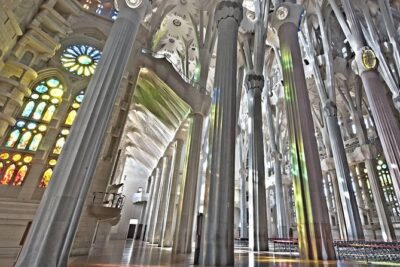
Barcelona in 1 Day: Sagrada Familia, Park Guell,Old Town & Pickup
Read our review →