
Reviewed · BARCELONA TOURS
Bean to Bar Chocolate Workshop in Barcelona
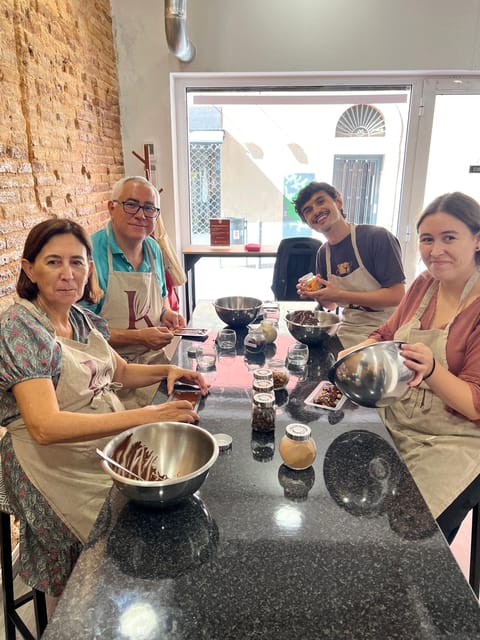
Cacao beans don’t look much like chocolate, and this workshop lets you follow the change with your own hands. At Kina Chocolates, you’ll see a cocoa pod, roast and peel beans, grind them into cocoa paste, taste cocoa drinks and chocolates, then make a bar to take home.
What I like most is the hands-on process, which turns a familiar sweet into a series of real steps, and the small group of up to eight, which leaves room for questions. One consideration: this is as much a lesson in cacao, history and tasting as it is a make-it-yourself class, so don’t expect two hours of independent chocolate crafting.
What to know before you book
- You start with the cacao pod: See what grows on the tree and learn how farmers prepare beans before they reach a chocolate maker.
- The work is practical: Roast, peel and grind cacao, then make cocoa paste yourself.
- Taste beyond the bar: The workshop includes cocoa-based drinks and chocolate samples, with attention to how cacao from different places can taste.
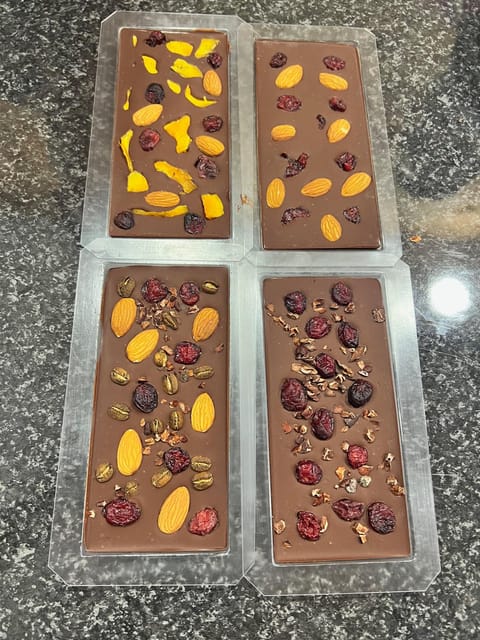
- You take home a bar: Make your own chocolate bar during the session.
- It’s intimate and accessible: Groups are limited to eight, instruction is in English or Spanish, and the activity is wheelchair accessible.
- The discussion reaches beyond the recipe: Learn about chocolate’s past, bean-to-bar production and the lives of cacao-producing communities.
From cocoa pod to working bench
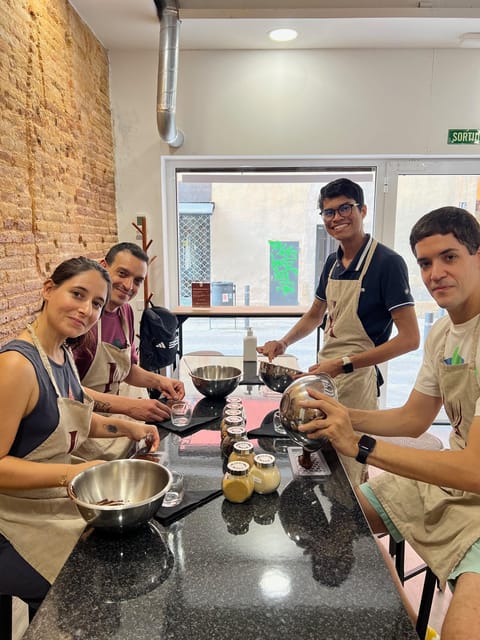
The workshop takes place at Kina Chocolates in Barcelona, a small artisan chocolate shop, rather than in a large demonstration kitchen. That setting suits the subject: the focus is on how cacao becomes chocolate, not on a polished show or a long list of techniques to memorize.
First, your instructor introduces the cocoa pod and explains how cacao is grown and processed before it arrives at the shop. This starting point matters. Chocolate bars are so familiar that it’s easy to forget they begin with a fruit and a crop, and that much of the labor happens far from the finished product.
The group is small, with a maximum of eight participants. That makes it easier to see what is happening at the workbench and ask questions as the process unfolds. Instructors named by participants include Oscar, Renée and Franklin. The guide can vary, but the teaching style is a key part of the experience: the session is designed to be conversational and practical, not a lecture delivered from across a room.
Instruction is available in English or Spanish. If you have a food allergy or intolerance, tell the provider in advance so the workshop can be adapted.
More dessert tours in Barcelona:
- Barcelona: Nougat and Chocolate Museum Tour with Tasting
★ 4.5 · 232 reviews - Family Private Tour: Churros, Hot Chocolate & Games in Barcelona
★ 5.0 · 79 reviews - Barcelona: Churros, Hot Chocolate, and Games Family Tour
★ 4.8 · 66 reviews
Roasting, peeling and grinding the beans
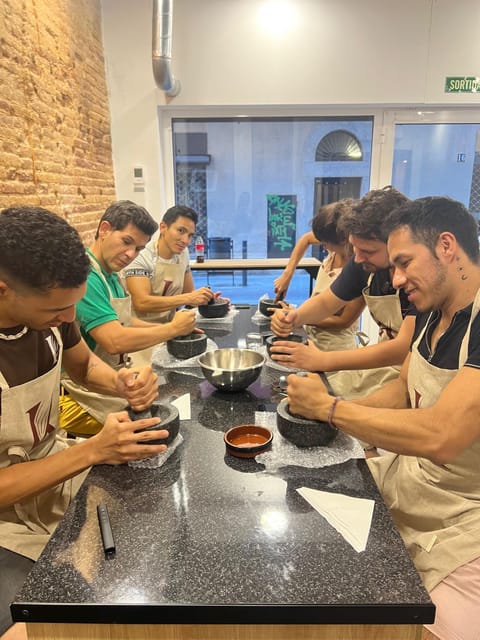
The most memorable part is getting beyond the finished chocolate and handling cacao at each stage. You roast the beans, peel them and grind them into cocoa paste. The work is simple enough for beginners, but it gives you a better sense of the steps hidden behind a chocolate bar.
Roasting and peeling are not just theatrical flourishes. They let you encounter the raw material directly, and the grinding makes the transformation tangible. You are not simply watching an instructor make chocolate while you stand nearby. You participate in the main stages yourself.
Still, expectations matter. This is a guided workshop, not a full production course where each participant independently makes a batch from start to finish. One bar is included to take home, but much of the two hours is devoted to learning, demonstrations and tasting. If your main goal is to spend the whole session shaping sweets or experimenting with decorations, this may feel more educational than crafty.
The balance is part of the appeal for curious beginners. You leave with a clearer idea of what bean-to-bar means, without needing previous chocolate-making experience.
Tasting cacao in drinks and chocolate
As the practical work continues, you also try cocoa-based drinks and chocolate. The tasting helps connect the raw bean to the flavors you know, and gives you a chance to notice how cacao can be used in more than one form.
The samples are part of the lesson, not just a sweet intermission. The instructor discusses the history of chocolate and different ways people have consumed cacao, including in earlier periods. You may also taste chocolates made with beans from different regions or climates, as participants have described. That comparison can sharpen your palate: instead of treating chocolate as one standard flavor, you begin to notice the character of the cacao itself.
This is one reason the workshop can appeal even if you are not especially interested in cooking. It offers context for what you taste. The point is not only that one sample is sweeter or more bitter, but that origin and processing influence the result.
Kina also sells its own chocolate in the shop, and some participants choose to buy bars or cocoa-related products afterward. There is no need to treat shopping as part of the workshop, though. The session’s emphasis is on learning and making, not on a sales pitch.
A bar to take home, and a wider view of chocolate
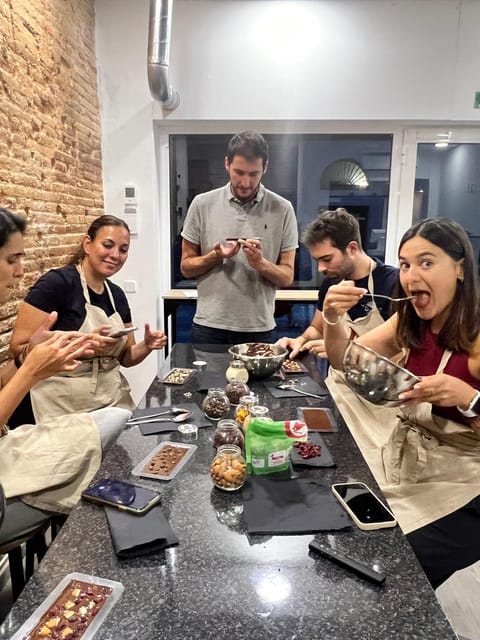
Near the end, you make your own chocolate bar to take away. It’s a satisfying finish because you have handled cacao in several forms before reaching the product most people recognize. Your bar is also a useful souvenir: unlike a standard shop purchase, it comes with a story about the steps behind it.
Barcelona’s summer heat can affect chocolate, so take care with your bar if you will be carrying it around for the rest of the day. One participant found that heat had melted theirs. The supplied details do not specify packaging or storage arrangements, so if you are visiting in warm weather, ask the instructor how best to look after it.
The final conversation widens the subject from technique to people. You’ll hear about bean-to-bar chocolate and the communities that grow cacao, including the work involved in getting beans from the field to the maker. That context gives the workshop a useful ethical dimension: it encourages you to think about where cacao comes from and who does the labor, rather than treating chocolate as a finished commodity with no origins.
The class is not a detailed guide to every cacao-growing region or a certification course in ethical sourcing. But it does make the connection between production and farmers part of the experience, which is more meaningful than a recipe alone.
More drinks tours in Barcelona:
- Barcelona: Unique Sunset Sailing Tour with Tapas & Open Bar
★ 4.7 · 959 reviews - Barcelona Sailing: Light Snacks & Open Bar with Private Option
★ 5.0 · 874 reviews - Barcelona Sensational Sunset Tour with Open Bar and Snacks
★ 5.0 · 681 reviews - Barcelona: El Born and Gothic Quarter Wine & Tapas Bar Tour
★ 4.8 · 674 reviews
Is $47 good value for two hours?
At $47 per person, this is not the cheapest way to eat chocolate in Barcelona. The value comes from combining a guided lesson, hands-on work, tastings, all necessary materials and utensils, an apron and hat, a personalized completion certificate, a workshop summary, and a bar to take home.
You are paying for access to the process and the instructor’s time, not for a large quantity of chocolate. If you value learning how cacao is grown and processed, tasting along the way and trying the work yourself, the price is reasonable for a two-hour activity with only eight people. If you mainly want to make several bars or take home a box of sweets, the workshop may not match your expectations.
The instructors are frequently described as engaging and enthusiastic, and that matters here. A workshop about a familiar food can easily become a string of facts. The format works best when the guide helps you connect the history, production and flavors. Oscar, Renée and Franklin are among the instructors participants have named, with their warmth and subject knowledge often highlighted.
Who will enjoy Kina Chocolates most?
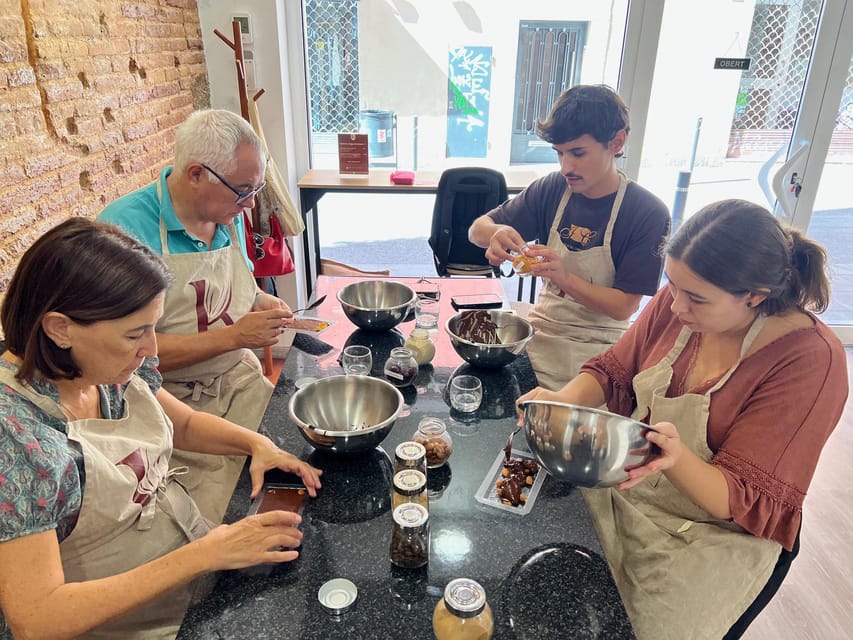
This is a good fit for chocolate lovers who want more than a tasting, as well as curious beginners who like learning by doing. It also works well for a rainy-day indoor activity or for a couple looking for something different from Barcelona’s usual sightseeing routine.
Families can consider it, too. The activity is described as suitable for adults and teenagers, and parents have brought children, including a 10-year-old and older children. A younger child may still enjoy the tasting and hands-on steps, but the advertised audience is adults and teenagers, so check suitability if you are booking for a child below that age range.
You do not need to know anything about cacao beforehand. In fact, the workshop is most useful if you arrive with everyday assumptions about chocolate and let the process challenge them. On the other hand, experienced chocolate makers seeking advanced techniques may find the class introductory.
The small size helps keep it personal, but it also means there are only eight places per session. The duration is two hours, and start times depend on availability. The venue is wheelchair accessible. You can reserve without paying immediately, and cancellation is free up to 24 hours in advance.
Should you book this chocolate workshop?
Book it if you want a lively, hands-on explanation of how cacao becomes chocolate, with tastings and one bar to take home. The strongest reasons to go are the chance to roast, peel and grind real beans, the small group, and the broader discussion of chocolate’s history and the communities behind cacao.
Skip it if your priority is a long, free-form confectionery class or a large quantity of chocolate to bring home. For most curious visitors, though, two hours at Kina offers a welcome change of pace from Barcelona’s major sights, and leaves you with a better idea of what goes into the next bar you unwrap.
FAQ
How long is the workshop?
The workshop lasts two hours.
How much does it cost?
The listed price is $47 per person.
Where does the activity meet?
The meeting point is Kina Chocolates in Barcelona.
What languages are offered?
Instruction is available in Spanish and English.
How many people are in each group?
The group is limited to eight participants.
What will I make during the workshop?
You will make one chocolate bar to take home.
Is the workshop wheelchair accessible?
Yes, the activity is listed as wheelchair accessible.
Can the workshop accommodate allergies or intolerances?
Tell the provider about any allergies or intolerances so the workshop can be adapted.
More hands-on workshops in Barcelona
- Barcelona Paella Cooking Class with Market Visit, Tapas & Sangria
★ 5.0 · 2,531 reviews - Barcelona: Cocktail Master Class by Mixologist with Tapas
★ 4.7 · 959 reviews - Barcelona: Paella Cooking Class with Market Visit and More
★ 4.9 · 711 reviews - Paella Cooking Class with Professional Chef: Four Course Dinner
★ 5.0 · 561 reviews
Reviewed this season in Barcelona
- Two Hour Luxury Sailing Experience with Open Bar★ 4.8 · 13 reviews
- Sunset from a private Classic Yacht★ 5.0 · 3 reviews
- Stories, Legends and Mysteries of Barcelona★ 5.0 · 14 reviews
- Skip-the-Line Barcelona & Montserrat Tour with Pick-up★ 4.6 · 47 reviews
- Skip-the-line Montjuïc Castle Tour with a Cable Car Ride★ 4.7 · 7 reviews
- Barcelona: Old Town & Seafront Segway Tour★ 4.9 · 145 reviews
- Shore Excursion of Barcelona★ 4.9 · 4 reviews
- Barcelona Highlights Half Day Small Group Tour★ 5.0 · 4 reviews
Barcelona Tours, compared.
Sagrada Familia Entry Ticket with Audio Guide
Read our review →

Park Guell Guided Tour with Skip The Line Entry
Read our review →
Barcelona in 1 Day: Sagrada Familia, Park Guell,Old Town & Pickup
Read our review →
Sagrada Familia Skip-the-Line Entry Ticket & Tour
Read our review →Browse the lists this tour appears in