Reviewed · BARCELONA TOURS
Món Sant Benet Monastery Tickets
Món Sant Benet makes Catalan history feel close to the ground. Voices, everyday sounds and images help bring the old monastery to life, while the museum links its medieval rooms to a thousand years of social change. I like that the visit combines historic spaces with a clear story, rather than asking you to make sense of the stones on your own.
I also like the chance to focus on Romanesque art and the monastery’s main rooms, then stay for a meal if you want to turn a short visit into a longer outing. One consideration: the ticket covers the audio-guided visit, not a restaurant meal, and you’ll need to arrange your own transport to Sant Fruitós de Bages.
At a glance
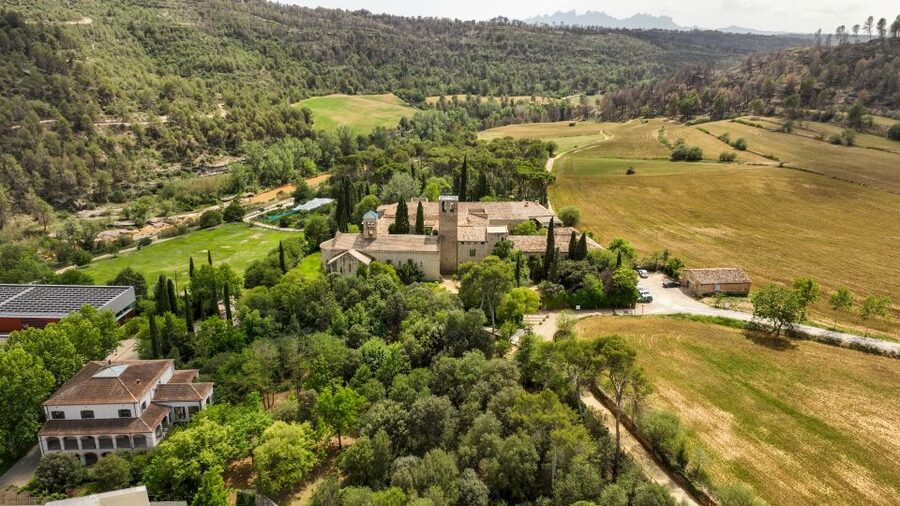
- A thousand-year-old setting: Explore a medieval monastery in Sant Fruitós de Bages, about 68 kilometers from Barcelona.
- Rooms with different stories: The visit includes the church, cloister, wine cellar and cells in the Montserrat gallery.
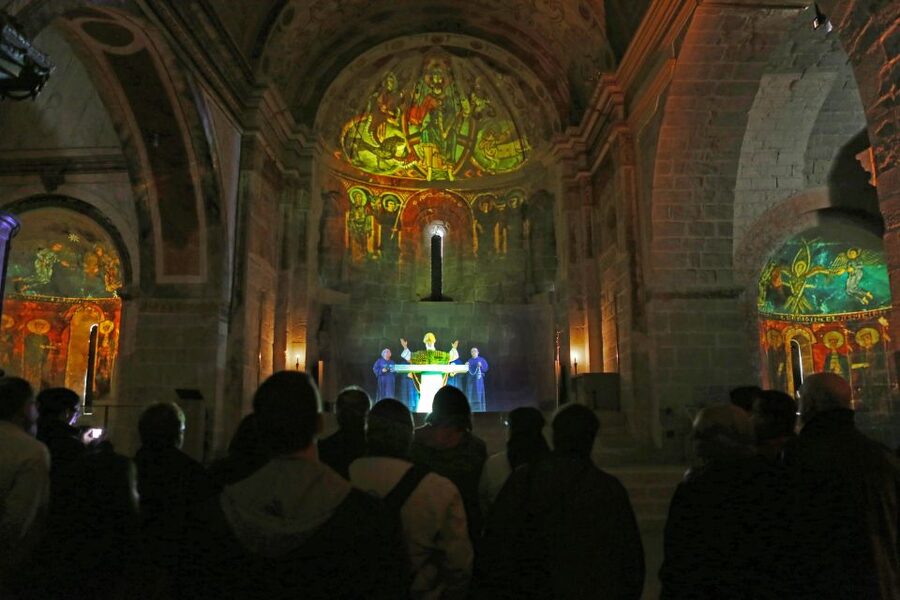
- History through sound and images: The museum uses voices and everyday noises to evoke monastic life and Catalonia’s social evolution.
- Audio guide in four languages: Choose Catalan, English, Spanish or French.
- A meal can extend the visit: Three restaurants are on site, including Michelin-starred L’Ó, but dining costs extra.
- A compact outing: Allow about 90 minutes for the visit; the ticket costs $18 per person.
A monastery visit with more than stone walls
Món Sant Benet is a cultural and leisure complex built around a medieval monastery in the Catalan town of Sant Fruitós de Bages. Its setting combines historic architecture, nature and gastronomy, but the monastery is the main reason to come. The audio-guided visit gives you a way to understand both the rooms and the lives once lived in them.
The museum also widens the frame. Rather than treating the monastery as an isolated relic, it connects its story with the social evolution of Catalonia over the last millennium. That context is useful if you want more than a quick look at old architecture, and especially if you are curious about how religious institutions fit into everyday life.
The format is self-guided with an audio guide, not a live tour with a named guide. That gives you some control over your pace, though it also means you should be comfortable following an audio narration as you move through the site.
More tickets in Barcelona:
- Barcelona: Sagrada Familia Entry Ticket with Audio Guide
★ 4.6 · 105,312 reviews - Barcelona: Park Güell Admission Ticket
★ 4.4 · 76,534 reviews - Barcelona Aquarium: Entry Ticket
★ 4.3 · 13,335 reviews
From reception to the heart of the monastery
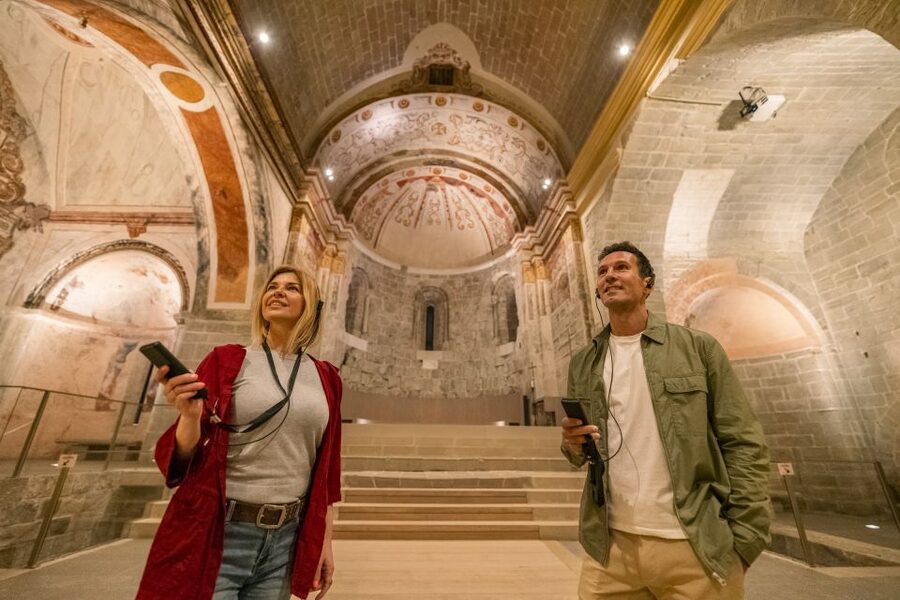
The visit begins at La Fàbrica, the reception at Món Sant Benet Monastery, and ends back at the same meeting point. From there, the audio guide leads you through the monastery’s principal features. The whole experience is listed as about 1.5 hours, a useful amount of time for a focused visit without needing to give it an entire day.
The audio format matters here. Monastery rooms can be beautiful but hard to read without context. Voices, everyday sounds and images help suggest the activity that once filled the complex, giving you a sense of its past life rather than leaving you to guess at the purpose of each space.
You can use the guide in Catalan, English, Spanish or French. If you have a strong interest in Catalan Romanesque art, this visit may be especially rewarding: the experience is described as didactic, with clear value for visitors who want to learn as well as look.
The church and cloister: architecture with a human story
The church and cloister are among the main stops, and they offer two different ways to understand the monastery. The church gives you a sense of the religious heart of the complex; the cloister offers a quieter architectural space within it. Together, they help explain how the monastery was organised around worship and communal life.
The value of the audio guide is in how it connects a room to its history. You are not only moving through a thousand-year-old building, but hearing about the lives and social changes associated with it. That approach can make the visit more memorable, though the amount you take in will depend on how carefully you follow the narration.
If Romanesque art is a particular interest, plan to give these spaces your attention rather than treating them as a quick passage to the next room. The experience’s teaching focus is one of its strengths for visitors who like to leave a historic site with a clearer sense of what they have seen.
The wine cellar and cells: ordinary spaces, useful clues
The wine cellar and monastic cells shift the focus from formal architecture to everyday routines. These spaces help make the monastery feel like a working community, not only a place of worship. They are also a reminder that a religious complex had practical needs and private rooms alongside its more public spaces.
The visit includes cells in the Montserrat gallery. The provided details do not specify how many cells you will see or how they are arranged, so it is best to think of this as one part of a broader route through the monastery rather than a separate exhibition with a set amount of time.
The wine cellar, too, is a named stop rather than a promise of a wine tasting. Your ticket includes the audio-guided entrance to the monastery, not food or drink. If you arrive expecting a tasting, you may be disappointed; if you are interested in how the complex functioned, the cellar adds another useful piece to the picture.
More tours and experiences in Barcelona:
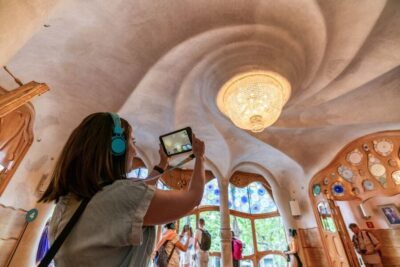
- Barcelona: Casa Batlló Entry with Self-Audioguide Tour
★ 4.7 · 25,359 reviews - Barcelona: 24 or 48-Hour Hop-On Hop-Off Bus Tour
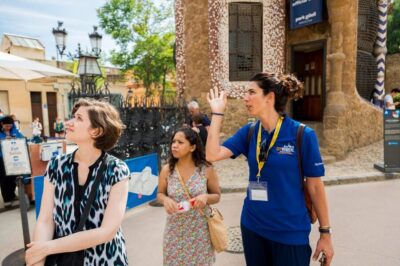
★ 4.4 · 20,872 reviews - Barcelona: Park Guell Guided Tour with Skip The Line Entry
★ 4.7 · 17,563 reviews - Barcelona in 1 Day: Sagrada Familia, Park Guell,Old Town & Pickup
★ 5.0 · 13,541 reviews
A museum that links the monastery to Catalonia
Món Sant Benet’s museum places the site within a wider story of Catalonia. The focus is on key moments in the region’s history and its social evolution over the last millennium. This gives the visit a broader purpose: you can see how one monastery fits into a much longer account of local life and change.
The museum uses voices, everyday noises and images to evoke the past. That sensory approach is central to the experience, and it helps explain why the visit can feel emotionally powerful as well as educational. It is not simply a sequence of rooms with labels; sound and imagery are part of how the story is presented.
The trade-off is that audio-led interpretation asks you to pay attention to a device while also looking around. If you prefer a live guide who can respond to questions in the moment, this format may feel less personal. If you enjoy exploring at your own pace, it is a practical way to get background without being tied to a group’s rhythm.
What $18 gets you, and what it does not
At $18 per person, the ticket includes audio-guided entrance to a historic monastery and museum, with access to its principal features. For a 90-minute cultural visit, that is a reasonable price if you are interested in medieval architecture, Catalan history or Romanesque art. The value comes not just from entering the building, but from the interpretation that helps you understand it.
The ticket does not include a meal. Món Sant Benet has three restaurants, including Michelin-starred L’Ó, and dining is an optional extra. That choice can make the complex work for different budgets: you can keep the visit to the ticket price, or plan a longer stop with a restaurant meal at additional cost.
Consider the total outing before you book. Món Sant Benet is about 68 kilometers from Barcelona, so the ticket price is only one part of the cost if you are travelling from the city. The available information does not specify transport options, so check your route separately and factor in the journey before deciding whether a 90-minute visit fits your plans.
A practical visit, with room for a longer stop
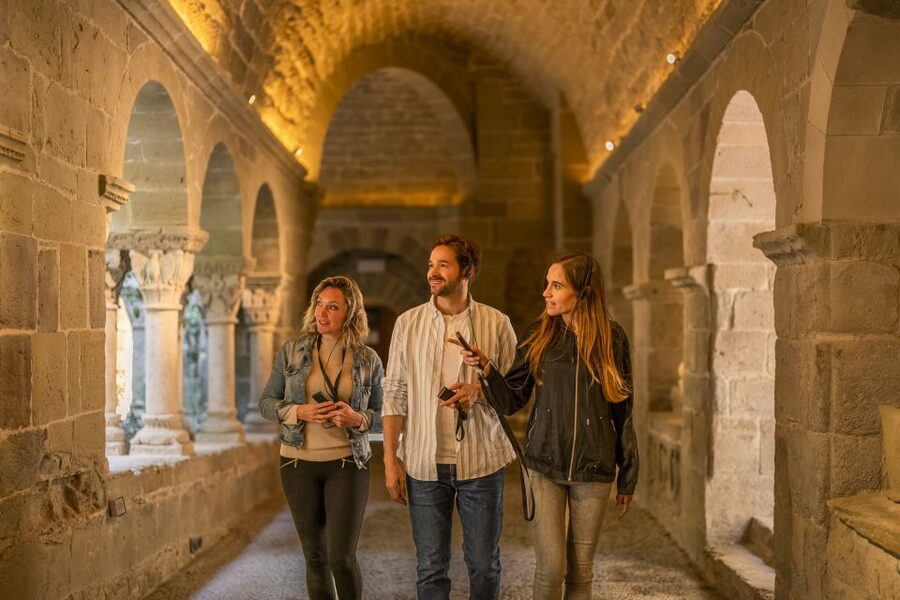
The visit takes about 1.5 hours, with starting times shown when you check availability. That makes it relatively easy to fit into a day, but the short duration does not mean you should rush. Give yourself enough time to listen to the audio guide and take in the main spaces.
The experience is wheelchair accessible. If access needs are important for your visit, you can use that information when deciding whether the site suits your plans, though the details here do not describe specific routes or facilities.
You can cancel up to 24 hours in advance for a full refund, and a reserve-now, pay-later option is available. Those terms can help if your plans are still taking shape, but check the conditions at booking so you know which option you have selected.
Who will get the most from Món Sant Benet?
This visit suits you if you want a focused introduction to a medieval monastery and the history around it. It is particularly appealing if Romanesque art or Catalan history interests you, since the audio guide and museum provide a teaching framework rather than leaving you with architecture alone.
It can also work well if you want to pair culture with a meal. The three restaurants make it possible to stay on site after the visit, with L’Ó as a special-occasion option. Keep in mind that dining is not included in the ticket, and the museum visit itself remains a relatively short part of the day.
You may want to choose another activity if you are looking for a long guided tour, a wine tasting or a meal included in the price. None of those is specified as part of this ticket. The strongest reason to come is the combination of historic rooms and a museum that tells a broader Catalan story.
Should you book this monastery visit?
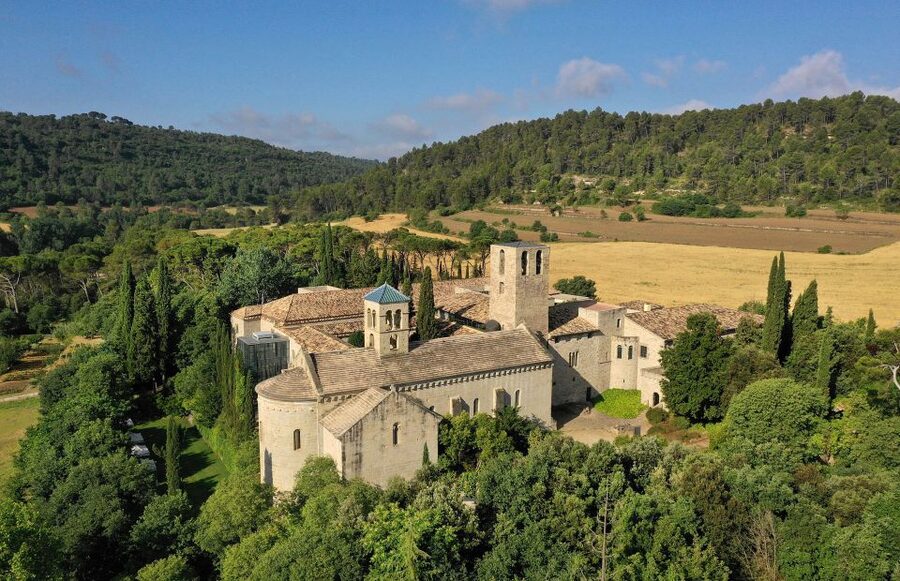
Book Món Sant Benet if you want an accessible, audio-guided visit that connects medieval architecture with Catalan history. The church, cloister, cellar and cells give the route variety, while the voices and images add a human dimension to the past. At $18 for about 90 minutes, it offers solid value for a history-minded visit.
Skip it if you have little interest in monasteries, Romanesque art or regional history, or if the distance from Barcelona makes the trip inconvenient. And if you book, treat the restaurants as an optional extension, not part of the ticket. That is the best way to set expectations and enjoy the visit for what it is: a compact cultural stop with the option of a longer meal afterward.
FAQ
How long does the Món Sant Benet visit take?
The visit lasts about 1.5 hours. Check availability for starting times.
How much does the ticket cost?
The listed price is $18 per person.
What does the ticket include?
It includes audio-guided entrance to Món Sant Benet.
Which languages are available for the audio guide?
The audio guide is available in Catalan, English, Spanish and French.
Where does the visit start and end?
It starts at La Fàbrica, the reception at Món Sant Benet Monastery, in Sant Fruitós de Bages. It ends back at the meeting point.
Is the visit wheelchair accessible?
Yes, the activity is listed as wheelchair accessible.
Are restaurant meals included?
No. The three restaurants, including Michelin-starred L’Ó, are available at your own expense.
Can I cancel for a refund?
You can cancel up to 24 hours in advance for a full refund.
Reviewed this season in Barcelona
- Two Hour Luxury Sailing Experience with Open Bar★ 4.8 · 13 reviews
- Sunset from a private Classic Yacht★ 5.0 · 3 reviews
- Stories, Legends and Mysteries of Barcelona★ 5.0 · 14 reviews
- Skip-the-Line Barcelona & Montserrat Tour with Pick-up★ 4.6 · 47 reviews
- Skip-the-line Montjuïc Castle Tour with a Cable Car Ride★ 4.7 · 7 reviews
- Shore Excursion of Barcelona★ 4.9 · 4 reviews
- Barcelona Highlights Half Day Small Group Tour★ 5.0 · 4 reviews
- Barcelona: Old Town & Seafront Segway Tour★ 4.9 · 145 reviews
Barcelona Tours, compared.
Sagrada Familia Entry Ticket with Audio Guide
Read our review →

Park Guell Guided Tour with Skip The Line Entry
Read our review →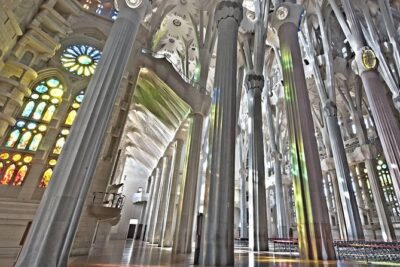
Barcelona in 1 Day: Sagrada Familia, Park Guell,Old Town & Pickup
Read our review →