
Reviewed · BARCELONA WALKING TOURS
Tarragona: Roman Heritage Guided Walking Tour
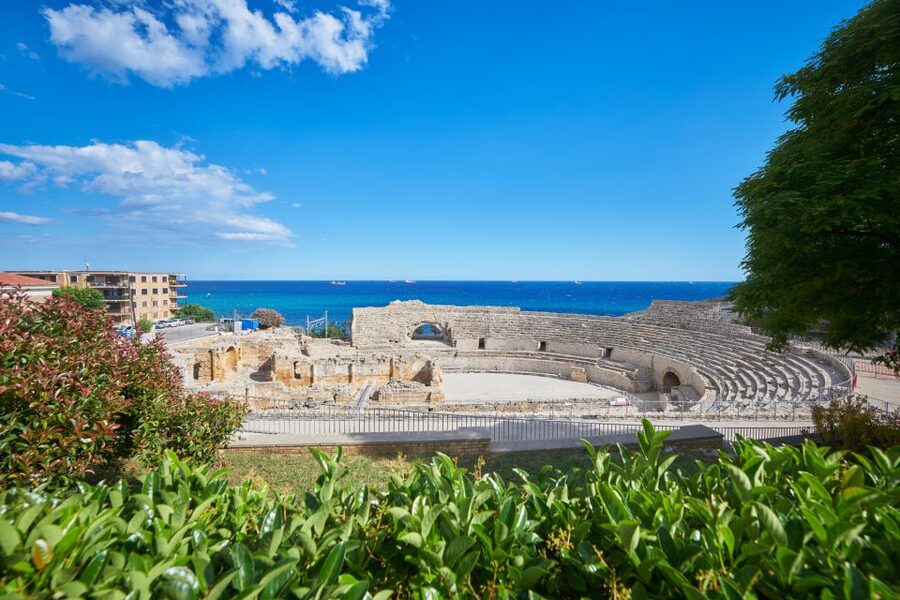
Tarragona’s Roman past is not cordoned off from the life of the modern city. On this two-hour walk, old walls, Circus vaults and the seaside Amphitheater help you read the streets around you as part of an ancient Roman city.
I like two things in particular: the Circus vaults, where a guide can make the scale and purpose of Roman chariot racing easier to imagine, and the Amphitheater’s setting beside the sea. The city model and 3D audiovisual exhibit also give useful context before you reach the monuments.
The trade-off is time. Two hours is enough for a guided introduction, not a slow, in-depth visit to every site. Groups can also be noisy when several set off together, so arrive ready to keep close and listen.
At a glance
- The walls set the scene: Learn why Rome chose this Mediterranean hill as a gateway into the peninsula.
- The Circus vaults bring racing into view: The tour includes entrance to the Circus, where vaults once served a grand public venue.
- The old city is still lived in: Roman remains appear among today’s houses, streets and squares.
- The model makes the plan legible: A large city model helps your guide show how ancient Tarraco was arranged.
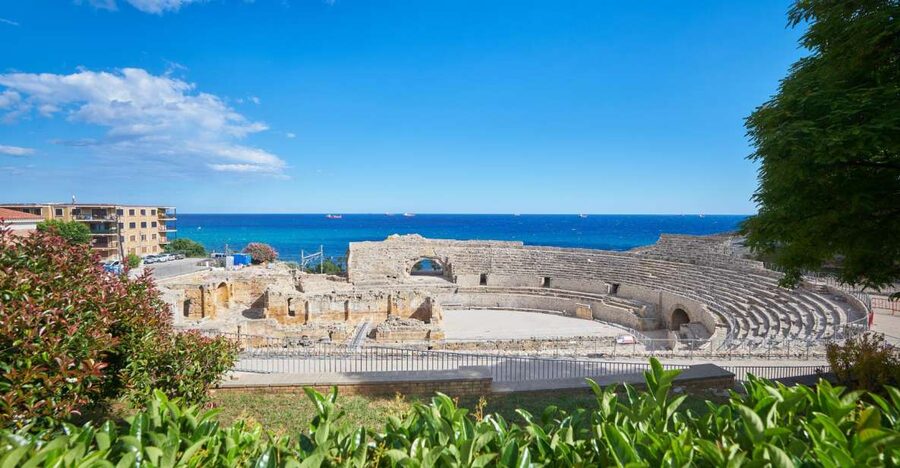
- The Amphitheater faces the sea: Hear about gladiator fights and animal hunts at the monument beside the water.
- Plan for a brisk pace: The tour lasts two hours, and some participants feel that is short for the material covered.
Start at the walls, where Roman Tarragona begins
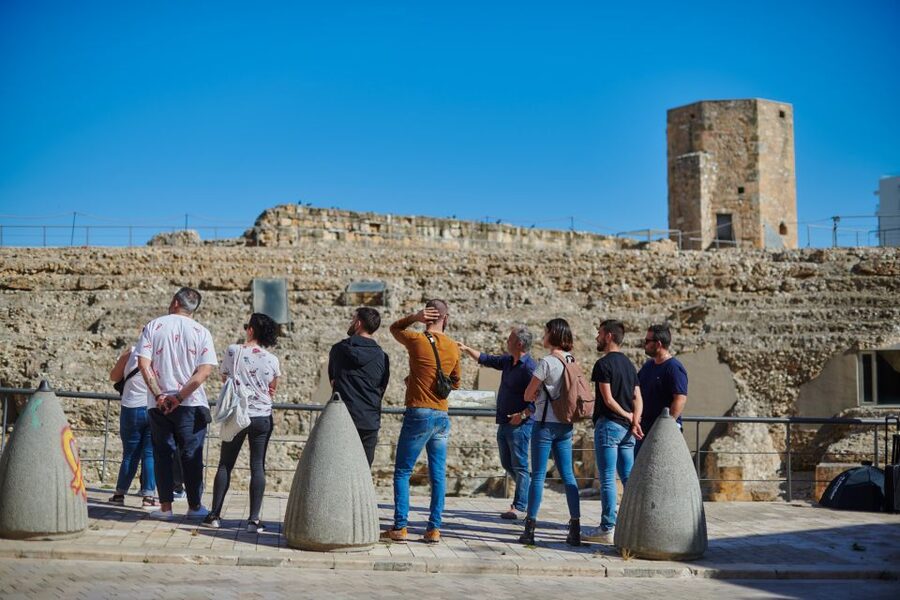
Meet at the Itinere office next to the Roman walls, and arrive ten minutes before the activity starts. Comfortable shoes are the one item to bring; large bags and luggage are not allowed. Starting beside the walls is more than a convenient meeting point. It places you right beside one of the clearest reminders that Tarragona was once a major Roman settlement.
Your guide introduces the region’s Roman past here and explains why the Romans chose this hill beside the Mediterranean. The walls are described as the oldest Roman walls outside Italy, a striking claim that gives this opening stop real weight. Rather than treating them as an isolated old structure, the tour uses them to explain Tarragona’s role as a gateway into the peninsula.
That context is useful if Roman history is new to you. A wall can be impressive on its own, but it becomes more memorable when you understand why it was built and what it meant for the city. If you already know the basics, this section still offers a helpful frame for the monuments ahead.
More walking tours in Tarragona:
- Barcelona Tapas and Wine Experience Small-Group Walking Tour
★ 5.0 · 5,804 reviews - Barcelona: Tapas Walking Tour with Food, Wine, and History
★ 4.8 · 4,261 reviews - Barcelona Tapas Walking Tour: Food, Wine & History
★ 4.5 · 1,928 reviews
Read the Roman city in today’s streets
From the walls, the walk continues through Tarragona’s historic center. The appeal here is the overlap: Roman remains are woven into streets, squares and houses that belong to the living city. You are not simply moving from one fenced archaeological site to the next. The ancient town and the modern one share the same urban ground.
That mix makes the guide’s explanations especially valuable. Without some orientation, it can be hard to tell which remains mattered, what a building was for, or how the different monuments fitted together. The tour’s large city model gives the group a visual map of Tarragona as it once looked, while the guide describes the functions of its buildings.
I like this kind of stop because it turns scattered stones into a plan. You can start to picture the city as a whole rather than collect a list of Roman names. The model is also a practical aid for families and first-time visitors who may find a street-level ruin less obvious than a well-preserved monument.
The pace matters here. You will be hearing explanations while moving through a real town, where people, traffic and other tour groups can add noise. One group found it difficult to follow a guide when several large groups started at the same time. If you are sensitive to crowd noise, stay near the guide and ask for a repeat when you miss a point. The tour operates in Catalan or Spanish, so check that one of those languages works for you before booking.
Enter the Circus vaults and picture race day
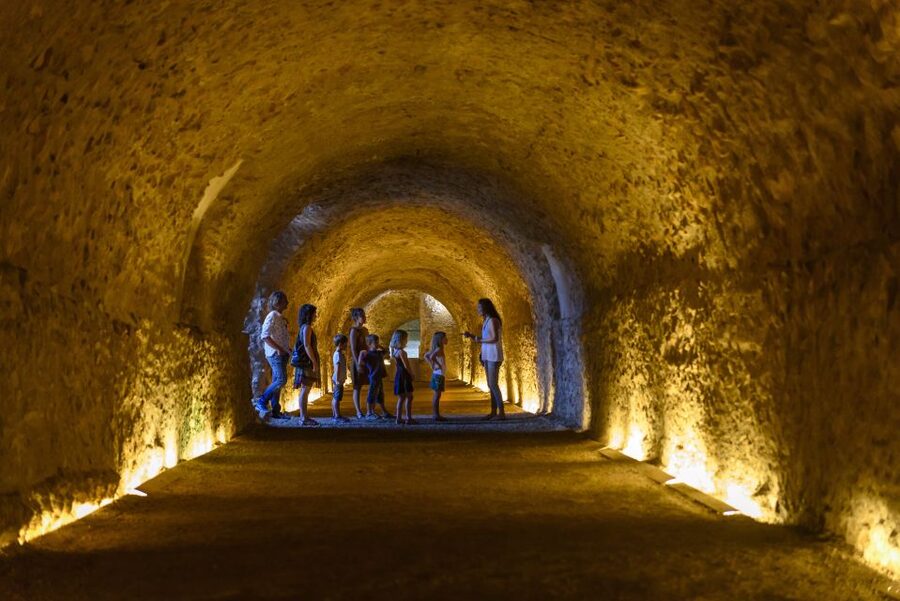
A highlight is the visit to the Circus vaults, with entrance included in the tour price. The Circus was the setting for chariot races, and the vaults offer a tangible connection to the machinery and architecture behind a mass Roman spectacle. The tour invites you to imagine the speed and noise of race day, but it also helps explain the structure that made such events possible.
This is a different kind of Roman monument from a wall or an arena. The vaults hint at the scale of a venue built for crowds and public entertainment. Even if you arrive mainly interested in gladiators, the Circus adds another side of Roman life: racing, spectators and the city’s appetite for grand events.
The visit is likely to feel most rewarding if you enjoy asking how a monument worked, not just how old it is. Your guide can connect the surviving spaces to the larger structure and explain their role. The available details do not specify how long the group spends inside, so think of it as one stop in a compact guided route rather than an extended independent visit.
The guided format also helps make the $17 price easier to judge. Entrance to the Circus is included, and you get a guide to connect the vaults with the rest of Roman Tarragona. If you want to linger over every architectural detail, two hours may feel tight; if you want a clear first orientation, the combination is good value.
Use the model and 3D exhibit before the Amphitheater
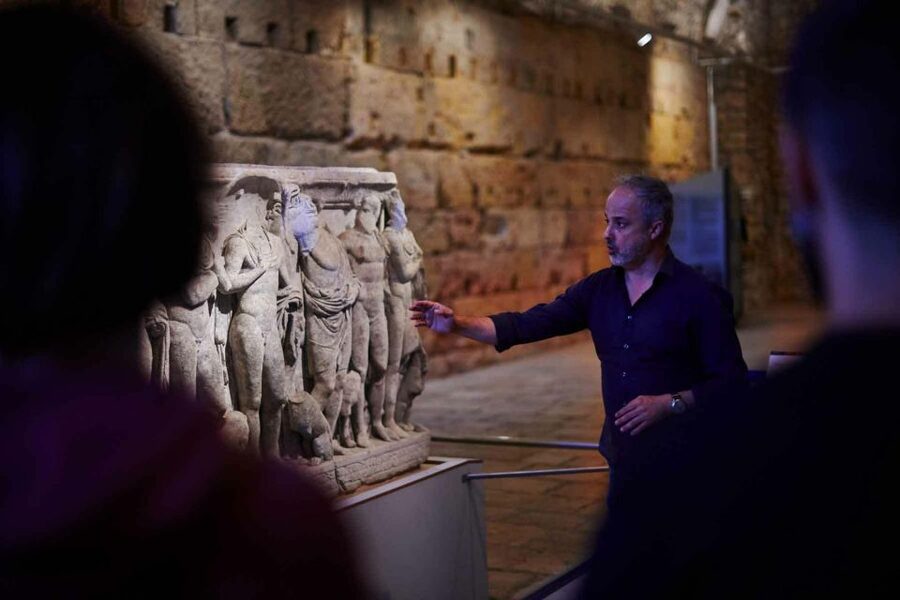
Before heading to the Amphitheater, the tour includes an audiovisual exhibit with 3D images. That pause gives you another way to picture the ancient city and its monuments before seeing the seaside arena. It is a useful bridge between the model in the old center and the physical site at the end of the walk.
The visual material has been a particular hit for some participants, especially the film about Tarragona. That makes sense: Roman ruins can leave you doing a lot of mental reconstruction, and images can show a building’s former shape more quickly than a long explanation. If you learn best by seeing rather than listening, this portion may be one of the most helpful parts of the route.
The exhibit also offers a change of rhythm. A walking tour asks you to take in streets and structures while keeping up with a group; a short film lets you absorb the picture in one place. Still, do not expect the audiovisual segment to replace time at the monuments. The tour’s focus is the overall story, with the film supporting the walk.
More history tours in Tarragona:
- Barcelona: 2.5-Hour Bike or E-Bike Historical Tour
★ 4.5 · 1,262 reviews - Barcelona Erotic Museum – Explore Art, History & Fun
★ 4.4 · 450 reviews - Andorra Original History and Sightseeing Tour (Private, Pickup)
★ 5.0 · 350 reviews - Barcelona: Dark History Night Walking Tour
★ 4.8 · 344 reviews
Finish beside the sea at the Amphitheater
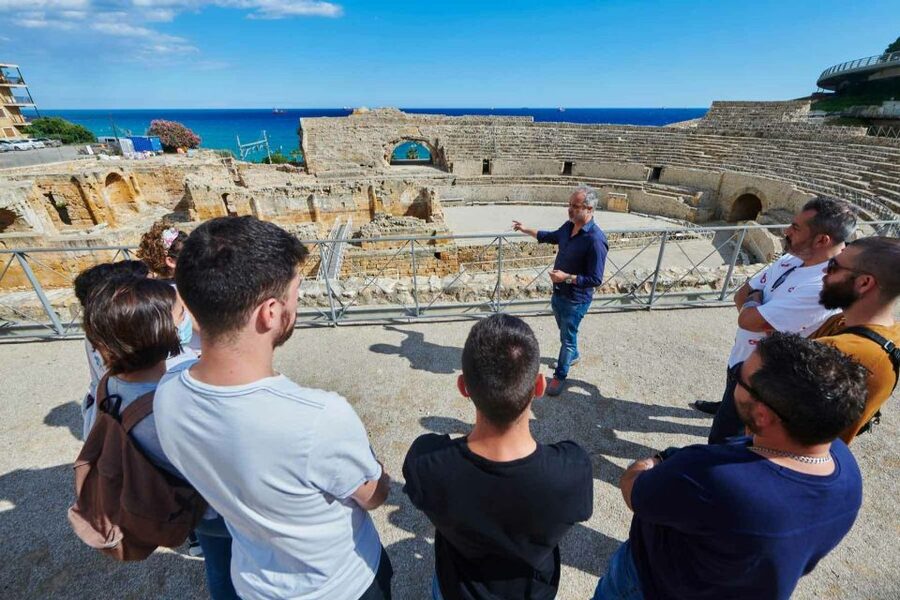
The final major stop is Tarragona’s Amphitheater, set beside the sea. The location is one of the tour’s strongest visual moments: the monument’s scale and the water beyond it make a vivid contrast. The guide explains the gladiator fights and animal hunts held here, then traces the site’s history through the centuries.
This is where the Roman past becomes especially easy to imagine. The Amphitheater was not merely a public building; it was a venue for violent spectacles that drew an audience. Hearing about the events held there gives the structure a human dimension, even if the surviving stonework is what first catches your eye.
The tour description promises a visit to the Amphitheater, but only Circus entrance is specifically included in the listed price. Do not assume that a separate Amphitheater admission is covered. The route does take you there to see the monument and hear its story, with the sea as an impressive backdrop.
Allow yourself a moment to look outward as well as at the stones. The views are part of what makes this a memorable final stop, and the setting gives you a strong sense of why a Roman city grew here. The guide-led format can help you connect what you see to the walls and Circus you have already visited.
Two hours is a useful introduction, not the last word
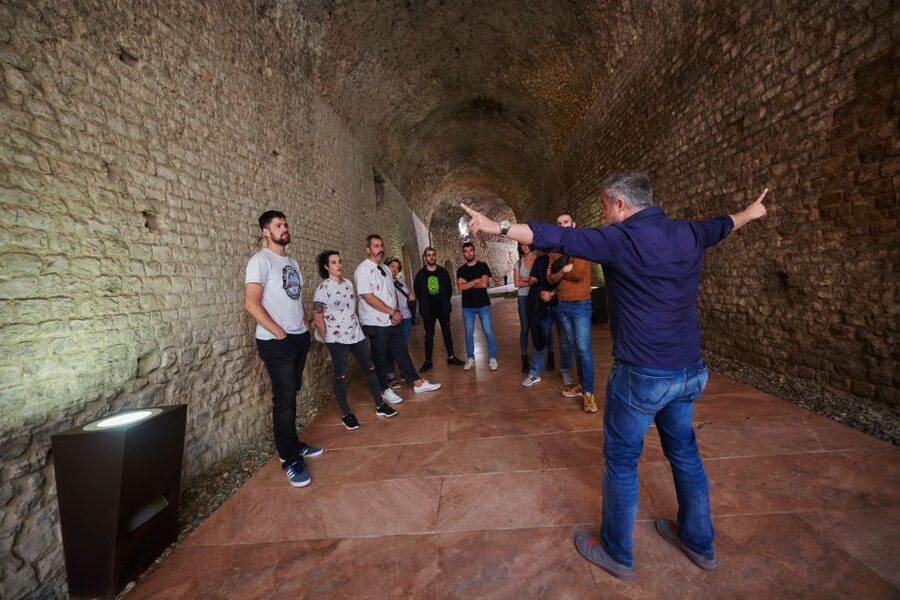
At $17 per person, this is an affordable way to meet the main Roman sights with an official city guide. The price includes the guided walk and Circus entrance, along with the interpretive help of the city model and audiovisual exhibit. For a first visit, that is a sound amount of context for a modest fee.
The limit is also clear: the route covers a lot in two hours. Some participants have felt it would work better as a three-hour tour, and the sense that the visit is short is understandable. You move from walls to the historic center, then through the Circus, a visual exhibit and the Amphitheater. There is little room for long independent pauses at each stop.
Guide style can shape the experience. Adrià has been singled out for clear explanations, commitment and evident pride in his region. That kind of enthusiasm can make a compact tour feel personal and easy to follow. But guide quality and group conditions may vary; one participant found the explanations hard to follow, particularly amid noise from multiple groups.
Crowd timing may matter. A report of three groups of about 20 people setting off at 11 points to a possible pinch point at popular start times, though it does not establish that every departure is crowded. If you can choose among available times, consider a start that avoids a busy midday cluster. Once underway, keep close enough to hear the guide.
The tour is wheelchair accessible, according to the activity details. No route-specific information about surfaces or gradients is provided, so if you need more detail for planning, contact the operator before booking. The language options are Catalan and Spanish, not English. That is a key practical point: book only if you can comfortably follow one of the offered languages.
Free cancellation is available up to 24 hours before the activity for a full refund, and the reserve-now, pay-later option lets you hold a place without paying immediately. Those terms offer flexibility, but the main decision is still whether a brisk guided overview suits your interests. Bring comfortable shoes, leave large bags behind, and arrive ten minutes early at the Itinere office beside the walls.
Who should book this Tarragona walk?
I would choose this tour if you want a well-priced introduction to Roman Tarragona and prefer a guide to connect the monuments into one story. It is especially suited to first-time visitors, history-minded walkers and anyone who wants to see the walls, Circus vaults and Amphitheater in a single outing. The city model and 3D exhibit are welcome tools if ancient ruins can otherwise feel hard to read.
I would think twice if you want a slow archaeological visit, need English-language guiding, or hope to spend a long time at each monument. The two-hour schedule is compact, and the experience may be less satisfying if the group is large or the guide is hard to hear. For the right expectations, though, it is a practical way to get your bearings and see how Roman Tarragona still shapes the city.
The overall rating is 4.7 out of 5 from 261 ratings, and the strongest praise centers on clear, engaging guiding. In particular, Adrià’s explanations have been described as easy to understand and delivered with real affection for his home region. That is a good sign, while not a guarantee that every departure will have the same guide or group dynamic.
FAQ
How long is the Tarragona Roman Heritage Guided Walking Tour?
The tour lasts two hours. Some participants may find that short for the number of monuments and historical context covered.
What does the tour include?
It includes a guided tour of Tarragona and entrance to the Circus. The route also includes the Roman walls, the historic center, an audiovisual exhibit and the Amphitheater.
Is Amphitheater admission included?
The listed inclusions specify entrance to the Circus, not separate admission to the Amphitheater. The tour visits the Amphitheater, but the provided details do not say that its entry fee is included.
What languages is the tour offered in?
The live guide speaks Catalan or Spanish. English is not listed as an option.
Where is the meeting point?
Meet at the Itinere office next to the Roman walls. Arrive ten minutes before the activity starts.
How much does the tour cost?
The stated price is $17 per person.
Is the tour wheelchair accessible?
Yes, the activity is listed as wheelchair accessible. The supplied details do not describe the route’s surfaces or gradients.
What should I bring?
Wear comfortable shoes for the walking tour.
Can I bring luggage or a large bag?
No. Luggage and large bags are not allowed.
What is the cancellation policy?
You can cancel up to 24 hours in advance for a full refund. The reserve-now, pay-later option lets you book without paying immediately.
Reviewed this season in Tarragona
- Tarragona: Southern Delta Birdwatching Private Tour★ 5.0 · 8 reviews
- Riumar: Ebro Delta Cruise and Jeep Tour with Mussels Tasting★ 4.5 · 100 reviews
- Falset: Guided Wine Tour to the Priorat by a Local★ 5.0 · 14 reviews
- Salou: Private Zodiac Boat Trip Through the Coves of Salou★ 5.0 · 35 reviews
- Entry ticket | Fundació Mas Miró – Mont-roig del Camp★ 4.2 · 10 reviews
- Ebro Delta: Northern Delta Guided Tour with a Local★ 5.0 · 16 reviews
- Ebro Delta National Park: Scenic Drive and Kayaking Tour★ 4.1 · 5 reviews
- Ebro Delta National Park: Guided Horseback Riding Tour★ 3.8 · 17 reviews
Barcelona Walking Tours, compared.
Barcelona Tapas and Wine Experience Small-Group Walking Tour
Read our review →
Tapas Walking Tour with Food, Wine, and History
Read our review →

Gothic Quarter Ghosts and Legends Walking Tour
Read our review →
Barcelona Helicopter, Sailboat & Old Town Private Walking Tour
Read our review →

Helicopter Flight, Boat Ride, and Walking Tour
Read our review →
Browse the lists this tour appears in