
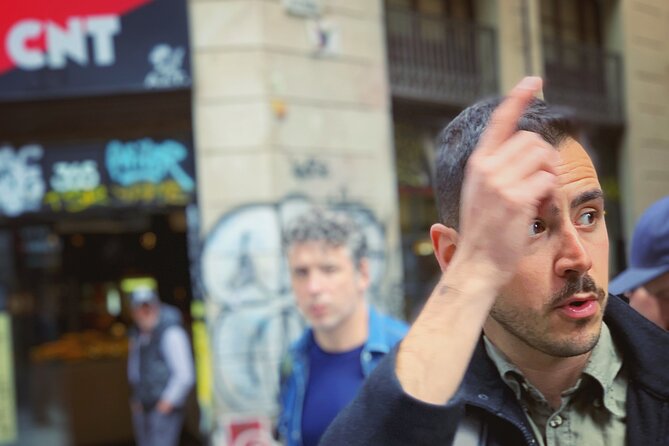
Reviewed · BARCELONA WALKING TOURS
The Spanish Civil War & Franco Barcelona Walking Tour
Barcelona’s Civil War story is written in places that can be easy to pass without a second glance. This walk connects familiar streets and old buildings to the conflict, the competing political factions, and the long dictatorship that followed.
I like two things in particular: guides use historic images to give context to sites that may show few visible signs today, and the route links political history to Barcelona’s working-class and anarcho-syndicalist past. The main consideration is that this is a history-first walk, and the subject is complex. You’ll get the most from it if you’re ready to walk, listen closely, and ask questions.
At a glance
- A city walk with a clear focus: Follow Civil War history through Plaça de Catalunya, La Rambla, the old Santa Creu Hospital, Santa Maria del Pi, and Plaça Sant Felip Neri.
- Politics explained on the ground: Your guide helps sort out the factions and events behind the conflict, then connects them to Franco’s dictatorship.
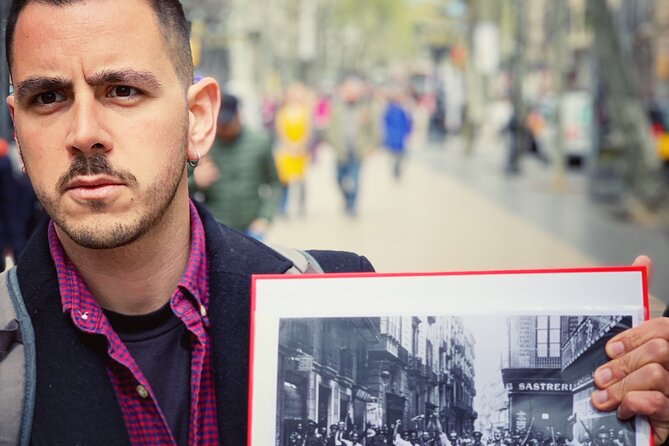
- Historic images add context: Photographs and posters help you picture places as they were during the war.
- A small-group format: The tour has a maximum of 25 people, with time for questions.
- Plan for added cost and plenty of walking: The tour costs $47.16 per person, and a guide radio headset costs €1 per person. Wear comfortable shoes.
A Civil War walk through Barcelona’s Old Town
This is not a general introduction to Barcelona’s architecture or food. It is a focused look at how the Spanish Civil War and Franco’s dictatorship affected the city, using central locations as a way into a difficult period of Spanish and Catalan history.
That focus is useful because the story can be hard to follow without a guide. The war involved many political groups and factions, and the tour sets out to explain who they were and how events unfolded in Barcelona. Guides have used historical images and posters to make the past more legible, while tying it to the streets and buildings in front of you.
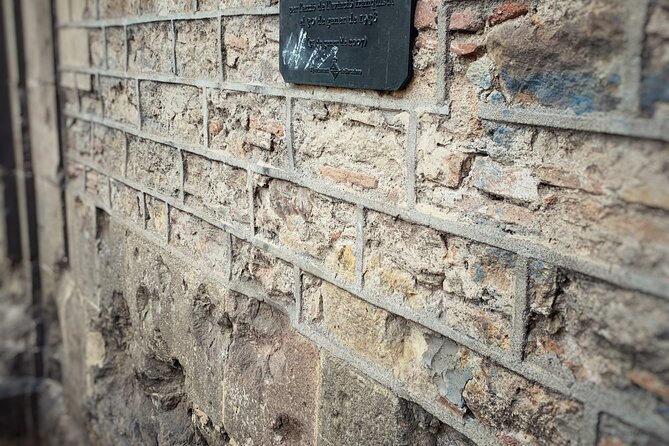
The route also gives you a different way to read the Old Town. A square or church may look much the same as it does on any city stroll, but the guide’s account can reveal its connection to the conflict. At Plaça Sant Felip Neri, for example, the beauty of the square sits alongside a stark reminder of wartime destruction.
Expect a walk with long stretches of explanation, rather than a string of quick photo stops. The listed stop times add up to less than the full two and a half hours, so much of the tour’s value comes from the guide’s storytelling as you move between locations.
More walking tours in Barcelona:
- Barcelona Tapas and Wine Experience Small-Group Walking Tour
★ 5.0 · 5,804 reviews - Barcelona: Tapas Walking Tour with Food, Wine, and History
★ 4.8 · 4,261 reviews - Barcelona Tapas Walking Tour: Food, Wine & History
★ 4.5 · 1,928 reviews
Plaça de Catalunya: starting at a key wartime place
The tour begins at Plaça de Catalunya, a major central square with an important place in the Civil War story. It is an apt starting point: you meet in the heart of the city, then look at a familiar public space through a historical lens.
The stop is listed as about 10 minutes. That is enough for an introduction to the site and its role, but not a lengthy visit to a monument or museum. The tour does not list an admission charge here.
The meeting point is by the Foot Locker at Plaça de Catalunya, 20. Since this is a busy central area, check the address before setting out and allow time to find the group. The tour is offered in English.
La Rambla: history among the crowds
La Rambla is another short stop, about 10 minutes, with several Civil War-related sites along the way. The avenue is one of Barcelona’s best-known streets, and the contrast between its present-day activity and its past is part of the appeal.
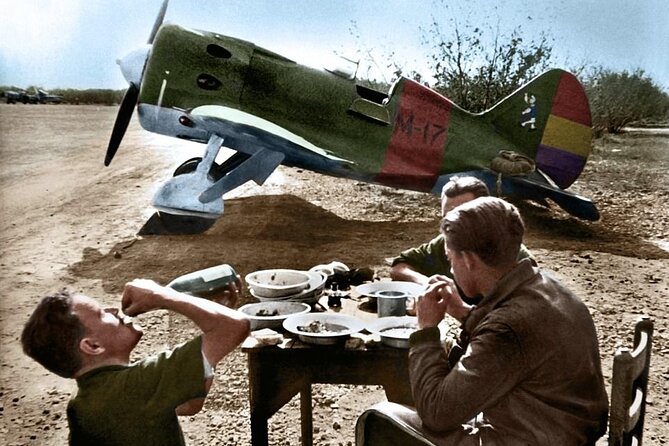
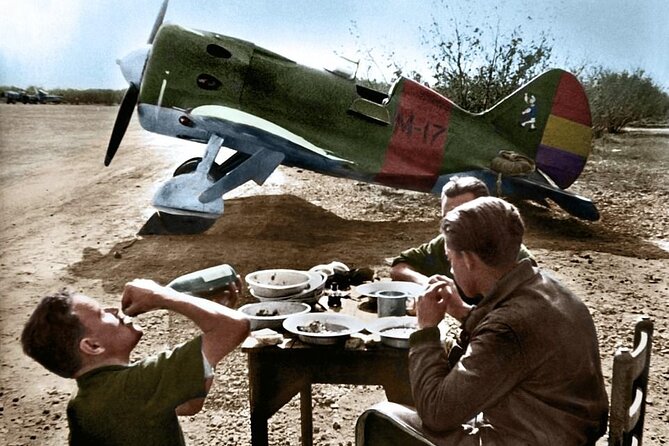
This is where a guide’s historical images can help. The tour is not simply asking you to imagine that the war happened somewhere in the city; it connects events to particular places and shows visual material that can bring those locations into focus. That kind of context is valuable when the buildings themselves do not function as clear, formal memorials.
There is a practical limit, too. La Rambla is a public street, not a quiet classroom, so you may need to concentrate while the city carries on around you. A €1-per-person radio headset is not included and is paid to an external provider at the meeting point. If hearing every detail matters to you, budget for it.
The old Santa Creu Hospital: a pause in the route
The Antic Hospital de la Santa Creu is a 15th-century hospital, and the tour allows about five minutes here. It adds a different layer to the walk: the story is not confined to squares and avenues, but touches older institutions and buildings that have served the city over time.
The short stop is best understood as part of the route’s wider narrative, not as a full visit to the hospital. The supplied details do not specify an interior visit, and the stop is listed as free admission. Come ready to listen to the guide’s account rather than expecting a long architectural tour.
This is a good example of how the experience uses place as a prompt. The building’s age and past role give the guide a way to set the Civil War within a longer urban story, while keeping the focus on Barcelona’s 20th-century history.
More tours and experiences in Barcelona:
- Barcelona: Sagrada Familia Entry Ticket with Audio Guide
★ 4.6 · 105,312 reviews - Barcelona: Park Güell Admission Ticket
★ 4.4 · 76,534 reviews - Barcelona: Casa Batlló Entry with Self-Audioguide Tour
★ 4.7 · 25,359 reviews - Barcelona: 24 or 48-Hour Hop-On Hop-Off Bus Tour
★ 4.4 · 20,872 reviews
Santa Maria del Pi: a church with a wartime connection
The Basilica de Santa Maria del Pi is an old church with a less obvious connection to the Civil War. The stop is listed at about five minutes, and admission is not included.
That brief pause signals the tour’s approach: the point is not to tour every landmark in depth, but to uncover details you might not notice on your own. If you are hoping to go inside the basilica, check separately whether entry is available and what it costs. The tour details do not promise an interior visit.
I like this kind of stop on a history walk because it changes how you see a familiar city. A church can be more than a pretty building on a sightseeing route; here, the guide places it within the tensions and events of the period.
Plaça Sant Felip Neri: beauty and damage side by side
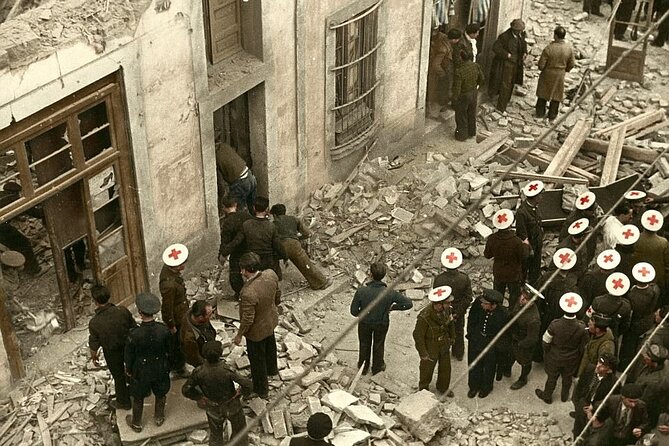
Plaça Sant Felip Neri is described as both strikingly beautiful and one of the most direct reminders of the destruction of the Civil War. The group spends about five minutes here, with no admission charge.
The square brings the tour’s central idea into sharp focus. Barcelona’s past is not only a list of dates and factions. It is also visible in the city’s physical traces and in the stories attached to ordinary public spaces. This is likely to be one of the most affecting stops, especially after the guide has explained the events that shaped it.
The brevity of the stop means you will not linger for long. Still, a few well-placed minutes can be enough when the guide has built the context along the way. Take time to look around, and leave room for questions if the group pauses.
The guide makes the complex story understandable
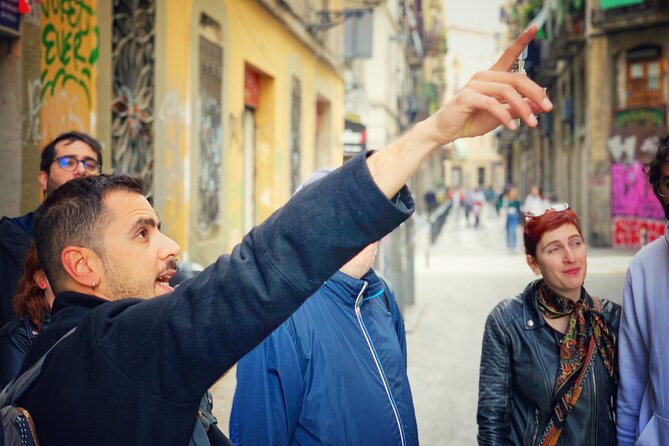
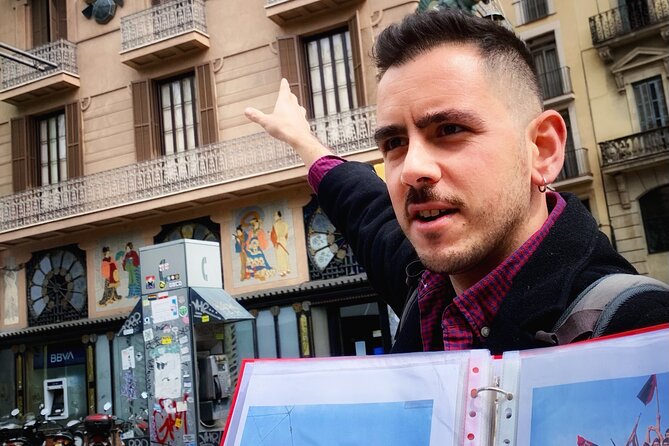
The guide is the deciding factor on a tour like this. The subject involves multiple organizations, political divisions, and changing events, so clarity matters as much as factual detail. The strongest guiding style is patient and structured, explaining who people and groups were before moving on to what they did.
Guides named by participants include Henrieta, Filipa, Chrysa or Chrisa, Evan, Yannis, Onno, and Evangelos. The guide assigned to your date can vary, so do not book on the assumption that you will have one particular person. The tour description identifies the guide as an expert on this complicated and sensitive subject.
The praise for the experience centers on guides who make the politics understandable without flattening the human story. Henrieta was noted for detailed accounts of events from 1936 to late 1938 and for showing historical images. Evan was praised for taking time to explain difficult political relationships and the emotions behind them. Filipa, Chrysa, Yannis, and others were also credited with clear, engaging explanations and thoughtful answers.
There is one useful caution: a guide’s delivery can shape the experience. One account describes a confusing presentation, with people and groups introduced without enough explanation. That is a reminder to speak up if the story gets tangled. The tour is meant to include questions, and asking who a group was or how an event fits into the timeline can help you keep your bearings.
Working-class Barcelona and Franco’s dictatorship
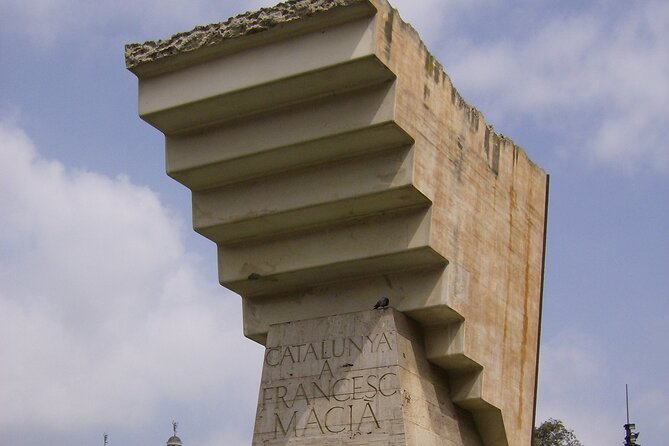
The tour does more than recount the fighting. It also covers Barcelona’s working-class history and its anarcho-syndicalist period, giving you a sense of the social and political currents that fed into the conflict. That context matters: without it, the war can seem like a sudden clash of names and factions rather than a crisis shaped by longer tensions.
The walk also addresses Franco’s dictatorship. For visitors who know little about this period, the guide’s explanations can provide a useful foundation for understanding why the war remains a sensitive subject and how its legacy still informs Spanish identity. Some guides have also offered reading, film, or article recommendations for anyone who wants to continue learning after the walk.
This is not a substitute for a book or a full course in Spanish history. It is a structured introduction, grounded in places you can see. If you already know the basics, the Barcelona setting and local perspective can still add detail, though you may want to ask questions to steer the conversation toward areas you have not studied.
Is $47.16 good value?
At $47.16 per person, this is a premium-priced walking tour compared with a self-guided stroll, but you are paying for more than a route between central landmarks. The value lies in the guide’s ability to link locations, explain competing political groups, and use images to make the history clearer. The tour lasts about two and a half hours, and group discounts are available.
The €1-per-person guide radio headset is an extra cost, paid at the meeting point to an external provider. Factor that into your budget, especially if you prefer to hear every part of the explanation. Admission is free at most listed stops, while Santa Maria del Pi is marked as not included.
The maximum group size is 25. That is small enough for questions to be part of the experience, though it is still a group walk rather than a private lesson. The tour is booked, on average, 26 days ahead, so planning early is sensible if your dates are fixed.
The tour requires good weather and a minimum number of participants. If poor weather or too few bookings mean it cannot go ahead, you will be offered another date or a full refund. You can cancel for a full refund up to 24 hours before the start time; later cancellations are not refunded.
Who will get the most from this walk?
Choose this tour if you want history to shape how you explore Barcelona. It suits first-time visitors who want a meaningful introduction to the city’s recent past, as well as repeat visitors who have already seen the major sights and want to understand what lies behind familiar streets.
It is especially worthwhile if you have a genuine interest in the Spanish Civil War, political movements, or Franco’s dictatorship. You do not need to arrive as an expert, but you should be ready to listen closely and follow a complicated story. The guides aim to make it accessible to people with little prior knowledge, and questions are welcome.
It is a weaker fit if you want a relaxed architecture walk, lots of time inside buildings, or a tour with only light historical commentary. There is a fair amount of walking, and comfortable shoes are a must. One participant also found headphones helpful for concentrating, which is practical advice if you find it hard to follow spoken explanations in a public space.
Should you book the Spanish Civil War and Franco Barcelona Walking Tour?
I would book this if you want more than a quick overview of Barcelona’s headline sights. The combination of specific Old Town locations, historical images, and explanations of the city’s political and working-class past gives the walk a clear purpose. The most important payoff is learning how the Civil War and dictatorship connect to places you can still visit.
Go in ready to walk and stay engaged, and use the question time if a name or faction becomes hard to track. At $47.16 plus the €1 headset fee, it is a considered purchase, but a strong guide can make a complex subject far easier to grasp than a self-guided route. If you prefer history told on the ground, this is a worthwhile way to spend part of a Barcelona day.
FAQ
How long is the tour?
It lasts approximately two hours and 30 minutes.
What language is the tour offered in?
The tour is offered in English.
Where does the tour start?
It starts at the Foot Locker at Plaça de Catalunya, 20, Ciutat Vella, Barcelona.
Where does the tour end?
The activity ends at a different location from the starting point. The exact end location is not specified in the tour details.
Is the guide radio headset included?
No. The headset costs €1 per person and is paid to an external provider at the meeting point.
How many people can join the group?
The maximum group size is 25 people.
Reviewed this season in Barcelona
- Two Hour Luxury Sailing Experience with Open Bar★ 4.8 · 13 reviews
- Sunset from a private Classic Yacht★ 5.0 · 3 reviews
- Stories, Legends and Mysteries of Barcelona★ 5.0 · 14 reviews
- Skip-the-Line Barcelona & Montserrat Tour with Pick-up★ 4.6 · 47 reviews
- Skip-the-line Montjuïc Castle Tour with a Cable Car Ride★ 4.7 · 7 reviews
- Barcelona: Old Town & Seafront Segway Tour★ 4.9 · 145 reviews
- Shore Excursion of Barcelona★ 4.9 · 4 reviews
- Barcelona Highlights Half Day Small Group Tour★ 5.0 · 4 reviews
Barcelona Walking Tours, compared.
Barcelona Tapas and Wine Experience Small-Group Walking Tour
Read our review →
Tapas Walking Tour with Food, Wine, and History
Read our review →

Gothic Quarter Ghosts and Legends Walking Tour
Read our review →
Barcelona Helicopter, Sailboat & Old Town Private Walking Tour
Read our review →
Helicopter Flight, Boat Ride, and Walking Tour
Read our review →
Browse the lists this tour appears in