
Reviewed · BARCELONA WALKING TOURS
Barcelona’s Dark History Walking Tour in El Raval
El Raval’s darker stories are not kept behind museum glass. They belong to the streets: a former house of mercy where abandoned children once lived, the home of a notorious figure known as the Vampiress of the Raval, and a medieval hospital with a grim past. This walk gives you a lively way to meet a part of Barcelona that is more complicated than its postcard image.
I like two things in particular: the route connects local legends to real places, and it balances them with modern street art and neighborhood life. The guide names Andreas and Owen (Eoghan) are associated with vivid, engaging storytelling, which matters on a tour built around characters and tales.
One consideration: the subject matter can be unsettling, and some stories sit between documented history and legend. The walk is also about two miles, so wear comfortable shoes and be ready to spend two hours on your feet.
- The Vampiress of the Raval: Hear the story of Barcelona’s infamous serial killer and the legends that grew around her.
- Keith Haring’s AIDS mural: See a major work of public art tucked behind MACBA, with a political message.
- Hospital de la Santa Creu: Explore the grounds of an old hospital associated with macabre local stories.
- Bar Marsella: Pass a bar more than 200 years old, linked with creative figures including Dalí, Gaudí, and Picasso.
- Sant Pau del Camp: Visit a Romanesque church more than 1,000 years old, with a troubled past and a local legend.
- A two-mile route: Cover El Raval at a leisurely pace in two hours, with an English-speaking guide.
El Raval’s history, told on its own streets
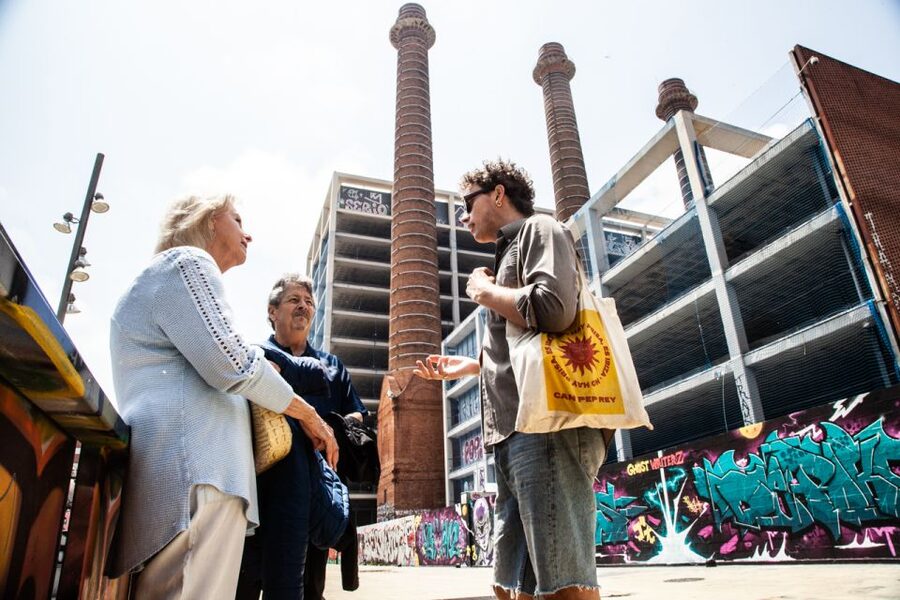
This is a walking tour for people who want Barcelona beyond its grand boulevards and famous façades. El Raval has narrow medieval streets, lively public spaces, street art, and a past shaped by institutions, nightlife, and hardship. The tour uses that mix to tell a story of the neighborhood rather than presenting a string of spooky anecdotes without context.
You meet outside the Church of Sant Pere Nolasc Mercedaris, beside Plaça de Castella. From there, the route moves through the Raval toward MACBA, the old hospital, Bar Marsella, Sant Pau del Camp, and the Three Chimneys. The pace is described as leisurely, but the two-hour format means the guide will keep the group moving between stops.
The focus is on dark history, so expect stories about abandonment, crime, and the city’s more unsettling past. The tone need not be grim throughout: the route also takes in art, architecture, and the character of streets that remain part of everyday Barcelona.
Casa de la Misericòrdia and its uneasy past
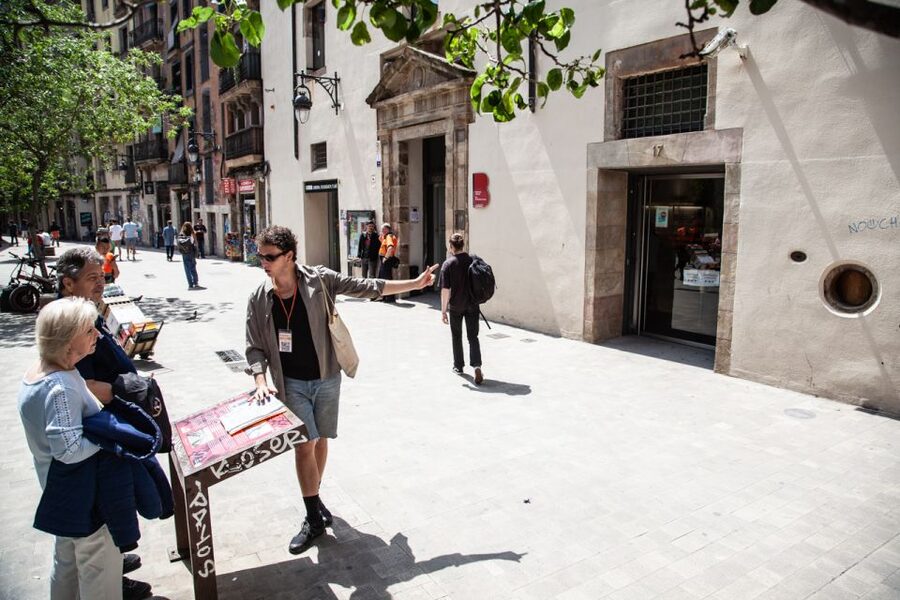
The first major stop is the Casa de la Misericòrdia, a former house of mercy where children were abandoned. The guide explains the site’s role and the stories attached to it, including the local belief that some children still walk its halls.
That distinction between history and haunting is part of the appeal. You can consider what the institution meant in its time while also hearing the ghostly tale that has gathered around it. The experience is an outdoor guided stop, not a visit inside the building, so don’t expect an interior tour.
Starting here sets the mood, but it also gives the walk a human subject beyond monsters and legends. Stories about abandoned children can be difficult, particularly for younger visitors, so consider your group’s comfort with the theme.
More walking tours in Barcelona:
- Barcelona Tapas and Wine Experience Small-Group Walking Tour
★ 5.0 · 5,804 reviews - Barcelona: Tapas Walking Tour with Food, Wine, and History
★ 4.8 · 4,261 reviews - Barcelona Tapas Walking Tour: Food, Wine & History
★ 4.5 · 1,928 reviews
MACBA, skaters, and Keith Haring’s mural
The route then reaches MACBA, Barcelona’s Museum of Contemporary Art, whose open space is also known as a gathering spot for skateboarders. The contrast is useful: this part of El Raval is not frozen in the past. It is a public place shaped by contemporary culture and daily use.
Behind the museum is the Keith Haring mural known as Mural del Sida, a work with a politically charged message about AIDS. The design uses whimsical stick figures, but its subject is serious. Seeing it in place gives you a chance to connect public art with the issues it was made to address.
This is one of the route’s strongest shifts in tone. After the early ghost story, the mural brings the tour into modern history and shows how art can speak plainly in public space. The guide can help explain why this work matters, while the setting makes clear that El Raval’s story is still being written.
Joaquín Costa and the Vampiress of the Raval
On Carrer de Joaquín Costa, the tour turns to the figure known as the Vampiress of the Raval. The story concerns Barcelona’s most infamous serial killer, but its afterlife is wrapped in legend. The tour points out the place where she once lived and explores how the lines between criminal history and supernatural folklore have blurred.
The name is dramatic, and the guide’s storytelling is central here. Andreas and Owen (Eoghan) are among the guides associated with the tour, with a style described as vivid and lively. That kind of delivery suits a story that needs atmosphere, while a good guide should also help you distinguish the known past from the legend.
Don’t expect a vampire hunt or a staged scare. The interest lies in how a real person and a frightening reputation became part of the neighborhood’s folklore. If you prefer history with clear boundaries between fact and myth, this stop may be less satisfying; if you enjoy seeing how legends grow from real events, it should hold your attention.
The old Hospital de la Santa Creu
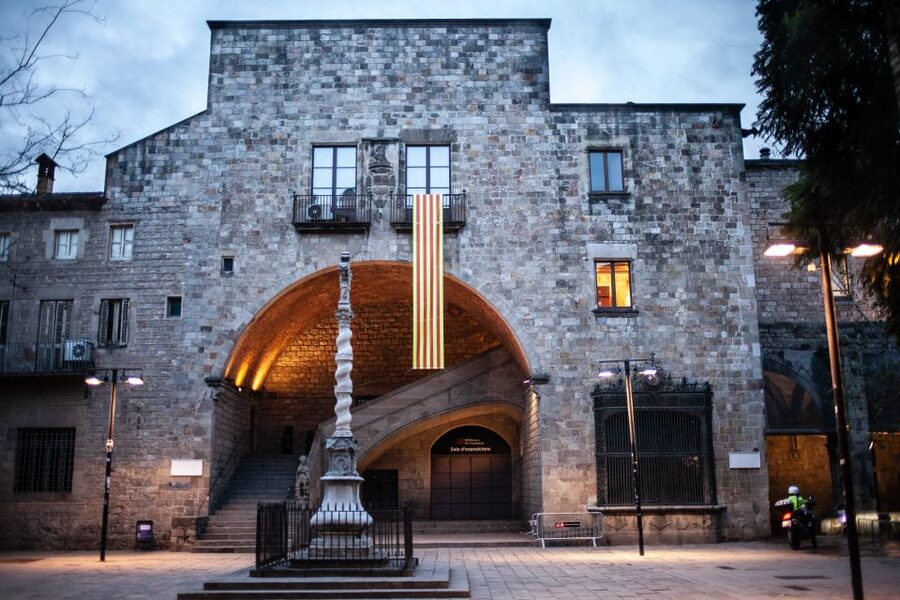
The Hospital de la Santa Creu offers a change of scale. You’ll walk through the grounds and a garden associated with macabre shows and spells, hearing about the darker events linked to the site. The hospital’s age and former purpose make it a natural place for stories about illness, care, and death.
The visit is a guided look at the grounds rather than a detailed medical-history lesson. That makes it a good fit for the tour’s broader aim: showing how El Raval’s old buildings carry stories that are sometimes factual, sometimes folkloric, and often unsettling.
Allow your guide to provide the context instead of treating the grounds as a quick photo stop. The value here is in listening to how the site fits into the neighborhood’s past. If your main interest is architectural detail, you may want to return independently for a slower look.
More history tours in Barcelona:
- Barcelona: 2.5-Hour Bike or E-Bike Historical Tour
★ 4.5 · 1,262 reviews - Barcelona Erotic Museum – Explore Art, History & Fun
★ 4.4 · 450 reviews - Andorra Original History and Sightseeing Tour (Private, Pickup)
★ 5.0 · 350 reviews - Barcelona: Dark History Night Walking Tour
★ 4.8 · 344 reviews
Bar Marsella, Barcelona’s old drinking room
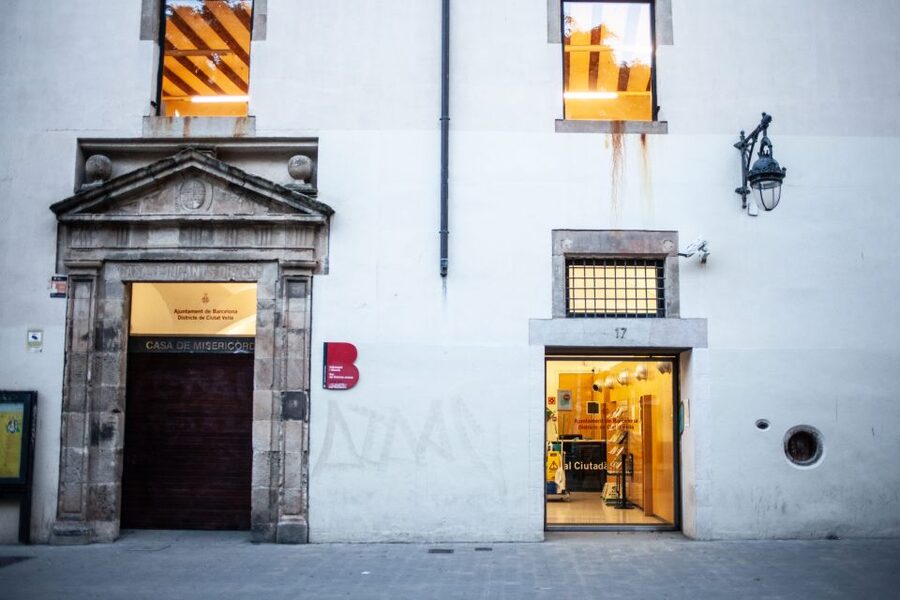
From the hospital, the route passes La Rambla de Raval and reaches Bar Marsella, described as the oldest bar in town. It has been open for more than 200 years and is associated with creative figures such as Dalí, Gaudí, and Picasso.
The tour’s stop is about the bar’s place in Barcelona’s cultural history, not necessarily a drink or a long visit inside. It gives you a glimpse of the neighborhood’s older social life and a reminder that artists and writers have long found their way into its streets.
This stop adds welcome variety after the heavier tales. Still, if you hope to sit down for a glass of absinthe or explore the interior at length, check whether time is built in. The tour’s stated duration is two hours, and its main purpose is to keep moving through the district.
Sant Pau del Camp and a church with a troubled past
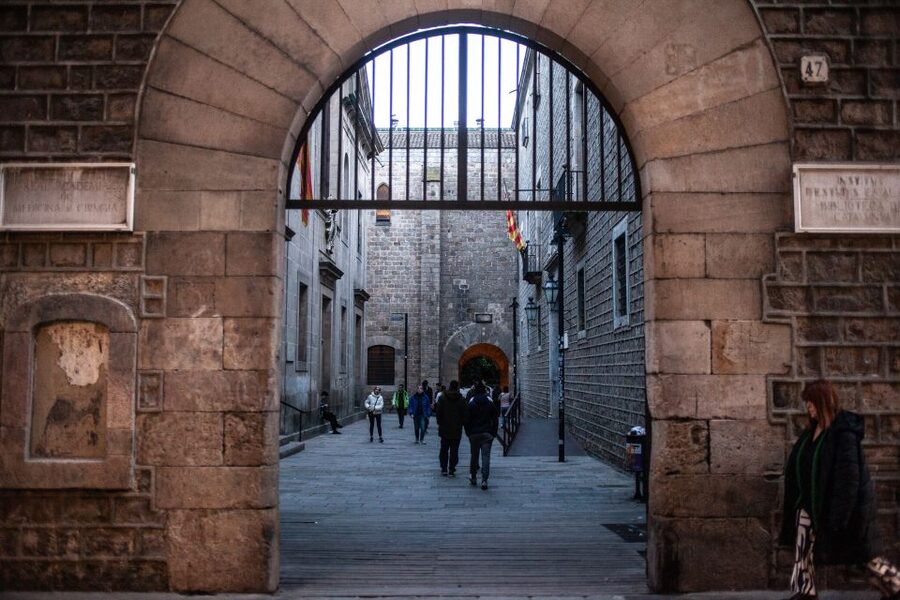
Sant Pau del Camp is a Romanesque church more than 1,000 years old, and it is presented as Barcelona’s oldest church. Its age alone makes it a striking stop in a neighborhood that is often introduced through its modern street life.
The guide also tells a story about the church’s troubled past, tied to a local legend. The specific details are part of the guided explanation, so this is a stop where listening matters more than simply admiring the exterior. It rounds out the tour’s theme: institutions that look solemn or peaceful can have complicated histories.
The stop’s appeal is strongest if you enjoy architecture with a story attached. If you want a full religious-art or architectural survey, this short visit is not a substitute for an extended church tour.
The Three Chimneys and the Raval’s south side
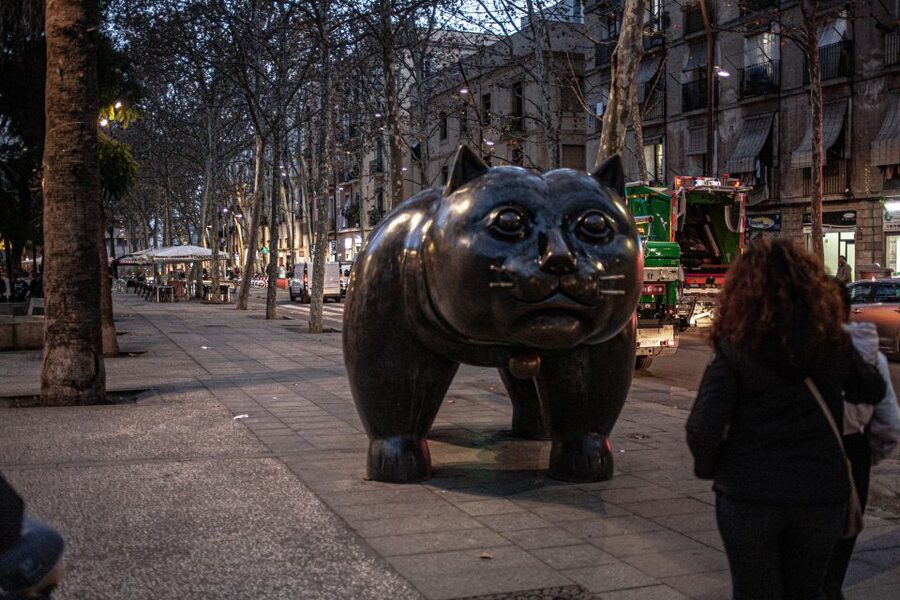
The final stretch heads into the south side of El Raval, where clubs, cabarets, and casinos drew crowds a century ago. Some of those venues have survived into the present, and the guide points them out. The area adds a nightlife chapter to a walk that has already covered charity, crime, art, and religion.
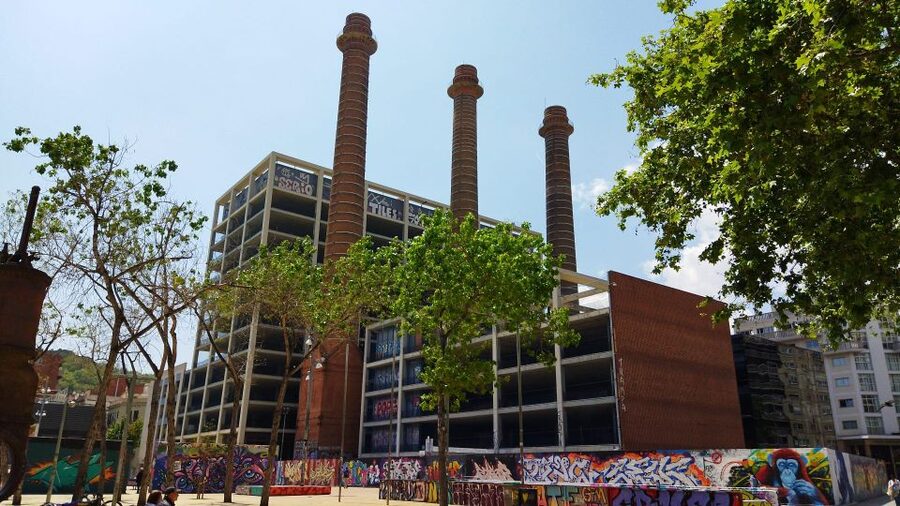
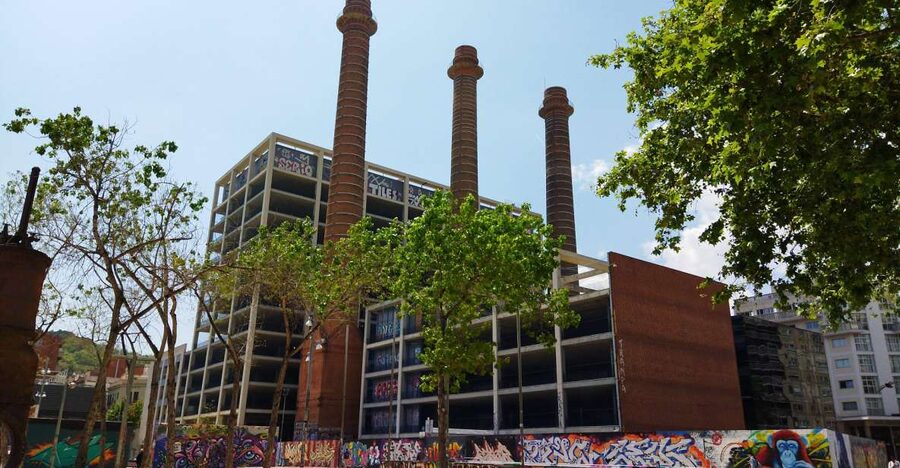
Near a former power factory, the route also takes in changing graffiti and street art. The Three Chimneys, or Jardins de les Tres Xemeneies, are the stated finish in the route description. You may see artists at work, though that depends on the day; the art changes, so this is not a fixed gallery visit.
The street art is a good final note because it brings you back to the present. El Raval’s history is not only something to hear about. The neighborhood continues to express itself through public art and public space.
What the two-hour walk is worth
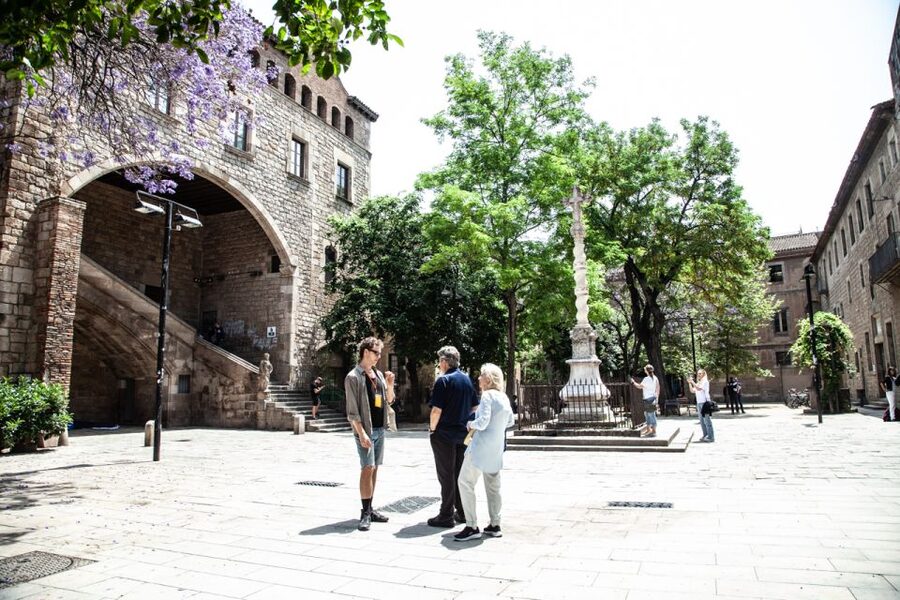
At $33 per person, the price buys a guided route of roughly two miles, lasting two hours, in English. You’re paying for a local narrative that links sites and stories you might otherwise pass without understanding. The value depends less on the number of stops than on the guide’s ability to make the route feel connected.
This is not a ticketed attraction with access to a series of interiors. The main experience is walking, listening, and seeing the neighborhood through its stories. If you like guided context and enjoy folklore, public art, and social history, the price is reasonable for a focused city walk. If you prefer to explore at your own pace or want long visits inside buildings, a self-guided stroll may suit you better.
The tour is listed as wheelchair accessible and runs rain or shine. It covers about two miles, so plan for a fair amount of walking despite the leisurely pace. Tips are not included, but are appreciated if you feel your guide did an outstanding job.
There is one practical detail worth checking before you set out: the route description names Jardins de les Tres Xemeneies as the finish, while the meeting information says the activity ends back at the starting point. Confirm the exact ending location with the operator if you have a timed reservation or onward plans.
Who should book this Raval walk?
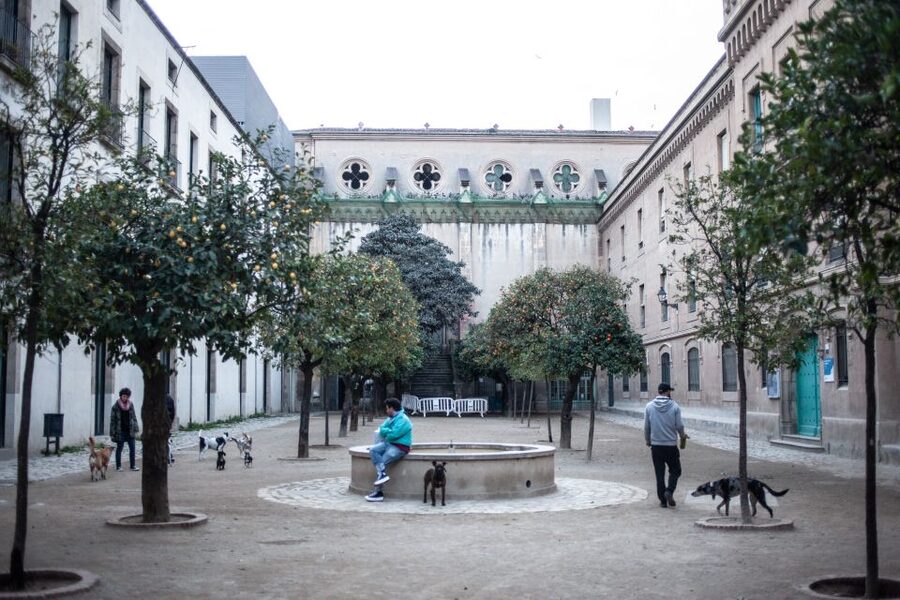
I’d choose this tour if you want an accessible introduction to El Raval’s layered past and enjoy a mix of unsettling stories, art, architecture, and local character. It is especially suited to curious walkers who like a guide’s interpretation and don’t mind folklore sitting beside documented history.
I’d skip it if you want a lighthearted neighborhood stroll, detailed access to historic interiors, or a strictly academic account of Barcelona’s past. For everyone else, the combination of the Vampiress story, Haring’s mural, the old hospital, Bar Marsella, and Sant Pau del Camp makes for a compact, memorable look at a side of the city that rewards attention.
FAQ
How long is the tour?
The tour lasts two hours and covers about two miles at a leisurely pace.
What language is the tour in?
The live tour guide speaks English.
Where does the tour start?
Meet your guide outside the Church of Sant Pere Nolasc in Plaça de Castella, Barcelona.
Where does the tour finish?
The route description gives Jardins de les Tres Xemeneies as the finish, while the meeting information says the activity ends back at the meeting point. Confirm the exact end point with the operator before booking onward plans.
Is the tour wheelchair accessible?
Yes, the activity is listed as wheelchair accessible.
What is included in the price?
The guided tour is included. Tips are not included, but are appreciated.
Reviewed this season in Barcelona
- Two Hour Luxury Sailing Experience with Open Bar★ 4.8 · 13 reviews
- Sunset from a private Classic Yacht★ 5.0 · 3 reviews
- Stories, Legends and Mysteries of Barcelona★ 5.0 · 14 reviews
- Skip-the-Line Barcelona & Montserrat Tour with Pick-up★ 4.6 · 47 reviews
- Skip-the-line Montjuïc Castle Tour with a Cable Car Ride★ 4.7 · 7 reviews
- Barcelona: Old Town & Seafront Segway Tour★ 4.9 · 145 reviews
- Shore Excursion of Barcelona★ 4.9 · 4 reviews
- Barcelona Highlights Half Day Small Group Tour★ 5.0 · 4 reviews
Barcelona Walking Tours, compared.
Barcelona Tapas and Wine Experience Small-Group Walking Tour
Read our review →
Tapas Walking Tour with Food, Wine, and History
Read our review →

Gothic Quarter Ghosts and Legends Walking Tour
Read our review →
Barcelona Helicopter, Sailboat & Old Town Private Walking Tour
Read our review →

Helicopter Flight, Boat Ride, and Walking Tour
Read our review →
Browse the lists this tour appears in