
Reviewed · COSTA BRAVA TOURS
Costa Brava: Via Ferrata Cala del Molí
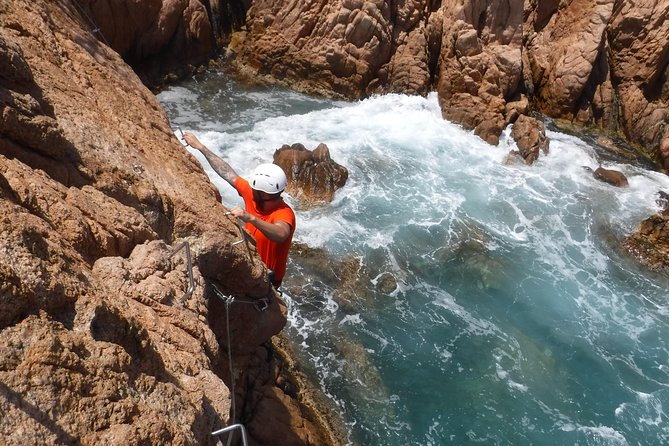
Cala del Molí’s via ferrata takes you along the Costa Brava cliffs, where the sea is part of the route, not just a view from the finish. You clip into a safety cable as you make your way across the rock, using metal steps and handholds where needed.
I like two things in particular: the unusual coastal setting and the choice of two sections, so you can judge how you feel before taking on the harder part. Your qualified guide supplies the technical equipment, takes photos, and brings a mini picnic, useful extras when your hands are busy on the route.
The main consideration is effort. The first section is a gentler introduction, but the second asks more of your arms and overall fitness. Some people have found the guide’s assessment of who should continue frustrating, so be ready to discuss your comfort and ability clearly.
The essentials at a glance
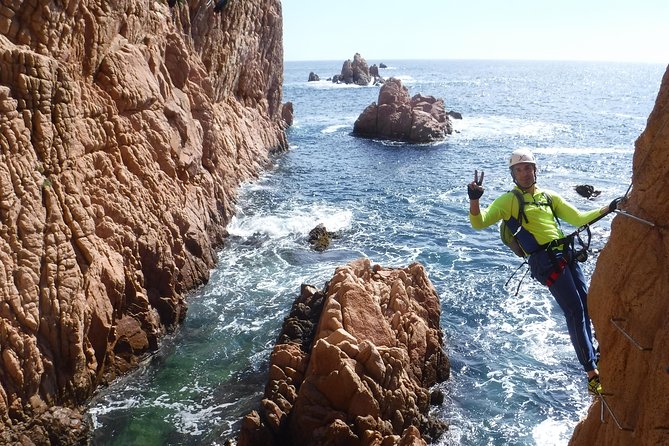
- The route runs above the Mediterranean: Cala del Molí’s coastal position is the draw, with sea and rock close at hand as you move along the cliff.
- There are two sections: The first is intended as an introduction; the second is more demanding, and you can stop rather than continue.
- Allow three to four hours: The activity is advertised at about three hours, but the stated duration is three to four. Actual pace can vary.
- A guide and technical equipment are included: You also get a photographic report, a mini picnic, and liability and accident insurance.
- The group is advertised at six people maximum: A small group can make it easier to follow instructions and keep track of everyone.
- The price is about $48 per person: At $48.31, the fee covers more than access to the route, including the guide, gear, photos, snack, and insurance.
A rare chance to climb beside the sea
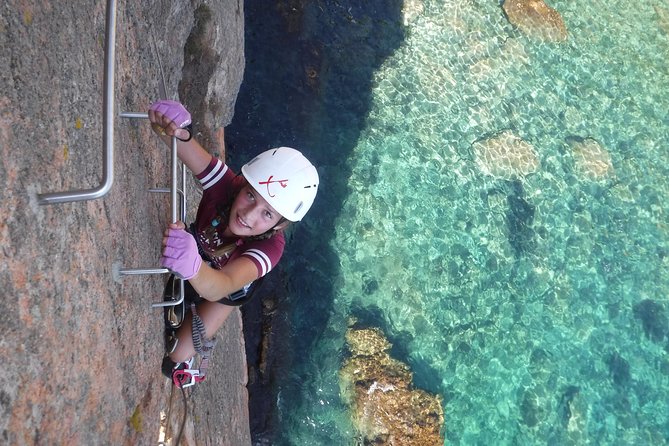
Via ferrata means iron path: a protected route that uses fixed cables and metal aids to help you move across steep terrain. You attach your safety system to the cable as you progress. It is not a guided hike, and it is not quite conventional rock climbing. You’ll need to pay attention, follow instructions, and use your arms and legs to move steadily.
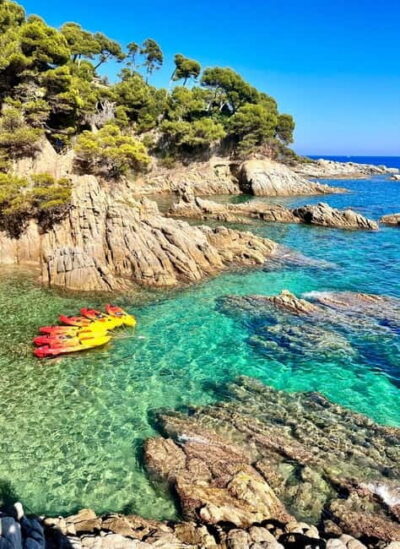
Cala del Molí’s special appeal is its setting. Instead of looking out over the Mediterranean from a lookout, you move along the coastal rock itself. The combination of sea and mountain scenery makes this route different from an inland ferrata, where the views may be impressive but the water is nowhere near your feet.
The route has two sections, with the second more physically demanding. That division gives you a practical choice: try the introductory part, then decide whether you want to keep going. It also means you should not assume that finishing the first section automatically makes the second feel easy.
More Costa Brava trips in Barcelona:
- Girona & Costa Brava Small-Group Tour with Pickup from Barcelona
★ 5.0 · 6,955 reviews - Montserrat, Girona & Costa Brava Guided Day Trip from Barcelona
★ 5.0 · 5,128 reviews - Barcelona Costa Brava Kayak, Snorkel & Cliff Jump Day Tour
★ 5.0 · 3,872 reviews
Meeting your guide and learning the ropes
The meeting point is Carretera de Sant Pol, 200, in Sant Feliu de Guíxols. The listed location of the activity is Sant Feliu de Guíxols in Baix Empordà, although the tour’s general location is also described as Figueres. Check the exact meeting address on your booking before setting out.
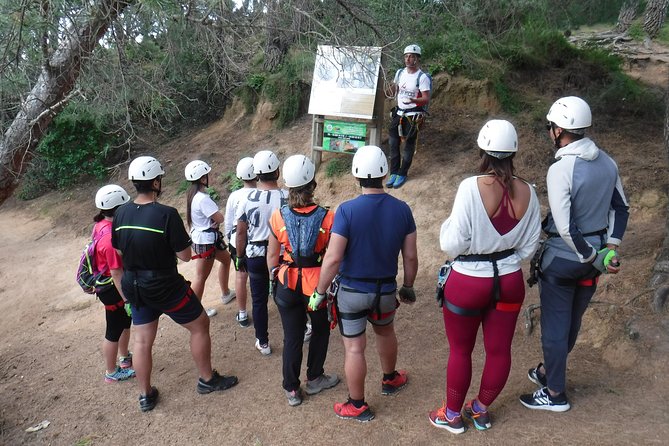
The approach to the route is listed as about two minutes, so you won’t spend a long time hiking just to reach the start. Your guide will provide technical equipment and explain how to use it. Several guides, including Miguel, Matias, and Lorenzo, are named in past accounts, but you should not assume which guide will lead your departure.
That briefing matters, particularly if this is your first via ferrata. Make sure you understand how to attach and move your safety equipment before you set off, and ask questions if an instruction is unclear. English is offered. If you need another language, contact the provider beforehand rather than assuming a particular guide will be available.
The first section: a useful test, not a free pass
The opening section is described as the easier part of the route. It gives you time to get used to the equipment and the movement: clipping along the cable, finding your footing, and keeping a steady pace. The scenery begins early, but your first job is learning the system.
Expect fixed aids such as metal steps, rings, or chains along the route. This is not necessarily a climb where you search for natural handholds in bare rock. Some people who have tried other via ferratas found Cala del Molí more focused on moving along the equipped route than on technical rock climbing. If you are hoping for a pure climbing challenge, that distinction is worth knowing.
The first section also gives you a moment to take stock. How are your arms feeling? Are you comfortable with the exposure and the equipment? The guide may use your progress to advise whether you should continue. That is a sensible safety check, but it can feel discouraging if you believe you are ready for more. Tell the guide what you are experiencing, and ask what specific concerns are behind the recommendation.
The second section: more effort, more reward
The second part is described as more demanding and is where you should expect the bigger test. The route still uses fixed equipment, but you may need more upper-body strength and stamina to keep moving. One person with experience on several North American ferratas considered Cala del Molí a little harder, while other accounts describe it as manageable for people with decent fitness. That is a reminder that difficulty depends on your background, not just the route label.
You don’t need to be an expert climber, but being in reasonable shape helps. People who do regular walking, Pilates, or other general exercise have completed the full route, while some participants have found the second part tiring. If you have a fear of heights, the equipment and the task of moving step by step may help you focus, but they do not make the exposure disappear.
Heat can add to the effort. One participant found the second part hard work on a hot day, so bring water and dress for the conditions, following the provider’s instructions. The mini picnic is a welcome extra, but it is not a substitute for preparing for a few hours outdoors.
Not quite it? Here is another way to spend the day:
- Barcelona: Sagrada Familia Entry Ticket with Audio Guide
★ 4.6 · 105,312 reviews - Barcelona: Park Güell Admission Ticket
★ 4.4 · 76,534 reviews - Barcelona: Casa Batlló Entry with Self-Audioguide Tour
★ 4.7 · 25,359 reviews - Barcelona: 24 or 48-Hour Hop-On Hop-Off Bus Tour
★ 4.4 · 20,872 reviews
Views, photos, and the value of a guide
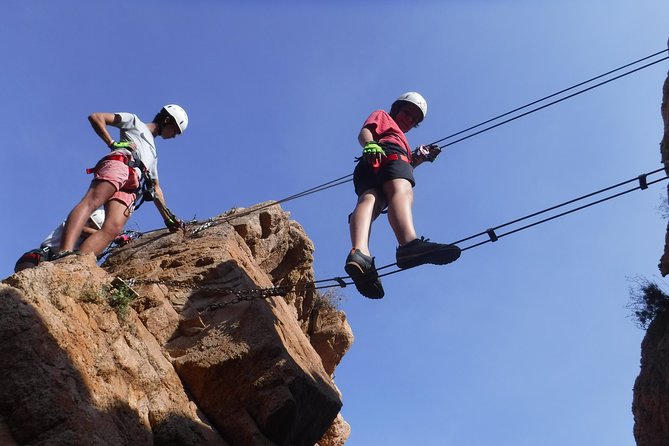
The strongest reason to book is the mix of physical effort and coastal scenery. You are not simply walking to a viewpoint, then walking back. The route puts you close to the cliffs and the water, and the work of moving across the rock makes the views feel earned.
A guide is central to the experience, not just someone who leads the way. You rely on the guide to explain the equipment, keep the group moving safely, and help when someone hesitates or needs a hand. Past accounts praise guides such as Miguel for clear instruction, patience, safety awareness, and taking photos while participants concentrate on the route. Others describe mixed experiences with how individual guides assessed ability or communicated with the group.
That range is worth taking seriously. The advertised group limit is six, which should help keep the outing manageable, but a small group does not guarantee that every guide’s style will suit every person. If you have concerns about continuing, explain them plainly. If you feel a guide is making a decision based on an assumption, ask for the reason and what options are available.
The photographic report is a particularly useful inclusion. Taking your own pictures while managing safety equipment can be awkward, so having the guide capture the outing lets you focus on the climb. Confirm how and when the photos will be shared if that detail matters to you.
What $48.31 gets you
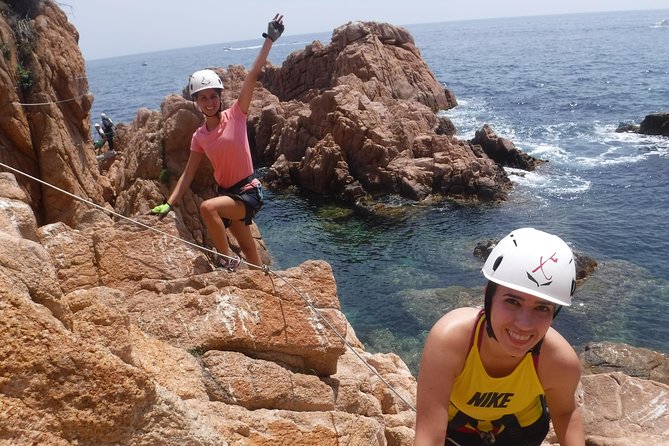
At $48.31 per person, this is a fair value if you want a guided, equipped activity rather than trying to arrange technical gear and instruction separately. The price includes a qualified guide, technical equipment, a photographic report, a mini picnic, and liability and accident insurance. That package helps explain the cost: you are paying for supervision and safety equipment as well as access to the route.
You should also weigh the price against the time involved. The activity lasts around three to four hours, with a very short approach, so most of your outing is spent on the ferrata itself rather than getting to it. The actual pace can vary, though. One participant felt the outing finished in about two hours, while the advertised duration is longer. If you have plans immediately afterward, leave a buffer rather than building your day around the shortest possible estimate.
The tour is booked about 11 days ahead on average. That is a planning clue, not a rule, but booking early is sensible if your dates are fixed. The activity depends on good weather and a minimum number of participants. If the provider cancels for weather or because the minimum is not met, you are offered another date or a full refund. You can cancel for a full refund up to 24 hours before the start time.
Who should go, and who should pause
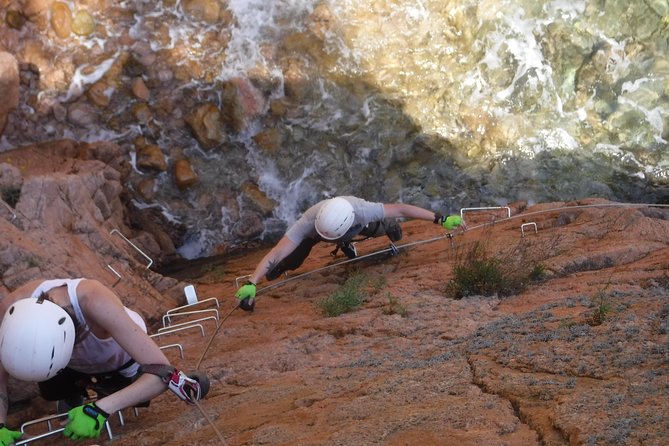
This route suits active adults and families with older children who are comfortable following instructions and trying a physical challenge. It can work for first-timers: the guide provides equipment and instruction, and the first section offers a chance to decide whether to continue. But beginner-friendly does not mean effortless.
The stated minimum height is 1.50 cm, which appears to be an unclear unit. Confirm the intended height requirement with the provider before booking, especially for a child. The activity also calls for a moderate level of fitness. If you know your arms tire quickly, or you are uneasy with heights, consider whether you would be comfortable trying the opening section even if you choose not to finish the route.
For a family or mixed-ability group, talk through the two-section format in advance. It may be possible for some people to stop while others continue, but do not assume how that will work for your group. Ask the provider what happens if a participant opts out midway.
Should you book Cala del Molí?
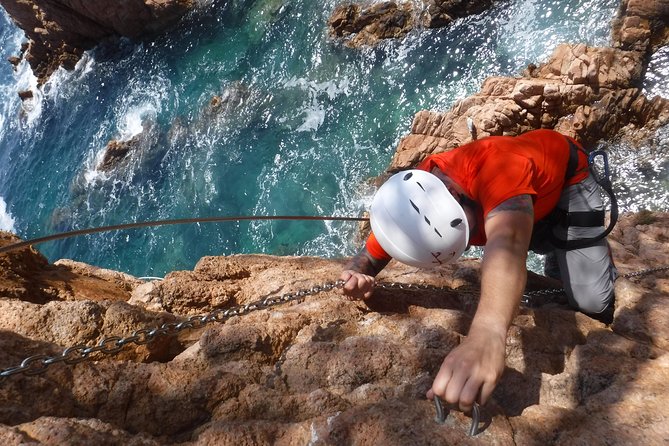
Book it if you want an active way to see the Costa Brava, like the idea of a guided route above the sea, and are prepared for a solid physical effort. The best reasons to go are the distinctive coastal setting, the two-part route, and the included equipment, guide, and photos.
Think twice if you want a gentle sightseeing trip, need a specific guide or language, or are uncomfortable with the possibility that the guide may advise you not to continue. Before booking, confirm the height requirement and meeting address, and leave time in your schedule for the full three to four hours. If those details suit you, Cala del Molí offers a memorable change from the usual beach day.
FAQ
Where does the activity start?
The meeting point is Carretera de Sant Pol, 200, 17220 Sant Feliu de Guíxols, Girona, Spain. The activity ends back at the meeting point.
How long does the via ferrata take?
The activity is listed as approximately three hours, with a stated duration of three to four hours. The time can vary with the group and conditions.
How difficult is the route?
It has an introductory first section and a more demanding second section. A moderate level of fitness is recommended, and the second part may require more arm strength.
Can I stop after the first section?
The route is described as having an easier first section and a more demanding second part. You can choose not to continue, but ask the provider how stopping works for your group.
What is included in the price?
The price includes a qualified guide, technical equipment, a photographic report, a mini picnic, and liability and accident insurance.
What is the maximum group size?
The activity is listed for a maximum of six participants.
Is the activity offered in English?
Yes. English is offered. If you need another language, check availability with the provider before booking.
What height is required?
The stated minimum height is 1.50 cm, but that unit is unclear. Contact the provider to confirm the intended requirement before booking.
What happens if bad weather cancels the activity?
If the activity is canceled because of poor weather, you are offered a different date or a full refund.
Reviewed this season in Barcelona
- Two Hour Luxury Sailing Experience with Open Bar★ 4.8 · 13 reviews
- Sunset from a private Classic Yacht★ 5.0 · 3 reviews
- Stories, Legends and Mysteries of Barcelona★ 5.0 · 14 reviews
- Skip-the-Line Barcelona & Montserrat Tour with Pick-up★ 4.6 · 47 reviews
- Skip-the-line Montjuïc Castle Tour with a Cable Car Ride★ 4.7 · 7 reviews
- Barcelona: Old Town & Seafront Segway Tour★ 4.9 · 145 reviews
- Shore Excursion of Barcelona★ 4.9 · 4 reviews
- Barcelona Highlights Half Day Small Group Tour★ 5.0 · 4 reviews
Costa Brava Tours, compared.
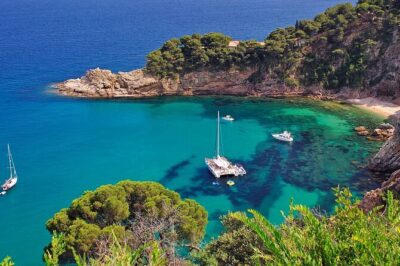
Girona & Costa Brava Small-Group Tour with Pickup from Barcelona
Read our review →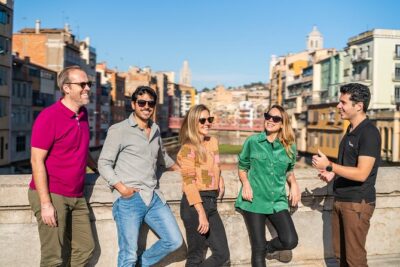
Montserrat, Girona & Costa Brava Guided Day Trip from Barcelona
Read our review →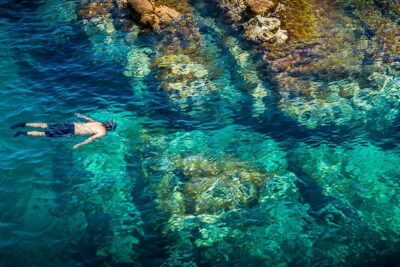
Barcelona Costa Brava Kayak, Snorkel & Cliff Jump Day Tour
Read our review →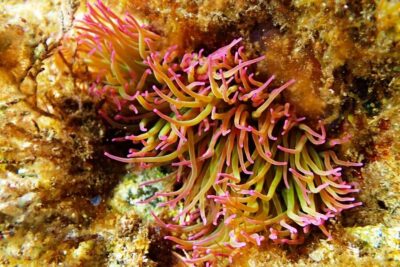
Costa Brava Kayak, Snorkel & Cliff Jump & Lunch
Read our review →

Dali Museum, House & Cadaques Small Group Tour from Barcelona
Read our review →
Browse the lists this tour appears in