
Reviewed · BARCELONA TOURS
Barcelona: Olympic and Sport Museum – Sports Experience
The museum’s best trick is letting you test your own sporting form alongside its history displays. Race a simulator inspired by Carl Lewis or Usain Bolt, compare swimming techniques associated with Mark Spitz and Michael Phelps, or try the cycling and weightlifting stations.
I like the mix of hands-on challenges and Olympic history, which gives families more to do than simply read exhibit labels. I also like the range: Barcelona’s 1992 Games sit alongside displays on other host cities, non-Olympic sports and Paralympic competition.
One consideration: if you are coming mainly for Barcelona 1992, that material occupies only part of the museum. The museum covers a broad range of sport, and the interactive equipment may be a bigger draw than a deep look at the city’s Olympic legacy.
- Race and test your form: Interactive stations let you try sports-inspired challenges, including sprinting, swimming, cycling and weightlifting.
- See Olympic host-city history: A permanent exhibition traces the Games across host cities, with Barcelona 1992 memorabilia included.
- Find more than Olympic sport: Displays cover football, Formula 1, skiing, tennis, canoeing and other sports.
- Look for the Paralympic section: Learn about the Paralympic Games through examples such as blind football and wheelchair basketball.
- Expect a Spanish-language host: The host or greeter speaks Spanish, and no named guide is specified.
- Pay a modest entry price: Admission is listed at $7 per person, with the ticket valid for one day.
Start with the sport, not just the history
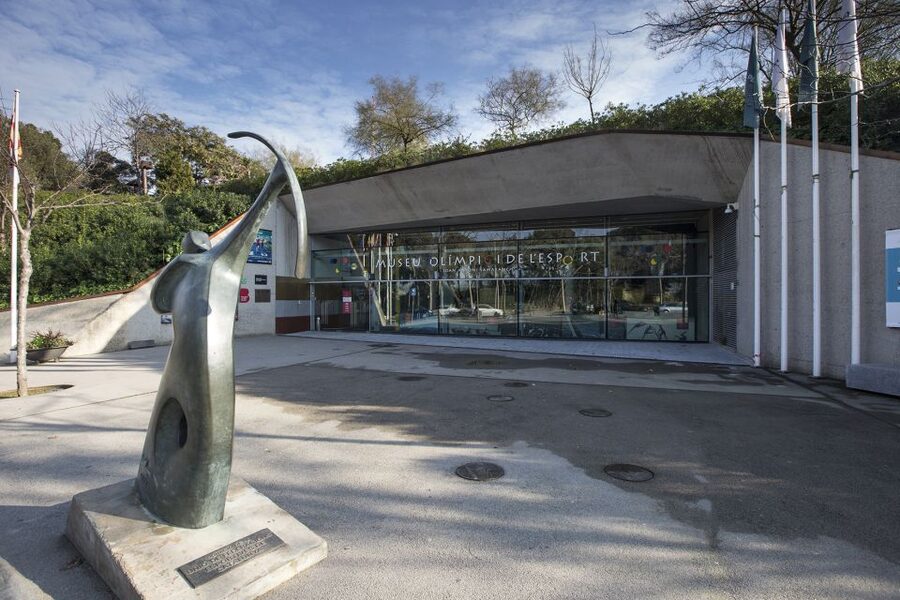
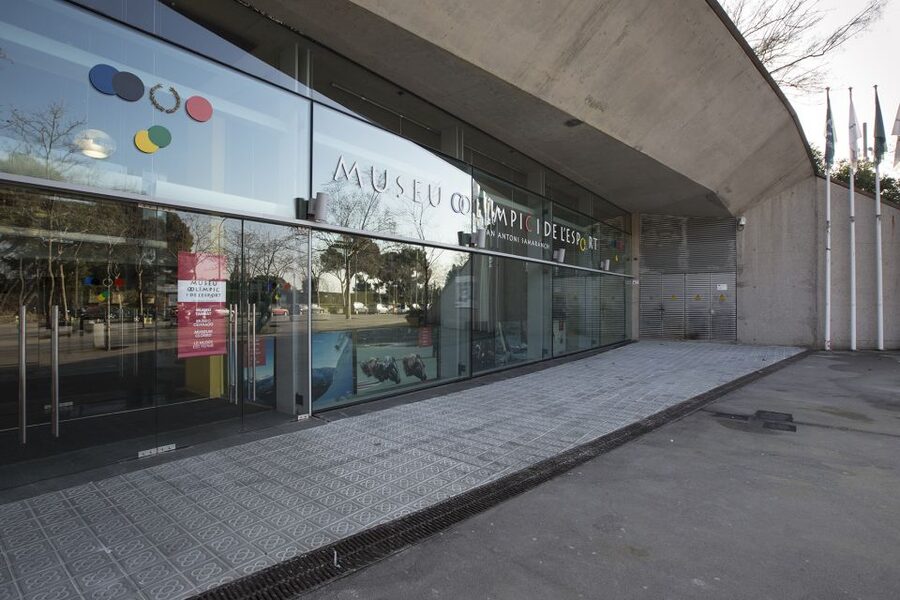
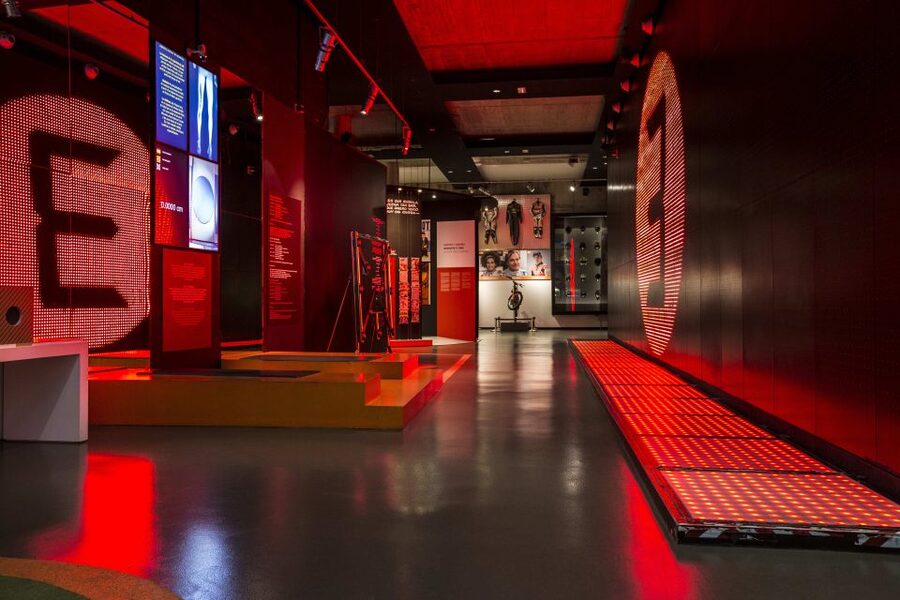
The Olympic and Sport Museum sits on Montjuïc hill, where Barcelona’s Olympic story has a natural setting. But this is not only a museum of the 1992 Games. It takes in Olympic and non-Olympic sports, athletic equipment, notable competitors and hands-on challenges, so you can move between history and play rather than spend your whole visit reading panels.
That wider scope is useful if your group has mixed interests. One person can pause over historic Olympic material while another tries a simulator or looks at football, Formula 1, skiing, cycling, canoeing or tennis displays. The museum is designed for families, but it need not be a children-only stop: its mix of memorabilia and interactive exhibits gives adults plenty to look at, too.
The experience is self-directed based on the information available. A Spanish-speaking host or greeter is listed, but there is no named guide or promise of a guided tour. If you want a detailed explanation in another language, plan to explore the exhibits at your own pace and check what interpretation is available when you arrive.
Try the simulators before the displays
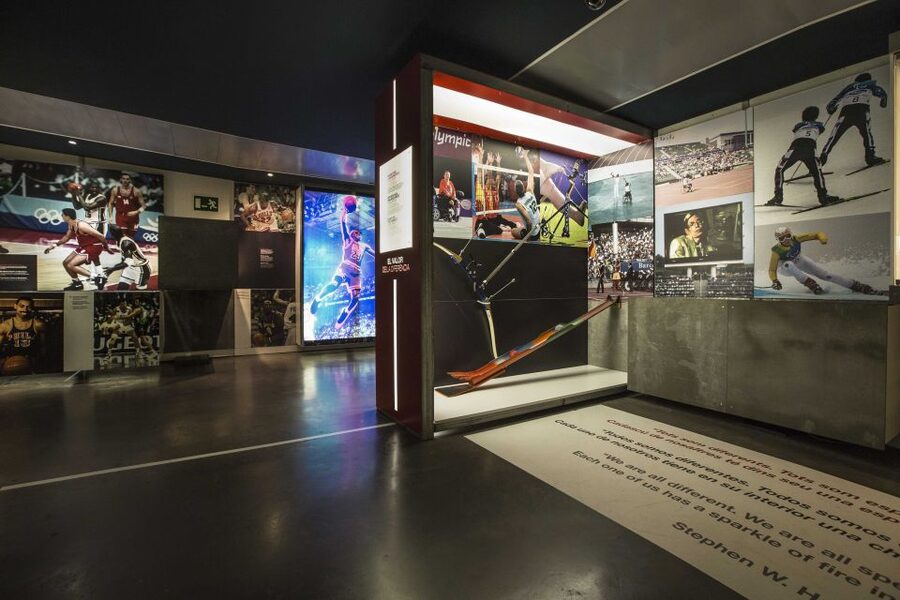
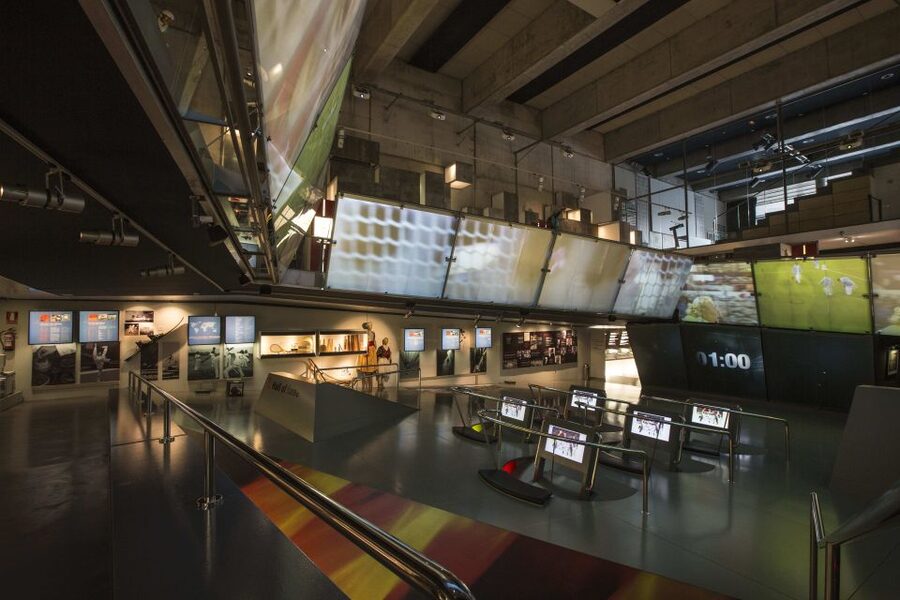
The interactive stations are the museum’s most distinctive feature. You can race against a virtual version of Carl Lewis or Usain Bolt, test your movement against swimming techniques associated with Mark Spitz or Michael Phelps, work on cycling skills, or get a feel for weightlifting through a simulator.
Think of these as a playful way to connect with sport, not a formal training session. The activities put you in the position of trying a movement or comparing your performance, which can make athletic achievements feel less abstract. For children, that hands-on element offers a change of pace from looking at objects; for adults, it is a chance to see how a museum can turn a sports subject into something physical.
The range of challenges also helps make the visit flexible. You can linger at the activities that interest you and skip those that do not. The available details do not specify how many simulators are operating at any given time, so it is best not to plan around one particular machine.
More museum visits in Barcelona:
- Barcelona: FC Barcelona Museum “Barça Immersive Tour” Ticket
★ 4.4 · 10,944 reviews - Barcelona: Park Güell and Gaudí House Museum Entry Ticket
★ 4.5 · 6,326 reviews - Barcelona: Picasso Museum Skip-the-Line Guided Tour
★ 4.5 · 3,355 reviews
Trace the Games from Barcelona to other host cities
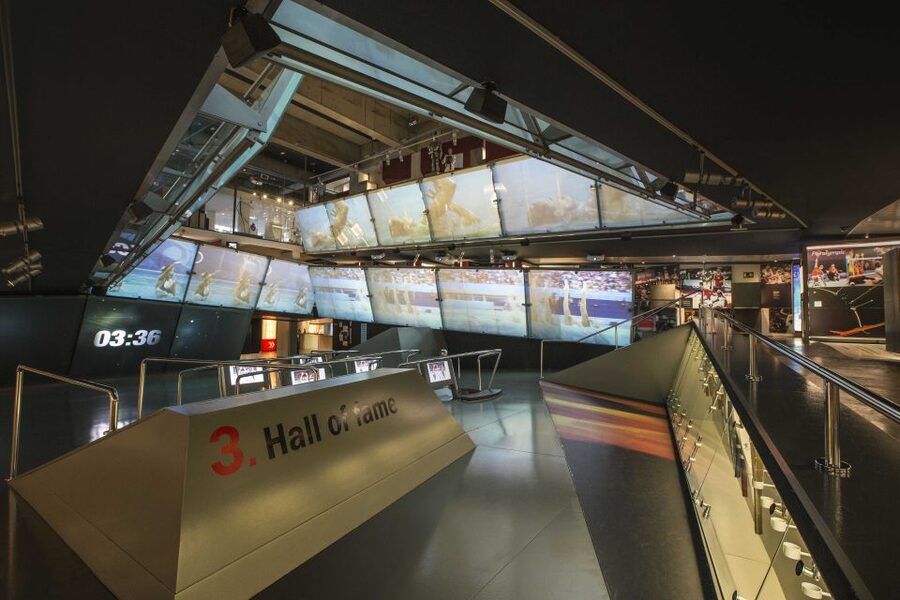
A permanent exhibition looks at the different cities that have hosted the Olympic Games, including Barcelona in 1992 and London in 2012. Its memorabilia from Barcelona ’92 offers a local thread through a much larger international story. You can use the host-city displays to think about how the Games move from place to place and how each edition becomes part of a city’s public memory.
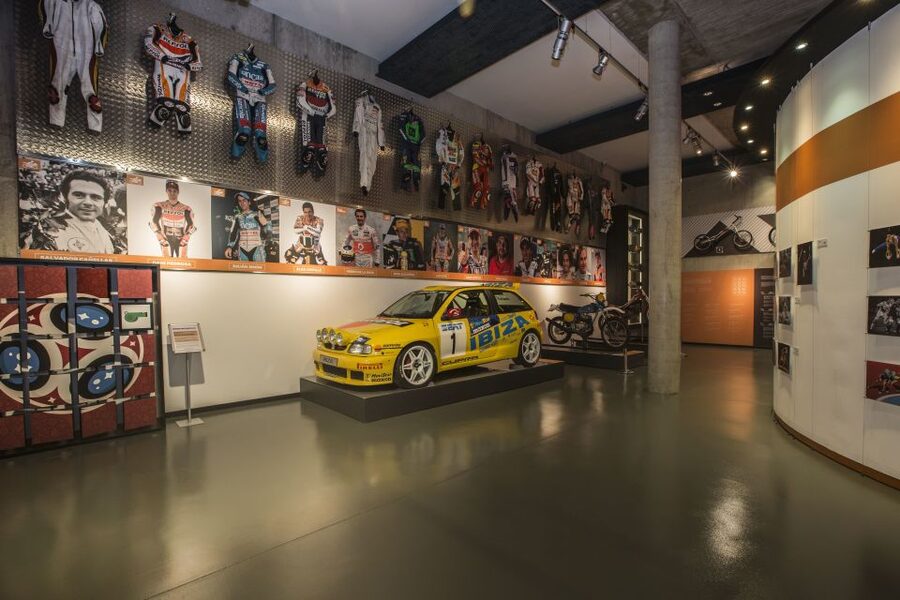
The museum also presents trophies, milestones and objects linked to major athletes and sporting moments in its Idols space. That section broadens the visit beyond the formal history of the Olympics. You may find yourself comparing the objects and achievements on display, or noticing how the museum frames athletes as both competitors and public figures.
Be realistic about the amount of Barcelona ’92 material. The focus spans many sports and Games, and one visitor found the local Olympic area smaller than expected. If you are hoping for a museum devoted almost entirely to Barcelona’s Olympic venues and legacy, this is a broader sports museum rather than a narrowly focused 1992 archive.
Look for athletes’ objects and unusual comparisons
Sports memorabilia can make familiar names feel more tangible. The museum’s Idols area includes items tied to athletes and important moments, while a shoe comparison feature lets you put your footwear alongside shoes associated with Michael Jordan, Pau Gasol and Roberto Dueñas. It is a simple idea, but it gives you a direct, physical scale for athletes whose performances are usually remembered through statistics or screens.
The Samaranch collection is another named feature. The available information does not detail its contents, so treat it as one area to explore rather than assume a particular display. You may also be able to watch a live sports match in the museum, though no schedule or sport is specified. That makes it a possible bonus, not something to build your visit around.
These objects work best when you take time to notice what they add beyond a name or trophy. The museum’s subject is not only who won, but also the equipment, milestones and stories that make sport recognizable across generations.
Give the Paralympic section proper time
The Paralympic section covers the history of the Paralympic Games and points to sports such as football for blind and visually impaired players and wheelchair basketball. It matters because it gives the museum’s story a wider view of athletic skill and competition, rather than treating sport as a single set of events or abilities.
If you are visiting with children, this section can prompt useful questions about how different sports are played and adapted. For adults, it adds context to the museum’s overall account of sporting achievement. The provided details do not describe the displays in depth, so expect an introduction to the subject, not necessarily a full standalone museum devoted to Paralympic history.
More tours and experiences in Barcelona:
- Barcelona: Sagrada Familia Entry Ticket with Audio Guide
★ 4.6 · 105,312 reviews - Barcelona: Park Güell Admission Ticket
★ 4.4 · 76,534 reviews - Barcelona: Casa Batlló Entry with Self-Audioguide Tour
★ 4.7 · 25,359 reviews - Barcelona: 24 or 48-Hour Hop-On Hop-Off Bus Tour
★ 4.4 · 20,872 reviews
Make room for the temporary exhibitions
Temporary exhibitions are included with admission. The listed program includes a photography display from the College of Physical Activity and Sports Professionals of Catalonia, built around images of the values and emotions connected with physical activity and sport. The contest began in 1999 and has gathered images across 26 editions.
A second listed exhibition concerns the Barcelona Olympic Foundation’s International Art on Paper Award, an event organized since 2010. These shows extend the museum’s subject beyond competition records and equipment, using photography and art to look at sport from a different angle.
Exhibition dates matter. The photography show is listed through January 25, 2026, while the art award exhibition is listed through November 9, 2025. Since temporary displays change, check what is currently open before you go, especially if either show is a main reason for your visit.
What the visit may feel like, and how long to allow
The ticket is valid for one day, but the supplied details do not give a set visit length. That leaves you free to adjust the pace: families can spend longer at the interactive stations, while sports fans may want more time with the memorabilia and host-city displays. I would treat the day validity as flexibility, not a signal that you need to spend a full day inside.
The museum can be quiet at times. One visitor described a particularly calm visit, which made it easier to explore, but crowd levels can vary. A quieter room can also make the interactive areas more pleasant, especially if you are visiting with children who want a turn at the equipment.
A nearby stadium may be open when you visit, offering a chance for photos and views, but access is not part of the museum ticket information and should not be assumed. Check separately if seeing the stadium is important to your plans.
Is $7 good value?
At $7 per person, the admission price is modest for a museum that combines permanent displays, sports memorabilia, interactive activities and temporary exhibitions. Its value depends on what you want. If you are curious about several sports, enjoy hands-on exhibits or are visiting with children, the combination gives you more than a single history display.
The price may feel less compelling if your main goal is a detailed account of Barcelona 1992. The museum does include memorabilia from those Games, but its subject is much wider, and that local material is not the whole experience. In that case, think of the museum as a general sports stop with a Barcelona Olympic thread, not a complete study of the city’s Olympic past.
The overall rating is 4.4 out of 5 from 65 reviews. That is a useful sign of broad appeal, but the practical details matter more: the museum offers activities for different ages, a broad range of sports and a low entry price, while its Barcelona-specific coverage is comparatively limited.
Who should make time for it
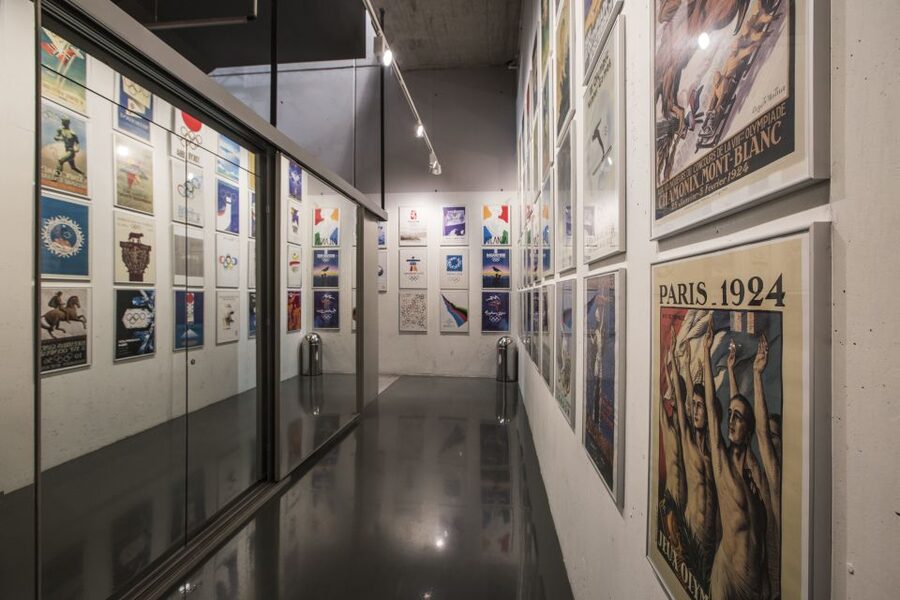
I would put this museum on the list for families, sports fans and anyone looking for an indoor activity on Montjuïc that mixes exhibits with participation. It is especially suitable if your group includes people who do not all want the same kind of museum visit. One can test a simulator while another studies the Olympic displays.
It also suits visitors who enjoy seeing the objects behind sporting legends: trophies, milestones, athlete-related items and the shoe comparison feature. The Paralympic section adds an important perspective, and the range of non-Olympic sports helps keep the subject from feeling too narrow.
It may be a lower priority if you have little interest in sport or expect a detailed account of Barcelona’s 1992 Games alone. The museum’s appeal is its variety, not a single exhaustive story. Children may enjoy the games, but unaccompanied minors are not allowed, so an adult needs to come along.
Should you book the Olympic and Sport Museum?
Book it if you want a fairly priced, flexible museum visit with sports challenges, Olympic history and exhibits for different ages. The strongest reasons to go are the interactive stations, the wide spread of sports and the mix of memorabilia with Paralympic and host-city material.
Skip it, or set modest expectations, if you want a focused Barcelona ’92 museum or a guided tour in a language other than Spanish. Check the temporary exhibition dates and any separate stadium access before you plan around them. At $7, it is an easy addition for sports-minded visitors, especially when the whole group is happy to explore at its own pace.
FAQ
Where is the Olympic and Sport Museum?
It is located on Montjuïc hill in Barcelona, Catalonia, Spain.
How much does admission cost?
The listed price is $7 per person.
How long is the ticket valid?
The ticket is valid for one day. A specific visit duration is not provided.
What language does the host or greeter speak?
The host or greeter speaks Spanish.
Is the museum wheelchair accessible?
Yes, the activity is listed as wheelchair accessible.
Can children visit the museum?
The museum is described as an interactive space for all the family. Unaccompanied minors are not allowed, so minors must not visit alone.
What sports are covered?
The museum includes Olympic and non-Olympic sports, including football, Formula 1, skiing, cycling, canoeing and tennis.
Can I try sports activities inside?
Yes. Interactive simulators include challenges related to sprinting, swimming, cycling and weightlifting.
Is Barcelona’s 1992 Olympic Games represented?
Yes. A permanent exhibition covers Olympic host cities and includes memorabilia from Barcelona ’92.
Are temporary exhibitions included in the ticket?
Yes, temporary exhibitions are included. Their dates can vary, so check which displays are open when you plan to visit.
Reviewed this season in Barcelona
- Two Hour Luxury Sailing Experience with Open Bar★ 4.8 · 13 reviews
- Sunset from a private Classic Yacht★ 5.0 · 3 reviews
- Stories, Legends and Mysteries of Barcelona★ 5.0 · 14 reviews
- Skip-the-Line Barcelona & Montserrat Tour with Pick-up★ 4.6 · 47 reviews
- Skip-the-line Montjuïc Castle Tour with a Cable Car Ride★ 4.7 · 7 reviews
- Shore Excursion of Barcelona★ 4.9 · 4 reviews
- Barcelona Highlights Half Day Small Group Tour★ 5.0 · 4 reviews
- Barcelona: Old Town & Seafront Segway Tour★ 4.9 · 145 reviews
Barcelona Tours, compared.
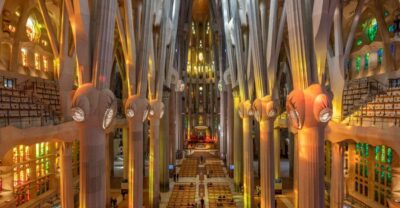
Sagrada Familia Entry Ticket with Audio Guide
Read our review →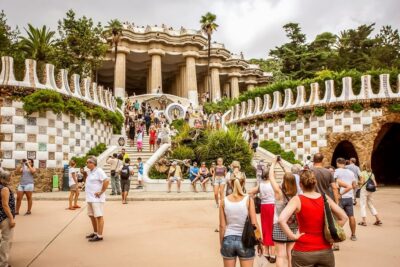
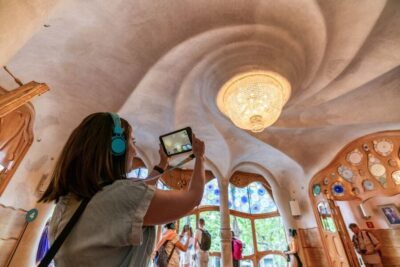

Park Guell Guided Tour with Skip The Line Entry
Read our review →
Barcelona in 1 Day: Sagrada Familia, Park Guell,Old Town & Pickup
Read our review →
Sagrada Familia Skip-the-Line Entry Ticket & Tour
Read our review →Browse the lists this tour appears in