
Reviewed · BARCELONA
Amposta: MónNatura Delta de l’Ebre Entrance Ticket
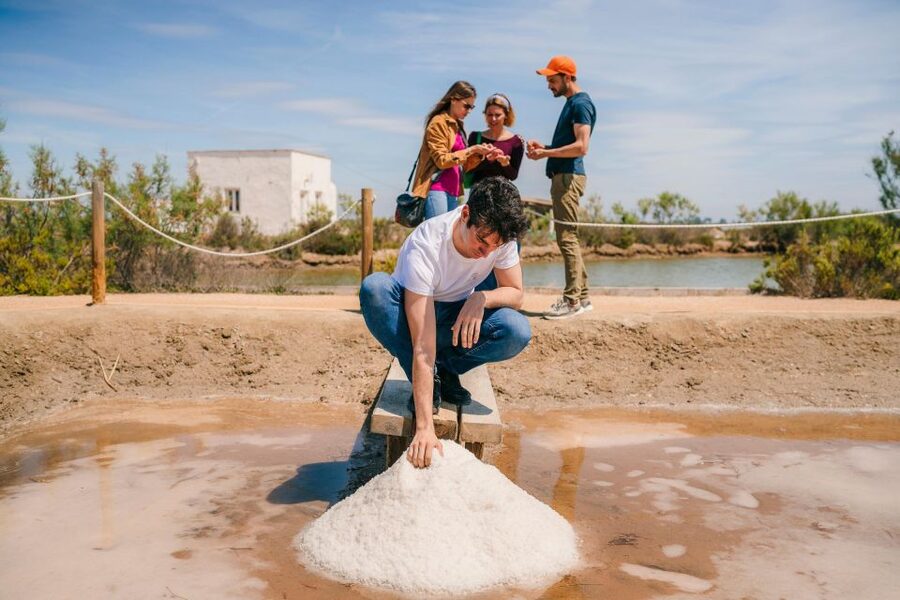
The best part of MónNatura is how it brings the Delta’s working past and wetland wildlife together. You can see the old saltworks recreated at full scale, then look out across the lagoon for flamingos, herons and other birds.
I like the bird observatory with telescopes and the chance to learn traditional fishing methods before seeing the shallow waters from a punt. Both give you more than a walk through marshland: they help explain how people and wildlife share this unusual place.
One consideration: this is an entrance ticket, not a guided tour, and bird sightings depend on what is present when you visit. The site is wheelchair accessible, but comfortable shoes are still a good idea for exploring.
What to know before you go
- A full-scale salt pan recreation shows how salt production shaped life around the Delta.
- Telescopes at the bird observatory help you watch flamingos, terns, waders, herons and other lagoon birds.
- Traditional fishing gear on display includes casting, dredging, eel and shrimp nets.
- A punt puts you close to the shallow water, using the Delta’s traditional form of transport.
- One ticket covers a day of exploration at MónNatura, near Amposta, for $11 per person.
A wetland visit with more than bird-watching
MónNatura Delta de l’Ebre sits beside the Tancada lagoon, within one of western Europe’s important wetland areas. The visit focuses on three connected parts of Delta life: salt, birds and traditional fishing.
That combination is what makes the site useful for more than a quick wildlife stop. You see the natural setting, but also learn why people built salt pans here and how they worked the shallow water. The result is a compact introduction to the Delta’s ecology and local traditions.
The ticket is valid for one day, so you can set your own pace rather than follow a timed, guided route. Starting times vary, so check availability before you go. The information provided does not name a guide, and the experience is best understood as a self-guided visit with exhibits and activities to explore.
More tickets in Barcelona:
- Barcelona: Sagrada Familia Entry Ticket with Audio Guide
★ 4.6 · 105,312 reviews - Barcelona: Park Güell Admission Ticket
★ 4.4 · 76,534 reviews - Barcelona Aquarium: Entry Ticket
★ 4.3 · 13,335 reviews
Start with how the Delta took shape
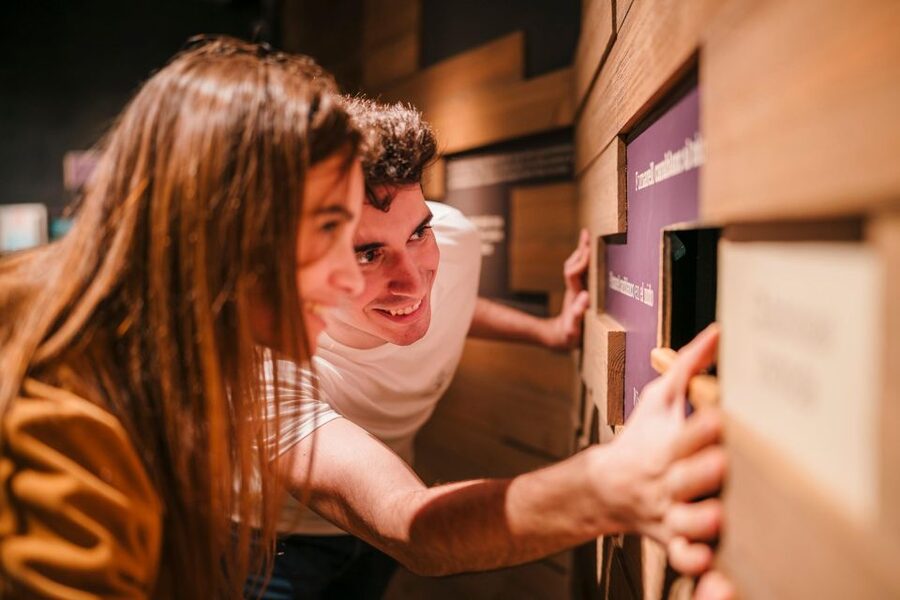
An audiovisual presentation explains how the Ebre Delta formed over centuries and how its character changes through a typical year. This is a worthwhile first stop because the Delta is not simply a stretch of water and reeds. Its lagoons, salt pans and shorelines reflect both natural processes and human use.
The presentation also helps put the rest of the visit in context. Once you know how freshwater and seawater meet here, the site’s emphasis on both kinds of wildlife makes more sense. You can connect what you learn indoors with the birds, vegetation and fishing equipment outside.
The presentation covers seasonal change, but the available details do not specify its length or how often it runs. If you are planning around a particular starting time, check the day’s availability rather than assuming a fixed schedule.
See the saltworks at full scale
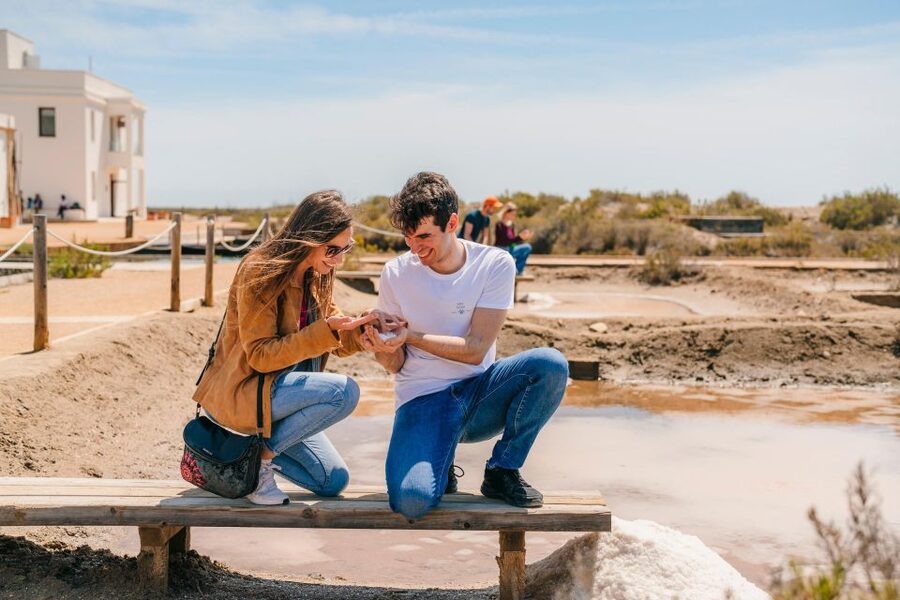
One of the most distinctive parts of MónNatura is its full-scale recreation of a Delta salt pan, the only one of its kind open to the public in the area. Instead of seeing salt production reduced to a picture or a brief label, you can get a sense of the physical setting where the work took place.
The old Tancada saltworks also help explain why salt is one of the site’s three main themes. The salt pans are not just a backdrop for bird-watching. They are part of the story of how people made a living in a place shaped by water.
Take time to notice the saline vegetation around the old Sant Antoni salt pans. The plants here have adapted to salty conditions, giving you another way to read the environment. The combination of saltworks, plants and water makes this section more rewarding if you are interested in how a habitat works, not only in spotting animals.
Watch birds from the observatory
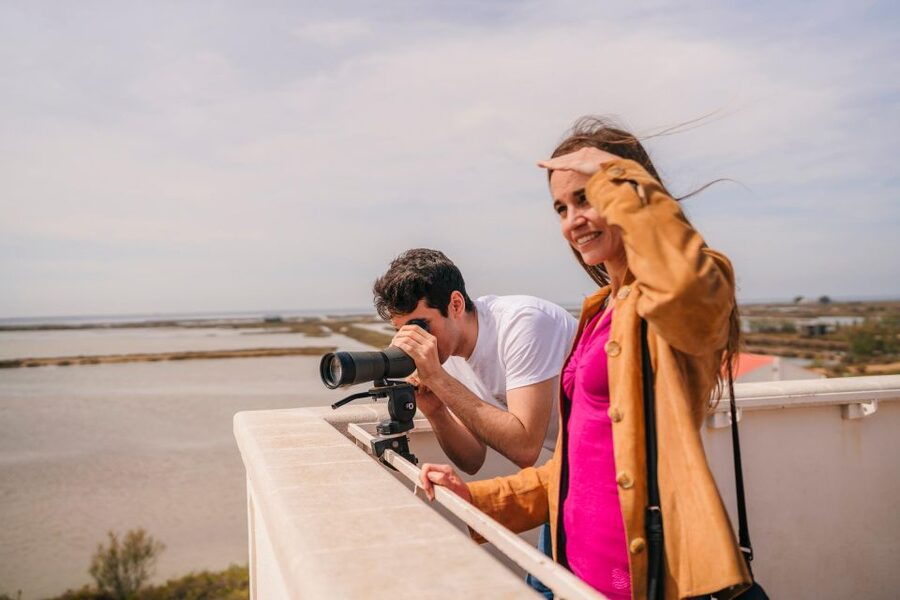
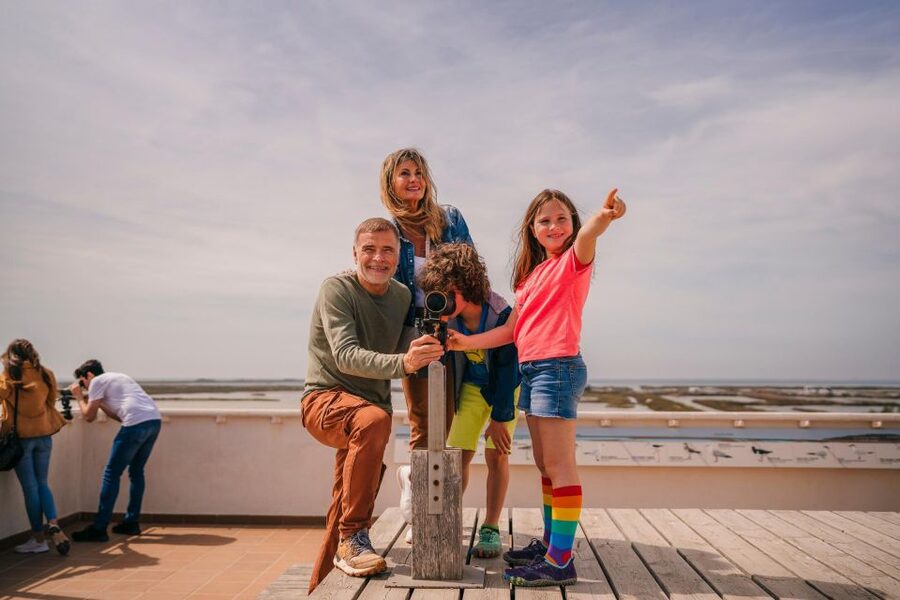
The partially enclosed bird observatory offers a sheltered place to look across the Alfacada lagoon. Telescopes are provided, which is useful because many birds are easier to appreciate at a distance than from the edge of the water.
Look for flamingos, terns, waders, herons and other water birds, including avocets and gulls around the old Sant Antoni salt pans. The Delta provides habitat for birds that live here as well as those that rest in the lagoon, so the viewing experience is tied to the natural rhythms of the wetland.
It is sensible to approach the observatory with patience. Wildlife watching is not a stage show, and the birds you see can depend on the conditions at the time of your visit. The telescopes make careful observation easier, but they cannot guarantee a particular sighting.
The viewpoint is one of the visit’s strongest features. A pleasant walk through the salt marshes and broad views from a lookout give you a sense of the scale and openness of the area. If you are mainly after close-up animal encounters, keep expectations measured; this is a chance to watch wildlife in its habitat, not a zoo-style display.
Not quite it? Here is another way to spend the day:
- Barcelona: Casa Batlló Entry with Self-Audioguide Tour
★ 4.7 · 25,359 reviews - Barcelona: 24 or 48-Hour Hop-On Hop-Off Bus Tour
★ 4.4 · 20,872 reviews - Barcelona: Park Guell Guided Tour with Skip The Line Entry
★ 4.7 · 17,563 reviews - Barcelona in 1 Day: Sagrada Familia, Park Guell,Old Town & Pickup
★ 5.0 · 13,541 reviews
Learn the fishing methods, then try a punt
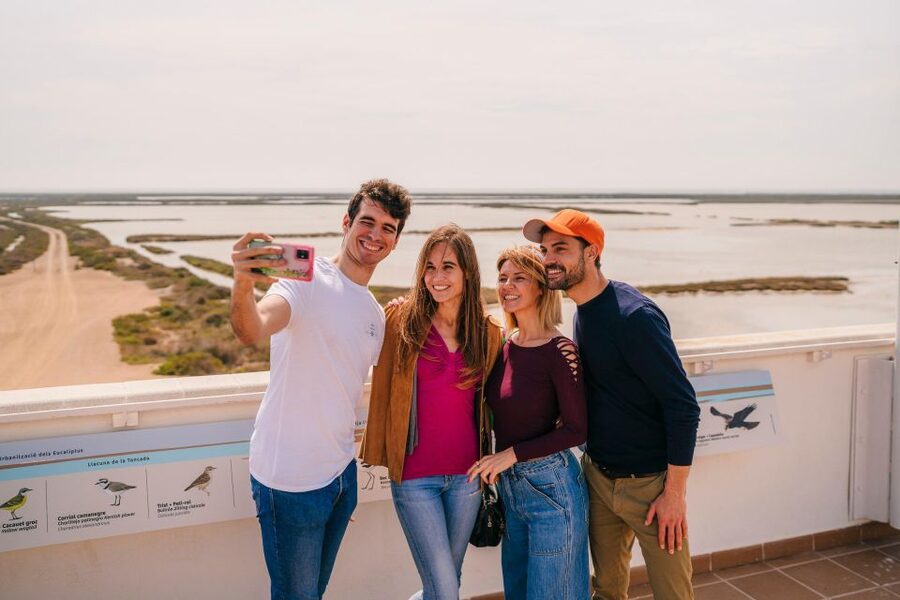
Near the landing stage, you can see traditional Delta fishing equipment, including casting nets, dredging nets, and nets used for eels and shrimp. These tools make the site’s fishing theme tangible. They also show how local methods were adapted to shallow water and the kinds of fish and shellfish found here.
You can also board a punt, the traditional means of moving across the Delta’s shallow waters. The chance to try one adds a hands-on element to a visit that otherwise involves walking, watching and learning from displays. It offers a simple but memorable way to understand why this kind of craft suited the local waterways.
The available information does not specify how long the punt activity lasts or whether it operates at set times. If it is a priority for you, check details on arrival. The activity is described as a small boat experience, so treat it as a short taste of traditional transport rather than a long excursion.
How to pace your visit
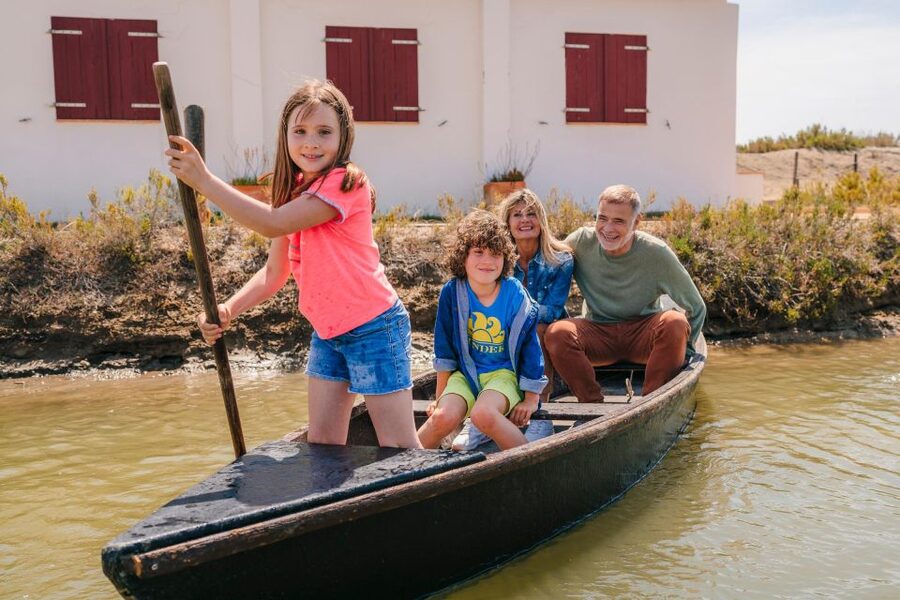
Because the ticket is valid for one day and the visit is not described as a guided tour, you can move through the site at your own speed. A sensible approach is to begin with the audiovisual presentation, then explore the saltworks and fishing displays before spending time at the observatory and landing stage.
That order gives you context before you look out over the lagoons. But there is no need to rush through the site in a fixed sequence. If bird-watching is your main interest, spend longer at the observatory; if you are visiting with children or anyone who likes hands-on activities, make time for the punt.
Wear comfortable shoes, as the experience includes a walk through the salt marshes. The site is wheelchair accessible, which is helpful for visitors who need step-free access, though the supplied details do not describe the exact surfaces or route distances. If you have specific access needs, confirm those details with the venue before your visit.
Is $11 good value?
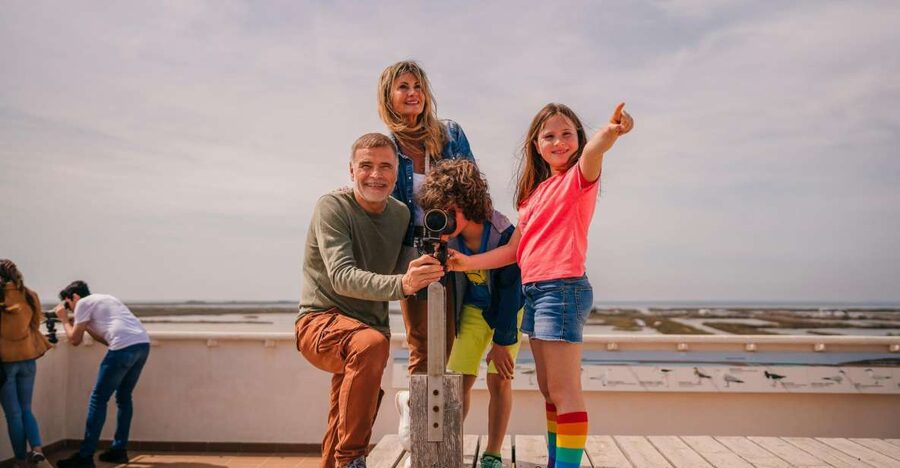
At $11 per person, this is a reasonably priced outing if you want a structured introduction to the Delta rather than a simple stop at a viewpoint. The admission combines the salt-pan recreation, bird observatory, fishing displays, audiovisual material and access to the punt activity.
The value comes from the range of things you can do at one site. You get a natural setting, local history and practical demonstrations of how people worked in the shallow waters. The telescopes add something useful to the bird-watching, while the punt gives the visit a hands-on feature that a standard walking route would not.
It is less compelling if you expect a long boat trip, a guided naturalist walk or guaranteed sightings of specific birds. Those are not included in the information for this ticket. Think of it as an accessible, self-paced wetland visit with several ways to understand the Delta, rather than a full-day excursion with transport and a guide.
Who will enjoy MónNatura most?
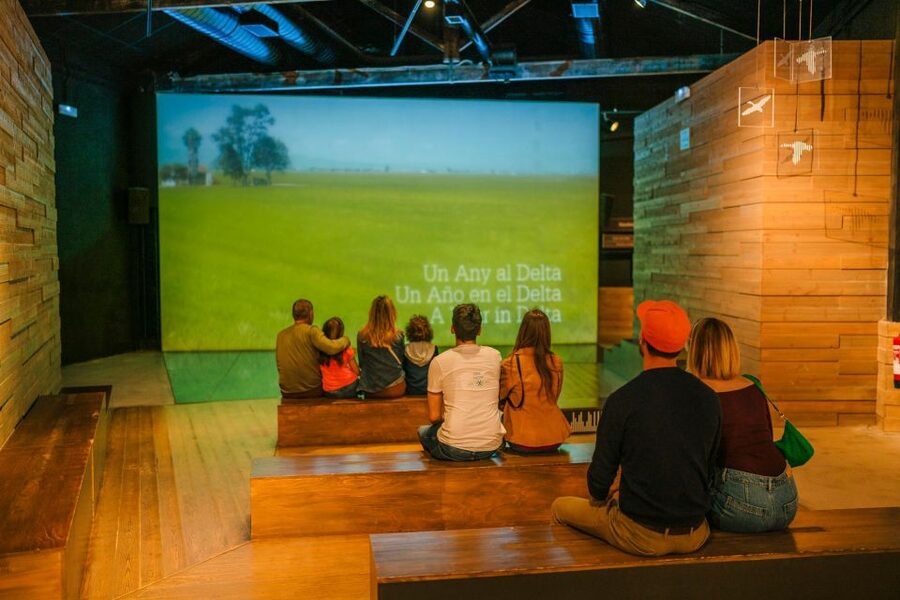
This experience suits you if you are curious about wetlands, birds or traditional ways of life around the Ebre Delta. It also works well for families and mixed-interest groups: one person can focus on the birds, another on the saltworks, and someone else can look forward to trying the punt.
Bird-watchers will appreciate having telescopes available, although serious birding plans should allow for the unpredictability of wildlife. History-minded visitors will get more from the salt pans and fishing displays than from a short stop at the viewpoint. If you are simply looking for a quiet outdoor walk, the marsh views alone may be enough to make the visit worthwhile.
It may not be the right choice if you need a fully guided experience or expect a large number of close animal encounters. The appeal is in learning how the setting works and taking time to observe it, not in a packed schedule of attractions.
Should you book this experience?
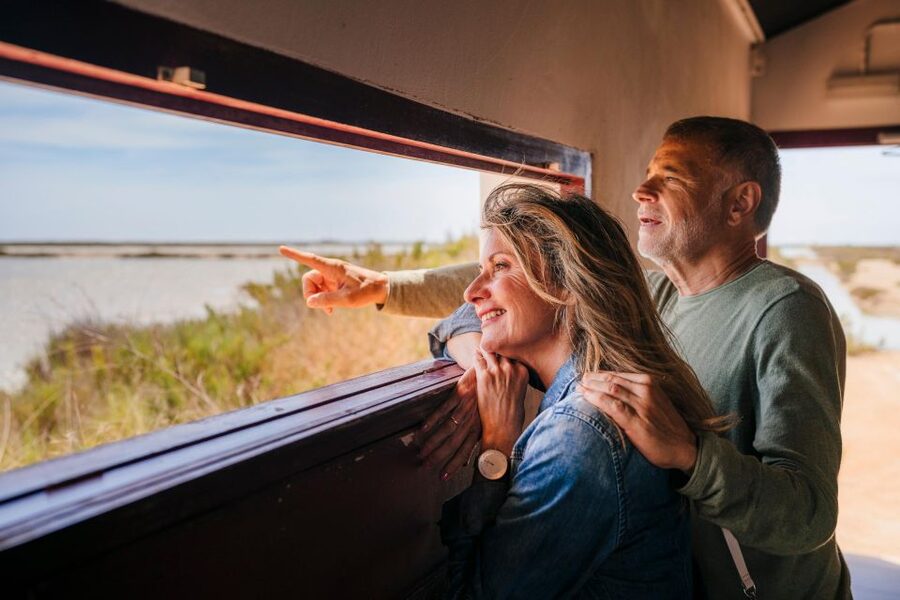
Book MónNatura if you want an affordable, self-guided introduction to the Ebre Delta that combines wetland views with local salt and fishing traditions. The full-scale salt-pan recreation, bird observatory and chance to try a punt give the visit several distinct reasons to stop.
Skip it if your priority is a long boat journey or a guaranteed wildlife spectacle. For a relaxed outing near Amposta, though, it offers a thoughtful way to see how water, birds and human work have shaped the Delta. Check the available starting times, bring comfortable shoes, and leave yourself room to linger at the viewpoint.
FAQ
Where is MónNatura Delta de l’Ebre?
It is at Polígon 78, parcel·la 7, Carretera del Poblenou a les Salines, near Amposta in Catalonia, Spain.
How much does the entrance ticket cost?
The listed price is $11 per person.
How long is the ticket valid?
The ticket is valid for one day. Check availability for starting times.
What can I see at the bird observatory?
The partially enclosed observatory looks over the Alfacada lagoon. Telescopes are available to view flamingos, terns, waders, herons and other birds.
Is the site wheelchair accessible?
Yes, MónNatura Delta de l’Ebre is wheelchair accessible.
What should I bring?
Comfortable shoes are recommended for exploring the site.
Reviewed this season in Barcelona
- Two Hour Luxury Sailing Experience with Open Bar★ 4.8 · 13 reviews
- Sunset from a private Classic Yacht★ 5.0 · 3 reviews
- Stories, Legends and Mysteries of Barcelona★ 5.0 · 14 reviews
- Skip-the-Line Barcelona & Montserrat Tour with Pick-up★ 4.6 · 47 reviews
- Skip-the-line Montjuïc Castle Tour with a Cable Car Ride★ 4.7 · 7 reviews
- Barcelona: Old Town & Seafront Segway Tour★ 4.9 · 145 reviews
- Shore Excursion of Barcelona★ 4.9 · 4 reviews
- Barcelona Highlights Half Day Small Group Tour★ 5.0 · 4 reviews