
Reviewed · BARCELONA GAUDÍ TOURS
Barcelona: Art Nouveau & Gaudí Tour
Eixample’s ornate façades are more than pretty stonework: they tell the story of a city bursting beyond its old walls and a newly wealthy class eager to make its mark. I like that this private, 3.5-hour walk ties architecture to Barcelona’s political past, and that it gives you time to look closely rather than race from one landmark to the next.
I also like the emphasis on a guide’s storytelling. Johannes, also called Hannes in one recent account, is praised for linking architecture, local figures, and political events in a clear, engaging way. One consideration: this is mostly an exterior tour, so you should not expect museum visits or access to the interiors of famous buildings.
- Eixample grew after the city walls came down, opening space between the crowded old city and Gràcia.
- The Golden Square’s palaces reflect new wealth, built by industrialists, aristocrats, and Catalans who returned with money from South America.
- Catalan Modernism was a cultural movement, not just an architectural fashion, with roots in literature and visual art as well as buildings.
- Expect façades, not a string of interior visits. Entry fees are not included, and most of the tour stays on streets and squares.
- The group is private for up to four people, with a U-Bahn ticket included in the $212 group price.
- The walk runs in sun, rain, or wind, so dress for the forecast and bring water and sun protection in summer.
Eixample, a district built out of frustration
The name Eixample means city expansion, and the neighborhood’s story begins with a simple physical change: Barcelona’s walls came down in 1854. For generations, the city’s growing population had been crowded into the old town. Beyond the walls lay room to build, including the stretch between the old city and the smaller town of Gràcia.
That expansion offered more than extra space. Barcelona had long faced restrictions from the central government in Madrid, and local people had limited power to shape their future. The tour traces the consequences of the War of the Spanish Succession and the events of 1714, then connects those political pressures to the city’s later growth. You get a useful frame for the buildings ahead: Eixample’s grand homes were constructed during a period when the city was looking for a new direction.
The plan for the district is also part of the story. Ildefons Cerdà imagined a better, more orderly city, and the tour uses his urban vision to explain why Eixample looks and feels different from the tight streets of the old center. The contrast is worth noticing as you walk: Barcelona did not simply add more streets. It built a new chapter beside the old one.
The Golden Square and its new money
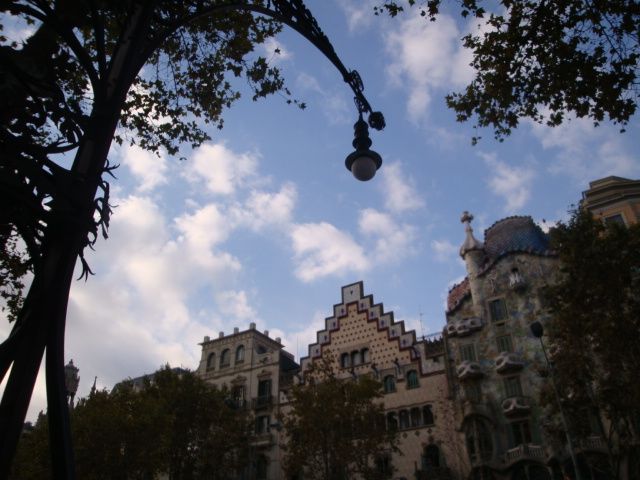
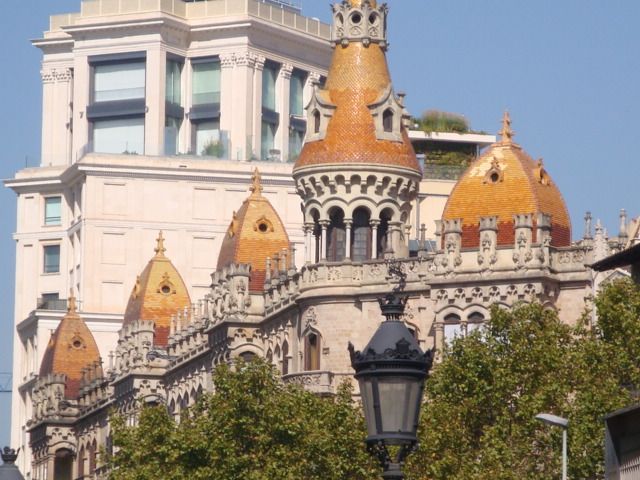
Eixample’s Golden Square became a choice address for industrialists, aristocrats, and Catalans who had made fortunes in South America. These families commissioned city palaces from leading architects of the day, including Lluís Domènech i Montaner, Josep Puig i Cadafalch, and Antoni Gaudí.
Their homes were a way to display wealth, but the architecture also expressed a wider cultural shift. Catalan Modernism began around 1885 as a movement across literature and visual art, as well as design and building. It had cousins in German Art Nouveau, the Viennese Secession, and the English Modern Style, yet it developed its own Catalan character.
I like that context because it helps you read the buildings rather than just admire their decoration. Stone, ceramic, and glass become part of a public statement about identity, ambition, and artistic freedom. A guide can point out details you might pass without noticing, then explain why they matter.
The tour also places this architectural boom beside Barcelona’s World’s Fair and the city’s efforts to clean up and present itself anew. That combination of civic ambition and private wealth gives the district its particular energy. Eixample’s palaces were built for individual families, but they also helped announce that Barcelona was a modern city with its own cultural voice.
More Gaudí tours in Barcelona:
- Barcelona: Park Güell and Gaudí House Museum Entry Ticket
★ 4.5 · 6,326 reviews - Barcelona: Gaudi’s Casa Vicens Skip-the-Line Entrance Ticket
★ 4.7 · 3,449 reviews - Sagrada Familia & Gaudi Tour Private or Small Group with Tickets
★ 4.5 · 1,188 reviews
Reading Modernism in the façades
The walk is designed for looking from the street. You’ll admire monuments from outside, with museum visits and interior explorations generally left out, apart from a couple of exceptions. That keeps the pace relaxed and lets the guide use the street itself as a classroom, though it is not the right format if you want to spend time inside famous buildings.
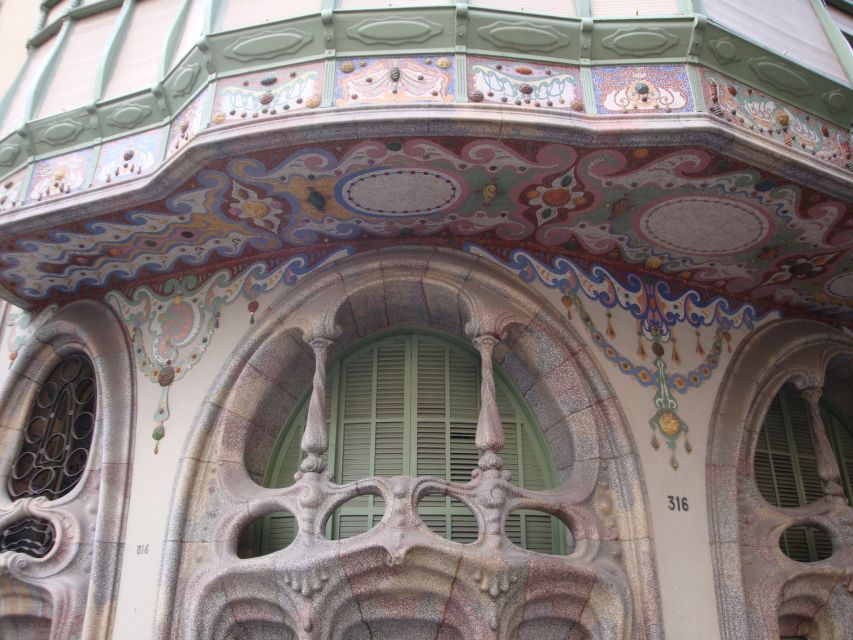
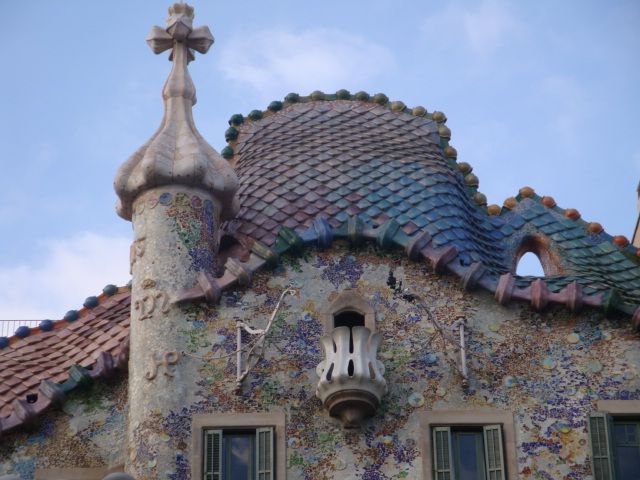
Passeig de Gràcia is one of the tour’s central threads. Here, the decorative technique called trencadís uses broken ceramic pieces to make patterned surfaces. The tour links the fragments with luck and draws attention to how architects turned ordinary materials into expressive ornament. Take your time: a quick glance can miss the small shapes and shifting colors that give a façade its character.
The so-called Block of Discord brings several major architectural names into close competition. The tour frames the buildings as three stars sharing the same block, a useful way to see how Modernist architects could answer the same urban setting with distinct designs. Rather than treating the street as a row of isolated attractions, you can compare the buildings side by side.
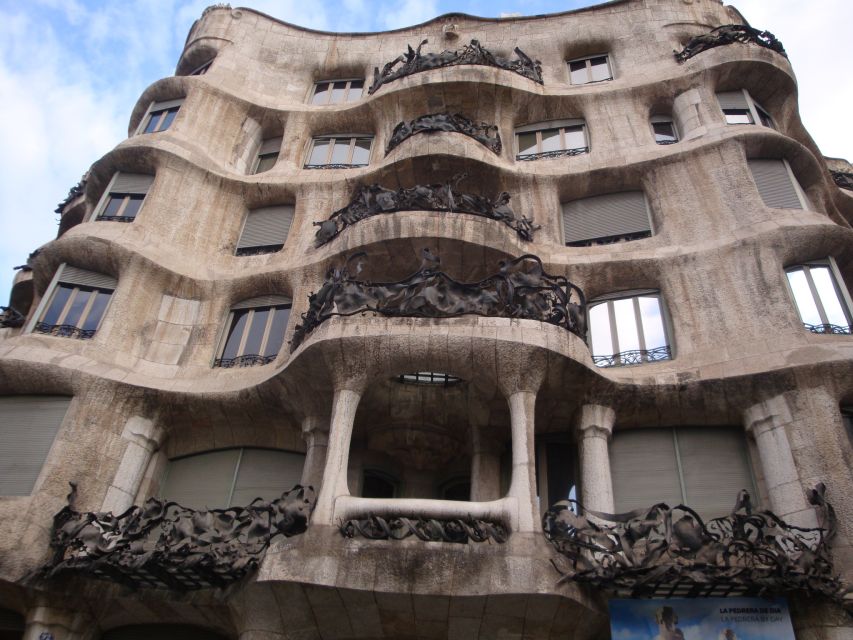
Gaudí’s Casa Milà, often called La Pedrera, is another key subject. Its name means quarry, a reminder of the unusual impression its stone exterior makes. The tour also touches on the practical puzzles of designing a grand home: one topic is a house with many rooms but no place for a piano. These details make the architecture feel less like a collection of abstract styles and more like a set of real decisions made for real clients.
Gaudí, with a few surprises
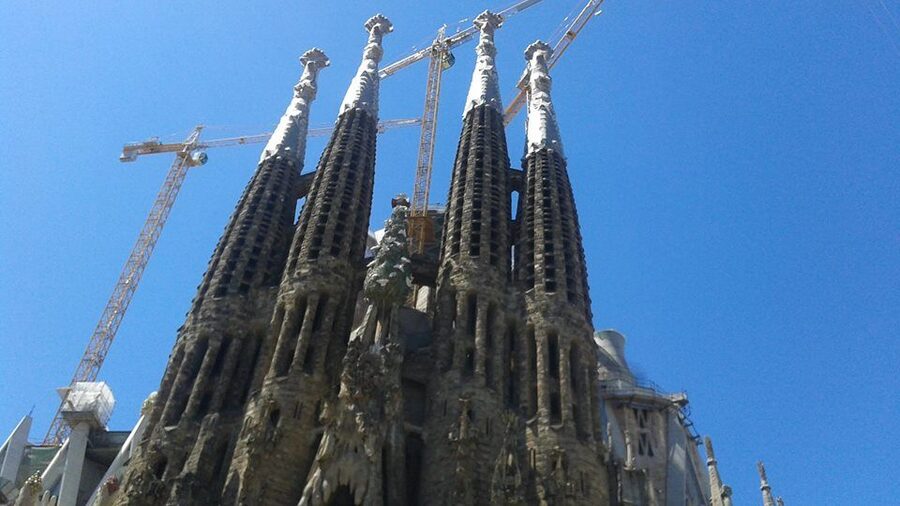
Gaudí is a major focus, but the tour’s scope reaches beyond the best-known façades. You’ll hear about his work and ideas, including the use of a string-based method to solve design problems, and the story of the Sagrada Família’s lost plans. These subjects help explain the thinking behind his work without requiring an interior visit.
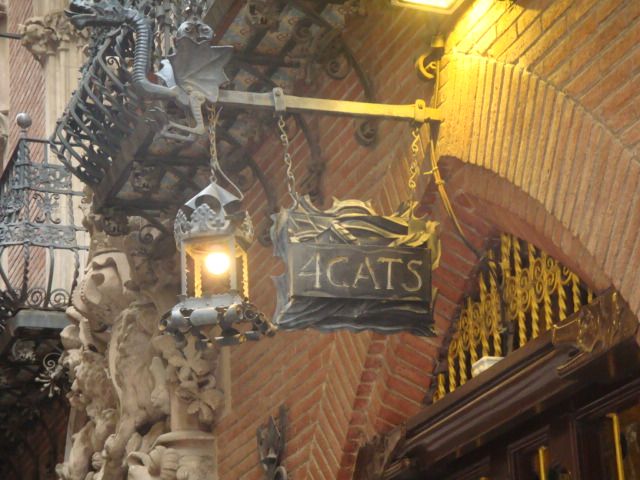
The route’s themes also include Gaudí and New York, a dragon’s den with relics, and a festive image described as carnival with confetti. The range is part of the appeal: the guide can move from a building’s surface to the odd story or design challenge attached to it. It also means the tour is not just a greatest-hits march through familiar names.
There are lighter detours, too, including Dalí and the Chupa-Chups empire. These topics broaden the story of Catalan creativity and business beyond the main architectural figures. If you prefer a tightly focused course on Gaudí alone, this may feel wide-ranging; if you enjoy connections between art, politics, and everyday life, that variety should suit you.
The tour also covers the Catalan Renaissance, the industrial barons and bourgeoisie, and the Week of Tragedy. That history is a reminder that the district’s beauty sits within a city shaped by conflict and change. The guide’s role matters here: a strong storyteller can make a long run of exterior buildings feel like a connected account rather than a list of dates.
What the guide adds to the walk
Recent accounts single out Johannes, with one person referring to him as Hannes. The most consistent praise is not simply that he knows the subject, but that he connects political events, local people, and architectural styles without making the walk feel like a lecture. One account describes a guide who had the details at hand and kept the day engaging; another notes that the three hours passed quickly.
That kind of teaching is especially valuable on an exterior tour. You are not entering rooms with explanatory displays, so the guide’s words provide much of the context. The strongest moments are likely to come when an architectural detail prompts a story about the family, city, or era behind it.
The tour is offered in German and English. If you care about nuanced historical explanations, confirm that the language you want is available for your chosen time. The activity is private for your group, which makes it easier to ask questions and linger for photographs than it would be in a large shared group.
More tours and experiences in Barcelona:
- Barcelona: Sagrada Familia Entry Ticket with Audio Guide
★ 4.6 · 105,312 reviews - Barcelona: Park Güell Admission Ticket
★ 4.4 · 76,534 reviews - Barcelona: Casa Batlló Entry with Self-Audioguide Tour
★ 4.7 · 25,359 reviews - Barcelona: 24 or 48-Hour Hop-On Hop-Off Bus Tour
★ 4.4 · 20,872 reviews
Pace, price, and practical trade-offs
The walk lasts 3.5 hours and is described as relaxed, with time for photos and bathroom breaks. That is a substantial stretch on foot, but the unhurried pace suits a district where details reward a closer look. A U-Bahn ticket is included, though the main format remains a walking tour.
The price is $212 per private group of up to four. With four people, that works out to about $53 each; for two, it is $106 each, and solo it is the full group price. The value improves as your party fills the four places, especially if you want a dedicated guide and a deeper account than a quick orientation walk can provide.
Entry fees are not included, and the tour is not built around paid interiors. That can be a plus if you want to spend your time outdoors and understand the district’s street architecture. It is a drawback if your main goal is to go inside palaces or monuments. You may want to plan separate visits for any interiors that matter most to you.
The walk runs in sun, rain, and wind, even during strong showers. In summer, bring a hat, sunglasses, sunscreen, and water. In winter, a jacket or light coat should be enough according to the tour guidance. The activity is marked wheelchair accessible, though you may still want to confirm any specific access needs before booking.
The meeting point is Plaza de Urquinaona, in front of Theater Borrás. The group can cancel up to 24 hours ahead for a full refund, and the reserve-now, pay-later option leaves payment until later. Those terms offer flexibility, but the bigger planning question is whether an exterior-focused architectural walk matches the way you like to see a city.
Who should book this Eixample walk
I’d choose this tour if you want Barcelona’s Modernist buildings explained in context, especially if you enjoy history as much as architecture. It should work well for couples, families, or friends of up to four who want the guide’s attention and are happy to spend several hours outdoors.
It is also a good fit if you’ve already seen the city’s headline sights and want to understand how Eixample came to be. The connections between the wall’s removal, Cerdà’s plan, Catalan culture, and the wealthy families’ building projects give you a more useful picture than façade-spotting alone.
I’d look elsewhere if you want a short walk, a comprehensive interior tour, or a low-cost group outing. But if a thoughtful guide and street-level detail are what you value, this private walk offers a strong way to see the Golden Square with fresh eyes. Book it for the stories as much as the buildings, and leave time afterward for any interiors you decide you want to explore.
FAQ
How long is the tour?
The tour lasts 3.5 hours.
What languages are available?
The live guide is available in German and English.
Is this a private tour?
Yes. It is a private group tour for up to four people.
What is the price?
The price is $212 per group of up to four.
Where does the tour meet?
Meet at Plaza de Urquinaona, in front of Theater Borrás.
Are entry fees included?
No. Entry fees are not included, and most of the tour focuses on exteriors.
Is a public transport ticket included?
Yes. A U-Bahn ticket is included.
Is the walk wheelchair accessible?
The activity is listed as wheelchair accessible.
Does the tour run in bad weather?
Yes. It runs in sun, rain, and wind, including strong showers.
What should I bring?
In summer, bring a hat, sunglasses, sunscreen, and a small bottle of water. In winter, a jacket or thin coat should suffice.
Reviewed this season in Barcelona
- Two Hour Luxury Sailing Experience with Open Bar★ 4.8 · 13 reviews
- Sunset from a private Classic Yacht★ 5.0 · 3 reviews
- Stories, Legends and Mysteries of Barcelona★ 5.0 · 14 reviews
- Skip-the-Line Barcelona & Montserrat Tour with Pick-up★ 4.6 · 47 reviews
- Skip-the-line Montjuïc Castle Tour with a Cable Car Ride★ 4.7 · 7 reviews
- Barcelona: Old Town & Seafront Segway Tour★ 4.9 · 145 reviews
- Shore Excursion of Barcelona★ 4.9 · 4 reviews
- Barcelona Highlights Half Day Small Group Tour★ 5.0 · 4 reviews
Barcelona Gaudí Tours, compared.
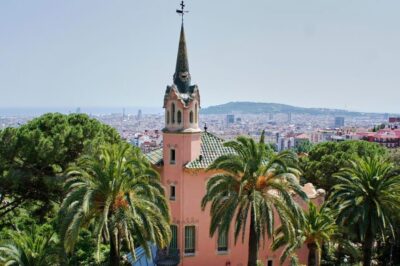
Park Güell and Gaudí House Museum Entry Ticket
Read our review →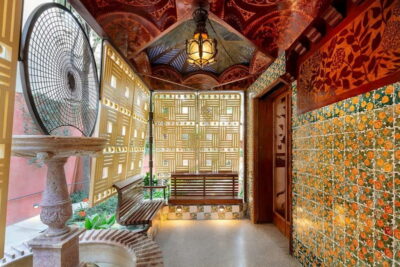
Gaudi’s Casa Vicens Skip-the-Line Entrance Ticket
Read our review →
Sagrada Familia & Gaudi Tour Private or Small Group with Tickets
Read our review →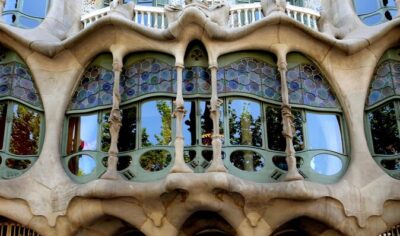
Complete Gaudi Tour: Casa Batllo, Park Guell & Sagrada Familia
Read our review →
Park Güell: Guided Tour with Optional Gaudí Experience Entry
Read our review →
Barcelona e-Bike Tour: Gaudí & Old Town Small Group
Read our review →
Ramblas, Old Town, Gothic and Gaudi Architecture Walking Tour
Read our review →
Discover Gaudí, Sagrada Familia, and Park Güell
Read our review →Browse the lists this tour appears in