
Reviewed · GOTHIC QUARTER TOURS
Barcelona: Gothic Quarter Walking Tour
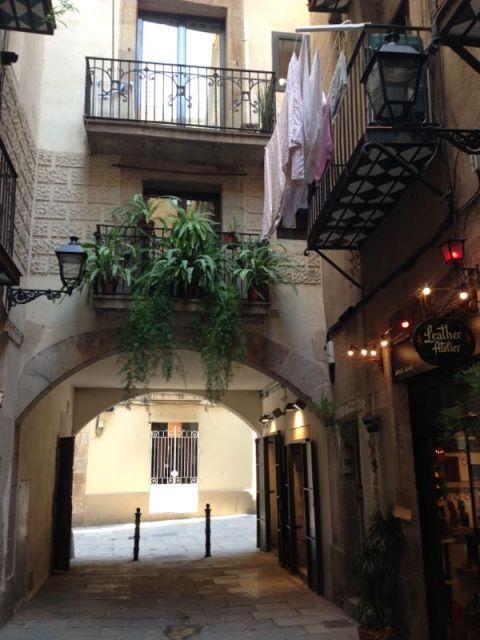
The best part of this walk is how it treats the old city as a place where people still live, not a collection of stones behind glass. Starting at Plaça de Catalunya, you follow narrow lanes and small squares through the Gothic Quarter and Ribera, with stories reaching from Roman Barcelona to the early 18th century.
I like two things in particular: the route links major events to ordinary streets, and the guide folds in useful Barcelona tips alongside the history. One past guide, Johannes, also brought photographs to help explain what had changed. The main consideration is that this is a German-language tour, and you see most monuments from outside.
It is also a substantial walk, lasting about three and a half hours, with no regular interior visits or entry fees included. I’d choose it if you want context, local stories and time to stop for photos, rather than a quick highlights loop or access to museum collections.
What makes this walk worth your time
- Roman beginnings: Hear how flowing water served a Roman settlement and how the city grew from that early base.
- Medieval power struggles: Stories cover the Crown of Aragon, civic government, royal succession and the forces that shaped Barcelona.
- A route into the Ribera: The walk continues beyond the Gothic Quarter to the area around Passeig del Born and Santa Maria del Mar.
- History in the street plan: Learn about the Jewish Quarter, the Inquisition and how some buildings were altered or even moved.
- Practical Barcelona advice: The tour can include tips on restaurants, shopping and local specialties, useful for the days that follow.
- A relaxed pace: The guide allows time for photos and bathroom breaks, and the walk runs in sun, rain and wind.
Start at Plaça de Catalunya, then step into the old city
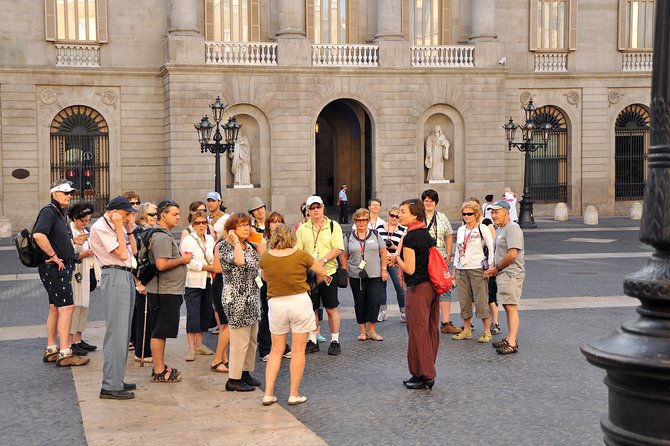
Meet in front of the Hotel Olivia Plaza at Plaça de Catalunya, 19. It’s a central starting point, making the tour a handy first-day introduction if you want to understand how Barcelona’s old quarters fit together before exploring on your own.
From this broad city square, the route turns toward the older streets. The contrast matters: Barcelona is not a preserved medieval set. It is a port city that keeps changing, and the tour’s central idea is to read those changes in its streets, buildings and public spaces.
Expect a guided walk rather than a string of formal monument visits. The advertised duration is three and a half hours, while the included city tour is described as three hours and the walking portion as about three hours and fifteen minutes. I’d keep the full half-day clear rather than plan a tight appointment immediately afterward.
More Gothic Quarter walks in Barcelona:
- Barcelona all included: Sagrada, Park Güell, Montjuic & Gothic
★ 5.0 · 2,169 reviews - Barcelona Gothic Quarter Tapas & Taverns Food & Wine Tour
★ 5.0 · 1,470 reviews - Barcelona: Gothic Quarter Ghosts and Legends Walking Tour
★ 4.7 · 1,443 reviews
Roman Barcelona and the stones beneath the present
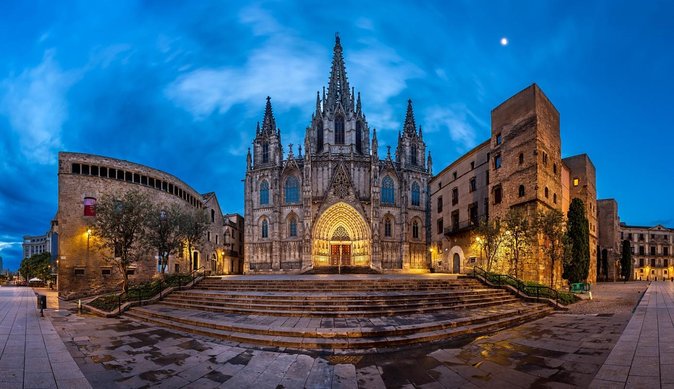
The historical story begins in Roman times, with a look at the settlement’s water supply and its role as a place of recovery. That opening gives you a useful scale for the walk: Barcelona’s old center is not simply medieval, even if Gothic façades dominate what you see today.
The guide then carries the story forward through the growth of the city and the making of a religious center. The advertised themes include a holy city facing competition and the emergence of Barcelona as part of a wider political and maritime power. These are not just dates to memorize. They help explain why the city’s later buildings and public spaces became symbols of influence.
The route emphasizes what can be read from the street. You should not expect to go inside every landmark, but exterior views can be more revealing when a guide points out how a building relates to the neighborhood around it.
Medieval Barcelona: civic power, crown and conflict
A large share of the walk’s appeal is its attention to the politics of medieval Barcelona. Topics include the Crown of Aragon, the city’s rise from a small settlement to a maritime force, and the role of civic assemblies and public advice. The story of King Martin’s death marks a turning point in local self-government.
The tour also tackles the less polished parts of the past. Its themes include a violent episode in the birth of a nation, the Inquisition and the city’s changing relationship with power. This makes the experience more useful than a walk that only points out attractive façades. You get a sense of how Barcelona’s identity was argued over and shaped, often at a cost.
Several of the route’s stories sound dramatic by design: a dragon connected with Barcelona, a French soldier’s bayonet, a brotherhood with a spooky reputation, and a king who feared an encounter with Fernando. They give the guide material to bring the streets to life, though the experience is still a walking tour, not a staged performance.
The Jewish Quarter and the traces of a lost community
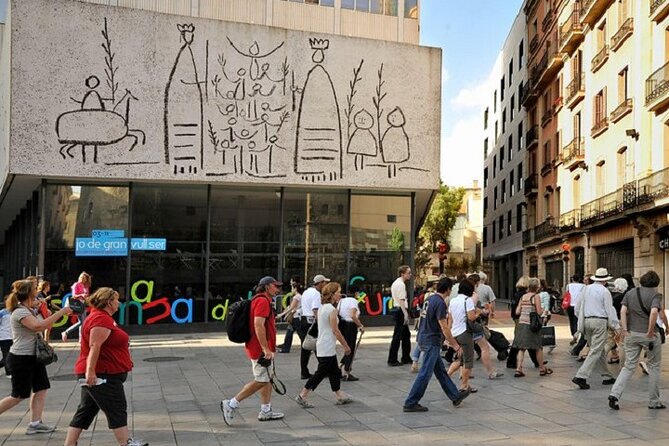
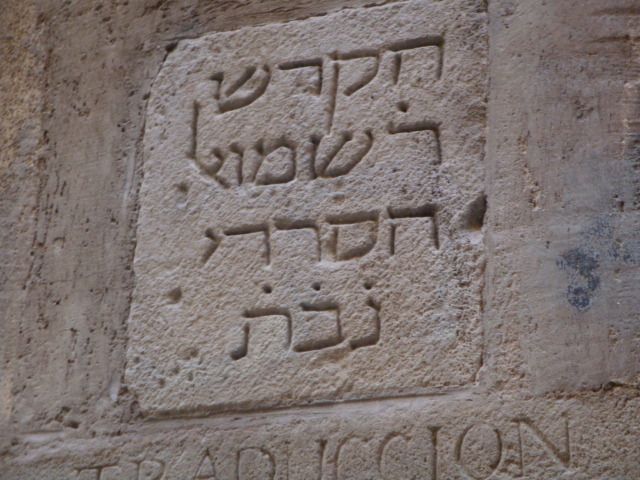
The Jewish Quarter is one of the most important subjects on the route. The tour looks at what remains of a community that once formed part of the city’s life, and how later persecution changed that world.
This is a valuable part of the experience because the old center can otherwise look like a handsome backdrop with no visible human cost. The guide connects place to memory, helping you consider whose history is preserved and whose traces are harder to see. Since the walk focuses on streets and squares, the emphasis is on context rather than an extended museum visit.
The program also includes the Inquisition and the so-called hound kings. The subject matter is dark at points, and the guide’s role is to put it in context rather than turn it into a collection of lurid tales. If you prefer a light, purely architectural stroll, this may be more history than you’re after.
More walking tours in Barcelona:
- Barcelona Tapas and Wine Experience Small-Group Walking Tour
★ 5.0 · 5,804 reviews - Barcelona: Tapas Walking Tour with Food, Wine, and History
★ 4.8 · 4,261 reviews - Barcelona Tapas Walking Tour: Food, Wine & History
★ 4.5 · 1,928 reviews - Barcelona: Tapas Food Crawl Walking Tour with Tastings
★ 4.9 · 1,798 reviews
From Gothic Quarter to Ribera and Santa Maria del Mar
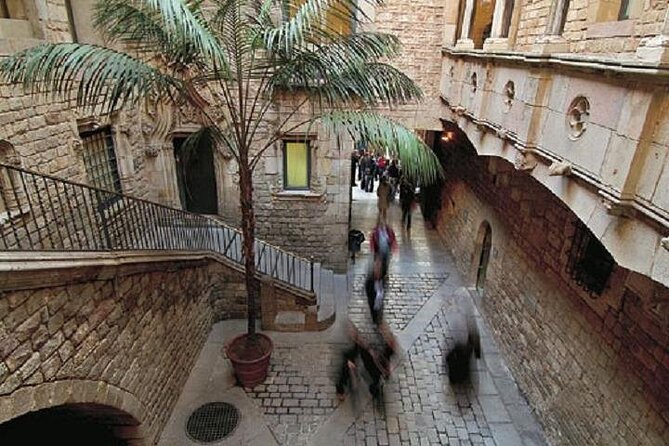
The walk continues into the Ribera Quarter and toward Passeig del Born, where the tour finishes at Passeig del Born, 22. This gives the route a satisfying geographic direction: it does not simply loop around a few famous Gothic Quarter lanes, but carries you into another of the old city’s historic areas.
Santa Maria del Mar is a key subject. The church is presented as a collaborative project, with legends and heroes woven into its story. The tour also explores the political and social history around the Born, including the Bourbon kings’ vengeance and the fate of a general. A further topic, the mulberry grave, points to the layers of memory attached to this part of the city.
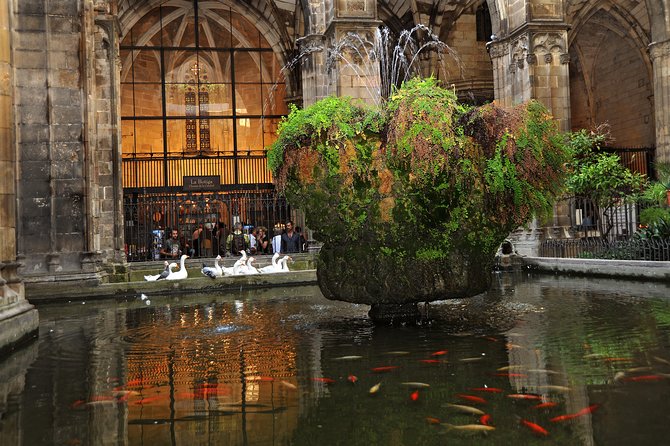
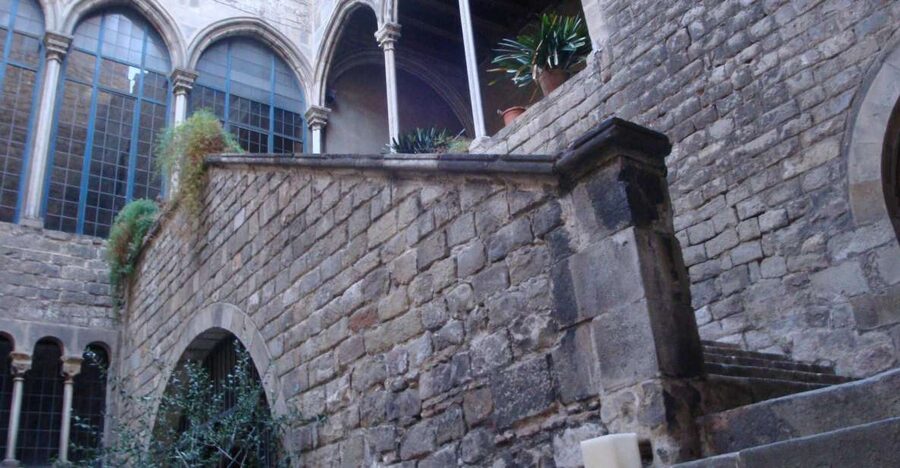
You should expect to admire the church and other monuments from the exterior in most cases. Interior visits and admission fees are not included, though the tour information notes a cloister visit and gives a dress code for it: cover your shoulders and wear clothing at least knee-length. If seeing interiors is a priority, check what is planned for your date before booking.
Buildings that moved, eggs that dance and a changing city
Not every story is about kings and conflict. The route includes the odd fact of houses moved stone by stone, a half house, and the song of the knife-grinder. These details add texture to a walk that could otherwise become a long march through dynastic history.
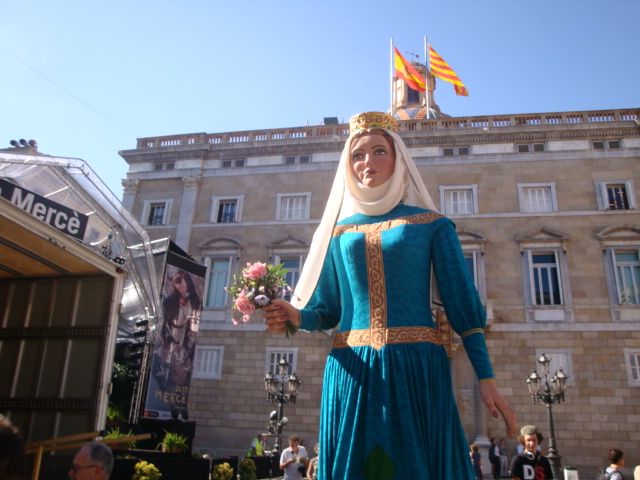
There is also a topic called Watch that egg dance, a reference to one of the city’s distinctive traditions. The tour’s approach is to mix grand history with local customs and small details, giving you different ways to remember the walk. You may leave with a sharper eye for façades, odd corners and public squares, not just a list of dates.
This is where the tour’s focus on Barcelona as a city in motion pays off. Old and new sit close together, and the guide’s stories help explain why the Gothic Quarter is not a sealed-off relic. You are walking through a living part of the city, where the past is visible but daily life continues around it.
The guide, the pace and the practical advice
The tour is led in German, so book only if you are comfortable following a German-language explanation for several hours. The experience is described as private group, and the stated price is $212 for a group of up to four. That makes the per-person cost $53 if you fill all four places, or $106 for two people. For a solo booking, the group price is a much bigger outlay.
A past tour led by Johannes was described as well structured, responsive to personal needs and full of useful detail. He brought extra photographs, which can help when a street or building has changed over time. The practical recommendations are another plus: restaurant ideas, shopping advice and pointers to local specialties can make this first walk useful beyond the history lesson.
The pace is intended to be relaxed, with time for photos and bathroom breaks. Still, three and a half hours on foot is a commitment. Wear comfortable shoes and dress for the forecast. In summer, take a hat, sunglasses, sunscreen and water; in winter, a jacket or light coat should do. The tour runs in all weather, including strong showers, so bring rain protection if the forecast calls for it.
The activity is listed as wheelchair accessible. The group also stays on streets and squares to experience the city up close. If you have specific access needs, confirm details in advance, as the tour’s route and any cloister visit may affect what is comfortable for you.
Is $212 good value for a private group?
The price makes the most sense when shared by four people. At $53 each, you get a German-speaking guide for a long, history-focused walk through two old-city districts, plus the chance to ask questions and get advice tailored to your interests. For a pair, the cost is higher per person, so you should value the private format and detailed storytelling.
There are no entry fees included, and you should not book this expecting a museum-heavy itinerary. The value lies in the guide’s interpretation of streets, squares and exteriors. If you want a quick orientation, a shorter group walk may suit you better. If you want a structured half-day that connects Roman roots, medieval politics, religious history and the 18th century, the length and price are easier to justify.
The booking terms offer free cancellation up to 24 hours before the tour and a reserve-now, pay-later option. Starting times depend on availability. Those flexible terms are useful if your plans are not fixed, but the main decision should be whether the language, pace and outdoor format suit you.
Who should book this walk?
I’d recommend it to German-speaking visitors who enjoy history told through specific places, and to anyone who wants an informed first look at the Gothic Quarter and Ribera. It is especially useful early in a Barcelona stay: the historical framework and practical local tips can help you make better sense of later walks, meals and visits.
It may not be the right choice if you want interiors, museum access, a short stroll or commentary in another language. The subject matter ranges from Roman infrastructure to political violence, so it is more substantial than a casual photo walk. But if you have half a day and like connecting a city’s present to its past, this is a thoughtful way to explore the old center.
FAQ
What language is the tour in?
The live guide speaks German. The tour is best suited to people comfortable following a German-language walk.
How long does the tour last?
Plan for about three and a half hours. The tour information also describes the guided city portion as three hours and the walking portion as about three hours and fifteen minutes.
Where does the tour start and finish?
It starts in front of the Hotel Olivia Plaza at Plaça de Catalunya, 19, and finishes at Passeig del Born, 22.
Are monument entries or interior visits included?
No. Entry fees and regular interior visits are not included. The walk focuses on streets, squares and exterior views, with a couple of possible exceptions. For a cloister visit, cover your shoulders and wear clothing at least knee-length.
Is this a private group tour?
The activity is listed as a private group, with a price of $212 for up to four people.
Does the tour run in bad weather?
Yes. It runs in sun, rain and wind, including strong showers. Bring sun protection and water in summer, and a jacket or light coat in winter.
Reviewed this season in Barcelona
- Two Hour Luxury Sailing Experience with Open Bar★ 4.8 · 13 reviews
- Sunset from a private Classic Yacht★ 5.0 · 3 reviews
- Stories, Legends and Mysteries of Barcelona★ 5.0 · 14 reviews
- Skip-the-Line Barcelona & Montserrat Tour with Pick-up★ 4.6 · 47 reviews
- Skip-the-line Montjuïc Castle Tour with a Cable Car Ride★ 4.7 · 7 reviews
- Barcelona: Old Town & Seafront Segway Tour★ 4.9 · 145 reviews
- Shore Excursion of Barcelona★ 4.9 · 4 reviews
- Barcelona Highlights Half Day Small Group Tour★ 5.0 · 4 reviews
Gothic Quarter Tours, compared.
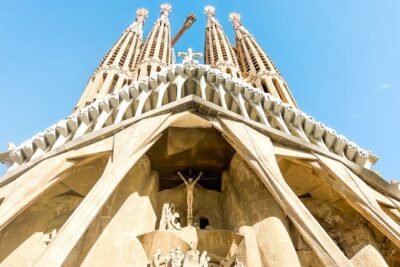
Barcelona all included: Sagrada, Park Güell, Montjuic & Gothic
Read our review →
Barcelona Gothic Quarter Tapas & Taverns Food & Wine Tour
Read our review →
Gothic Quarter Ghosts and Legends Walking Tour
Read our review →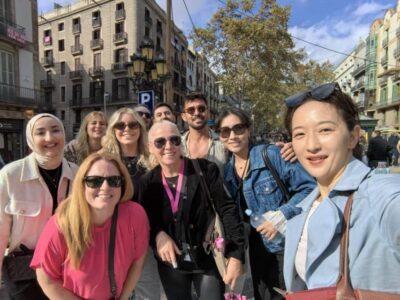
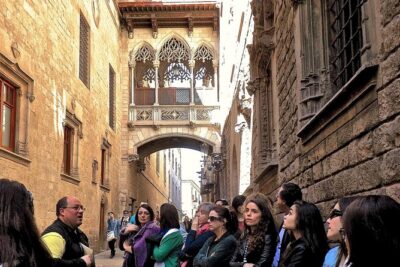
Barcelona Old Town & Gothic Quarter Small Group Tour
Read our review →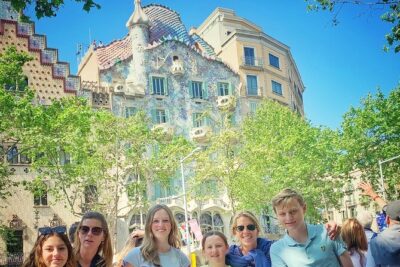
Ramblas, Old Town, Gothic and Gaudi Architecture Walking Tour
Read our review →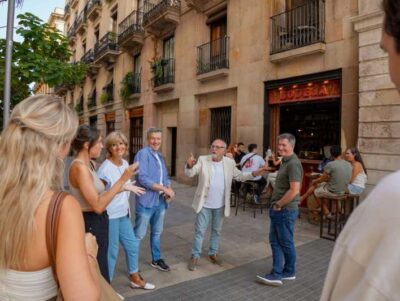
El Born and Gothic Quarter Wine & Tapas Bar Tour
Read our review →
El Born Food Walking Tour with Tapas and Drinks
Read our review →Browse the lists this tour appears in