Reviewed · BARCELONA TOURS
Barcelona: Sant Pau Recinte Modernista Entry Ticket
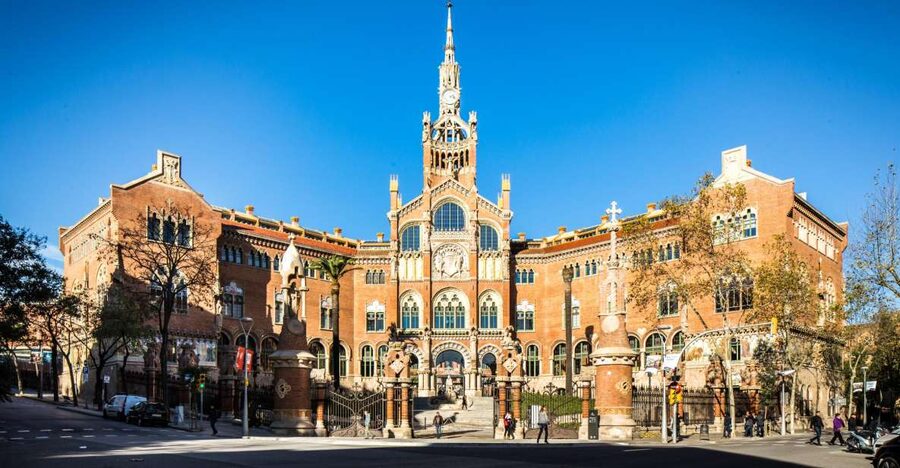
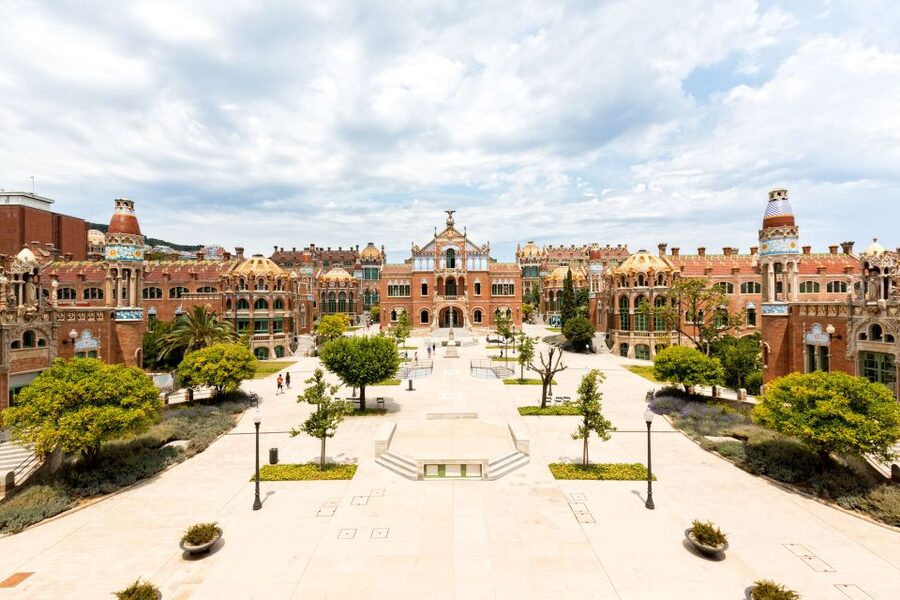
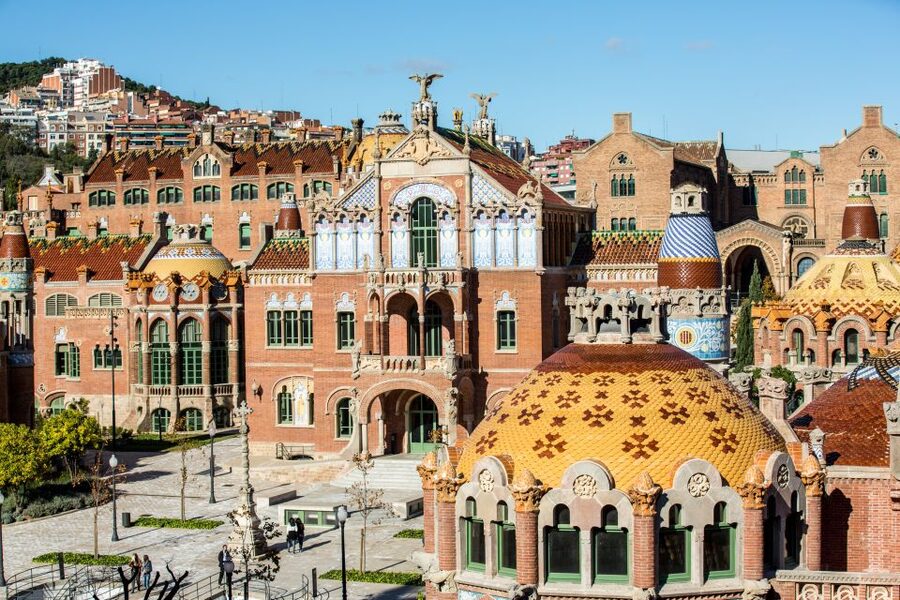
Sant Pau is a former hospital on a remarkable scale: a garden complex of ornate pavilions linked by underground passages, built from 1905 to 1930 by architect Lluís Domènech i Montaner. You can wander through restored spaces and gardens, then picture the site as a working public hospital.
I love two things here: the architecture is part of the story, not just decoration, and the grounds offer a calm change of pace from central Barcelona. One consideration: your ticket is for entry, not a guided tour, so you set the pace and provide your own context.
At a glance
- A hospital planned as a garden city: Sant Pau joined medical care with landscaped outdoor space.
- Modernista details at every turn: Look for sculptures, stained glass, mosaics, and decorated façades.
- Underground links: Passages connected the pavilions and are part of what makes the layout unusual.
- A working hospital’s past: The site served as a public hospital for about a century.
- Self-paced entry: Plan about 1.5 hours as a starting point, or longer if you want time to read and explore.
- Practical value: The ticket costs $21 per person, and children 11 and under enter free with a parent or guardian.
A hospital designed for care and fresh air
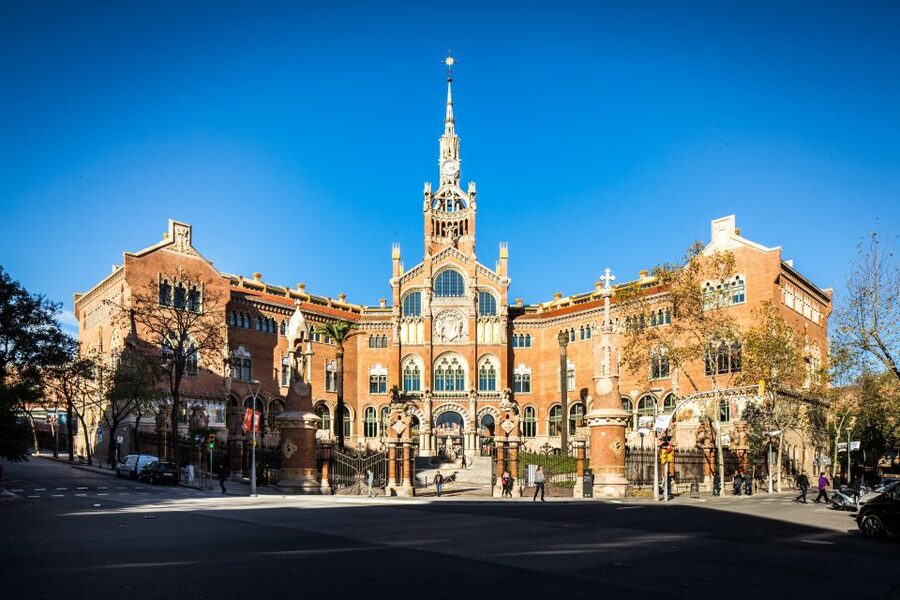
Sant Pau began with a practical problem. By the late 19th century, Barcelona’s old Hospital de la Santa Creu in El Raval had become too small. The replacement was an ambitious project shaped by new ideas about health and hygiene, and by the hospital’s long charitable mission.
Domènech i Montaner designed a complex of pavilions set among gardens. The plan treated the hospital as more than a collection of wards: its buildings and outdoor spaces formed a connected whole. That concept gives the visit an unusual rhythm. You move between architecture, landscaped grounds, and interiors that recall the site’s medical purpose.
The complex was built between 1905 and 1930, and it served as a public hospital for roughly a century. It has since been restored and adapted for a new role as a campus for international organizations. That change is worth keeping in mind as you explore: Sant Pau is both a preserved architectural work and a place that has continued to be used.
More tickets in Barcelona:
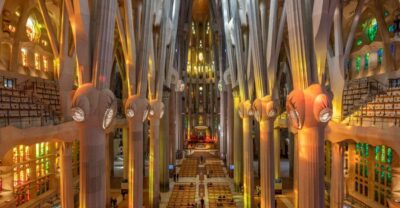
- Barcelona: Sagrada Familia Entry Ticket with Audio Guide
★ 4.6 · 105,312 reviews - Barcelona: Park Güell Admission Ticket
★ 4.4 · 76,534 reviews - Barcelona Aquarium: Entry Ticket
★ 4.3 · 13,335 reviews
Start in the courtyard, then look up
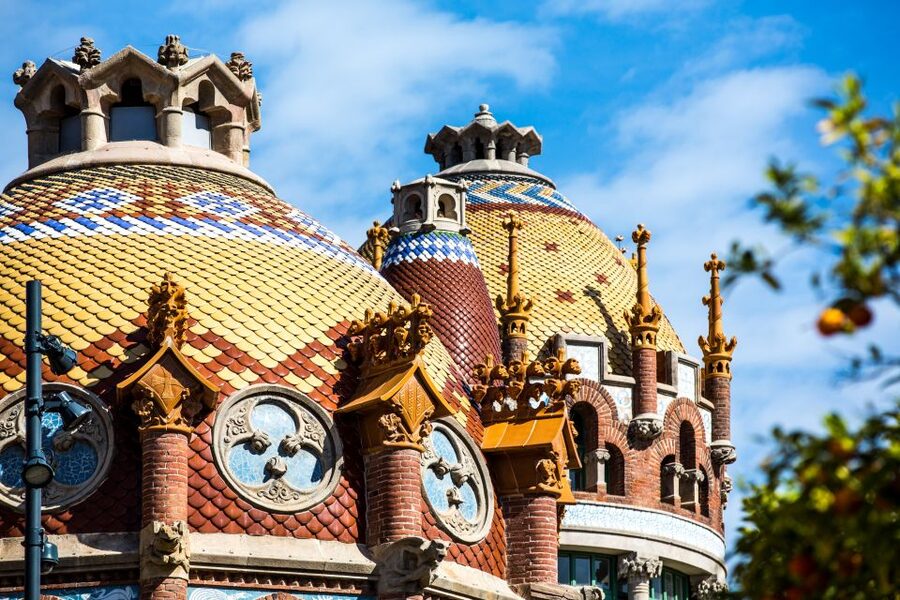
The first impression is the scale. Rather than one imposing hospital block, Sant Pau opens into a group of separate pavilions, with gardens between them. Give yourself a moment to take in the layout before heading indoors. The space makes more sense when you see it as a planned complex rather than a single building.
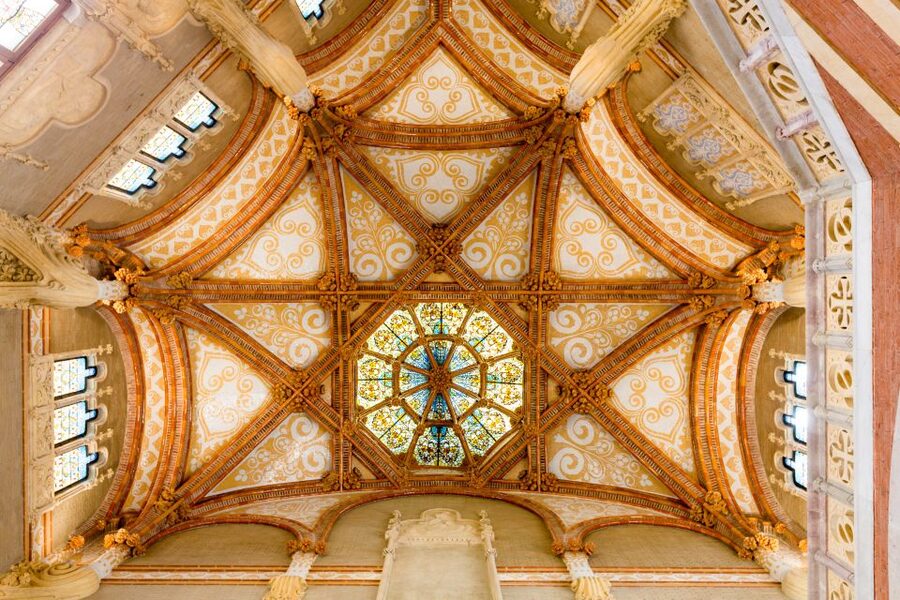
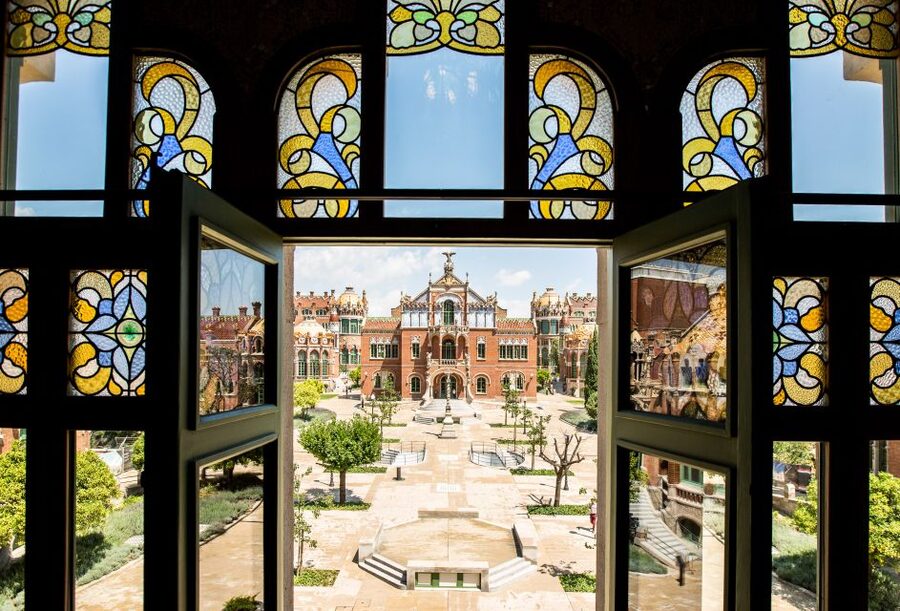
I recommend looking up often. The most rewarding details are not all at eye level. The façades bring together sculptures, patterned surfaces, stained glass, and mosaics, and the decorative work can be easy to miss if you hurry from one room to the next. Walk around the sides of the front buildings too, where mural mosaics add detail beyond the main approach.
The grounds are a real part of the experience, not just a walkway between rooms. You can pause outside, sit in the courtyard, and take in the architecture at a slower pace. In warm weather, that outdoor breathing room is especially welcome after busier parts of Barcelona.
Follow the pavilions into the hospital’s past
Inside, the visit shifts from grand exterior to human scale. Restored hospital spaces help explain how the complex worked, while displays and historical material connect the buildings to medical care. One especially evocative detail is a hospital room set up as it appeared in 1932, when the hospital opened. It makes the site’s history feel less distant than a display of dates alone.
You may also see medical instruments from the period. These details are valuable because the architecture can otherwise take over the visit. Sant Pau is undeniably beautiful, but its beauty was built around a public institution intended to care for people, including the poor. The medical exhibits help you understand the purpose behind the design.
I find that combination more compelling than a visit focused only on decorative style. The complex presents a vision of care shaped by its time, with attention to welfare, health, and the surrounding environment. You do not need a medical background to follow the story, though people interested in healthcare or nursing may find extra layers in the exhibits.
Take the underground passages between buildings
The underground passages are one of Sant Pau’s most distinctive features. They linked the pavilions and gave the hospital a practical network beneath its gardens. Walking through them helps you imagine how separate-looking buildings functioned as one institution.
The passages also change the pace of the visit. Above ground, you get open courtyards and decorated façades; below, you see another side of the site’s planning. Look for the contrast between the ornate architecture and the practical connections that supported hospital life.
Not every building is necessarily open to explore, and the visit may feel less complete if you expect access to the entire complex. Focus instead on the spaces available to you, and take time with the connections between them. The underground routes, restored interiors, and garden paths together explain more than any one pavilion could.
More tours and experiences in Barcelona:
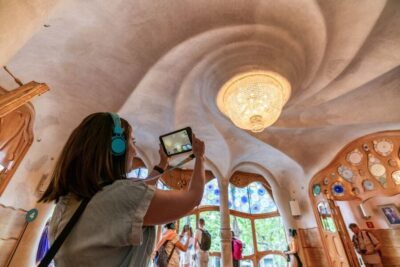
- Barcelona: Casa Batlló Entry with Self-Audioguide Tour
★ 4.7 · 25,359 reviews - Barcelona: 24 or 48-Hour Hop-On Hop-Off Bus Tour
★ 4.4 · 20,872 reviews - Barcelona: Park Guell Guided Tour with Skip The Line Entry
★ 4.7 · 17,563 reviews - Barcelona in 1 Day: Sagrada Familia, Park Guell,Old Town & Pickup
★ 5.0 · 13,541 reviews
Give yourself time to wander

A 1.5-hour visit is a useful planning estimate, but it need not be a strict limit. You can cover the main experience in that time if you move steadily. If you like reading exhibit text, examining architectural details, or stopping in the courtyard, allow closer to two hours. Some visitors spend longer, and the self-paced format makes that easy.
This is not a guided tour. Your ticket includes admission, so you do not have a guide narrating the history as you go. If you prefer a structured explanation, check whether an audio guide is available and consider using it. A written pamphlet can also help orient you, but don’t expect a staff-led route as part of this ticket.
Wayfinding may take a little attention outdoors and inside. I’d keep an eye on the site map or visitor information as you go, rather than assume every next stop is obvious. The reward for an unhurried approach is simple: you notice more, and you can spend longer in the rooms and courtyards that interest you.
Is $21 a fair price?
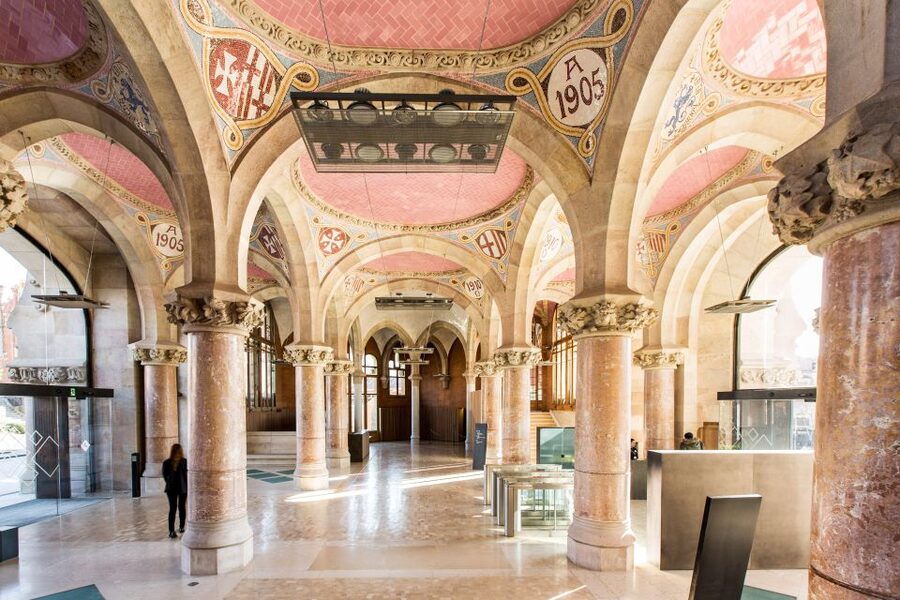
At $21 per person, this is a worthwhile ticket if architecture, history, or medical heritage interests you. You are paying to explore a large complex, not just to peek into one showpiece room. The gardens, restored pavilions, interior exhibits, and underground links give the visit several different dimensions.
The value depends partly on how you like to visit. If you want a guide to explain every detail, admission alone may feel spare unless you add an audio guide or another source of interpretation. If you enjoy setting your own pace and looking closely, the open format is an advantage. You can linger over the mosaics or move quickly through a section that holds less interest.
Children 11 and under are admitted free, provided a parent or guardian is present. Visitors over 65 can also enter free on the first Sunday of the month. Check the conditions when planning, since those details can make a noticeable difference to the cost for a family or older visitor.
Getting there and making the visit comfortable
The meeting address is Calle Sant Antoni Maria Claret, 167, in Barcelona. A metro station is nearby, and the location can work well as a stop before or after other plans. If you are relying on a navigation app, check the address carefully before setting off; the site is not in El Raval, where the old hospital stood.
The venue is wheelchair accessible. Pets, smoking, alcohol, and drugs are not allowed. The ticket offers free cancellation up to 24 hours in advance, and you can reserve now and pay later, which is useful if your Barcelona schedule is still shifting.
For the most comfortable visit, leave room in your day to pause outdoors. Sant Pau’s calm courtyards are part of its appeal, and the site is at its best when you are not racing through it to get to the next appointment. Bring your curiosity, and remember to look beyond the main façades.
Who should book Sant Pau?
I’d put Sant Pau high on the list for anyone who enjoys Art Nouveau architecture, design, or the social history of hospitals. It is also a good choice if you want a quieter cultural stop that still offers plenty to see. The medical displays give healthcare workers and science-minded visitors a particular reason to linger, but the building itself carries the visit for anyone drawn to architecture.
It may be a weaker fit if you want a guide included, or if your Barcelona schedule allows only a quick dash between major attractions. The site rewards attention and a little time. If you can spare around 1.5 to two hours, the ticket offers more than a pretty courtyard: it brings together architecture, gardens, and the story of a hospital built to serve the city.
My call: Book it if you want to see a side of Barcelona beyond its best-known Modernista landmarks. Arrive with time to explore at your own pace, and consider an audio guide if you want more historical detail than the entry ticket provides.
FAQ
How long should I plan for Sant Pau?
The visit is described as about 1.5 hours. You can allow around two hours if you want more time to explore the pavilions, read the displays, and pause in the gardens.
Does the ticket include a guided tour?
No. The ticket includes entrance to Sant Pau Recinte Modernista, but not a guided tour.
Are children admitted free?
Yes. Children 11 and under have free admission, but a parent or guardian must be present.
Can visitors over 65 enter for free?
Visitors over 65 can enjoy free access on the first Sunday of the month.
Is Sant Pau wheelchair accessible?
Yes, the site is listed as wheelchair accessible.
What is included with the ticket?
The ticket includes the entrance fee to Sant Pau Recinte Modernista. It does not include a guided tour.
Reviewed this season in Barcelona
- Two Hour Luxury Sailing Experience with Open Bar★ 4.8 · 13 reviews
- Sunset from a private Classic Yacht★ 5.0 · 3 reviews
- Stories, Legends and Mysteries of Barcelona★ 5.0 · 14 reviews
- Skip-the-Line Barcelona & Montserrat Tour with Pick-up★ 4.6 · 47 reviews
- Skip-the-line Montjuïc Castle Tour with a Cable Car Ride★ 4.7 · 7 reviews
- Barcelona: Old Town & Seafront Segway Tour★ 4.9 · 145 reviews
- Shore Excursion of Barcelona★ 4.9 · 4 reviews
- Barcelona Highlights Half Day Small Group Tour★ 5.0 · 4 reviews
Barcelona Tours, compared.
Sagrada Familia Entry Ticket with Audio Guide
Read our review →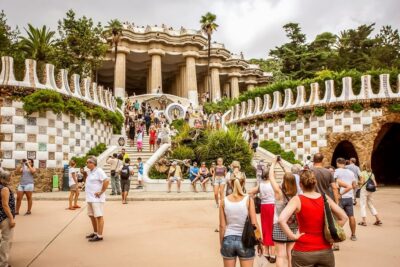


Park Guell Guided Tour with Skip The Line Entry
Read our review →
Barcelona in 1 Day: Sagrada Familia, Park Guell,Old Town & Pickup
Read our review →