
Reviewed · GIRONA TOURS
Girona: Museum of Cinema Entry Ticket
Girona’s Museum of Cinema starts long before the first film. Its collection traces how people represented movement and images over five centuries, leading to the invention of the cinematograph in 1895. That makes this a useful stop for anyone who wants to understand not just what cinema became, but what came before it.
I like two things in particular: the Tomàs Mallol Collection gives the story a material shape through devices and objects, and the museum’s interactive approach can make the subject enjoyable for children as well as adults. The former water company building, known as the House of Waters, adds a pleasingly practical setting for a museum about visual invention.
One detail worth checking before you pay: a visitor who arrived on the first Sunday of the month found that admission was free that day. Free-entry schedules can change, so check the museum’s current policy before booking. The audio guide is accessed online, and some people may find it less straightforward to use than the printed information.
Key points before you go
- Nearly 8,000 pre-cinema objects help explain how people explored moving images before the cinematograph.
- The story reaches back about 500 years, then follows the technical steps that led to cinema in 1895.
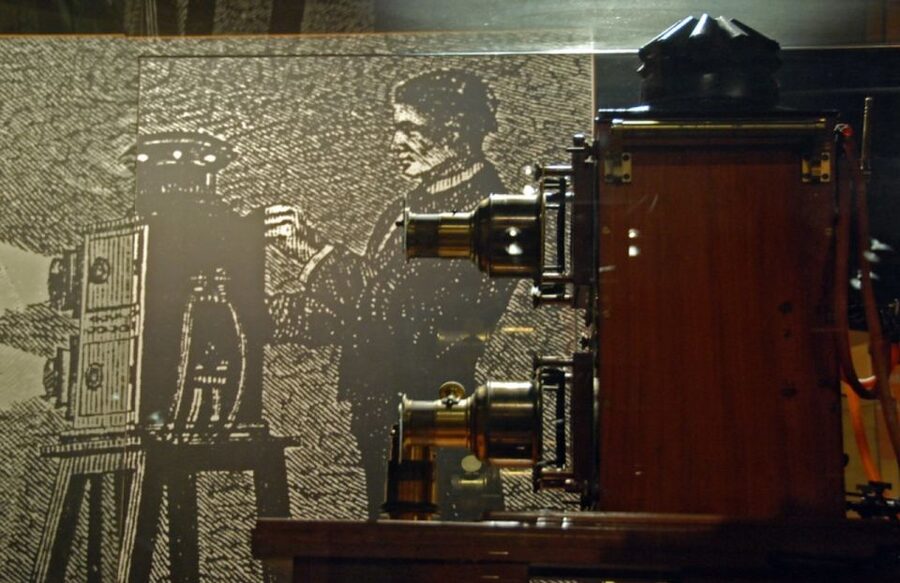
- The Tomàs Mallol Collection is the museum’s core collection of cinematographic and pre-cinematographic devices.
- Permanent and temporary exhibitions are included, so your ticket covers more than the main collection.
- A free web-based audio guide adds information beyond the exhibition panels, though it requires access through the museum’s website.
- The museum welcomes families and groups, and the building is prepared for visitors with reduced mobility.
A cinema museum that begins before cinema
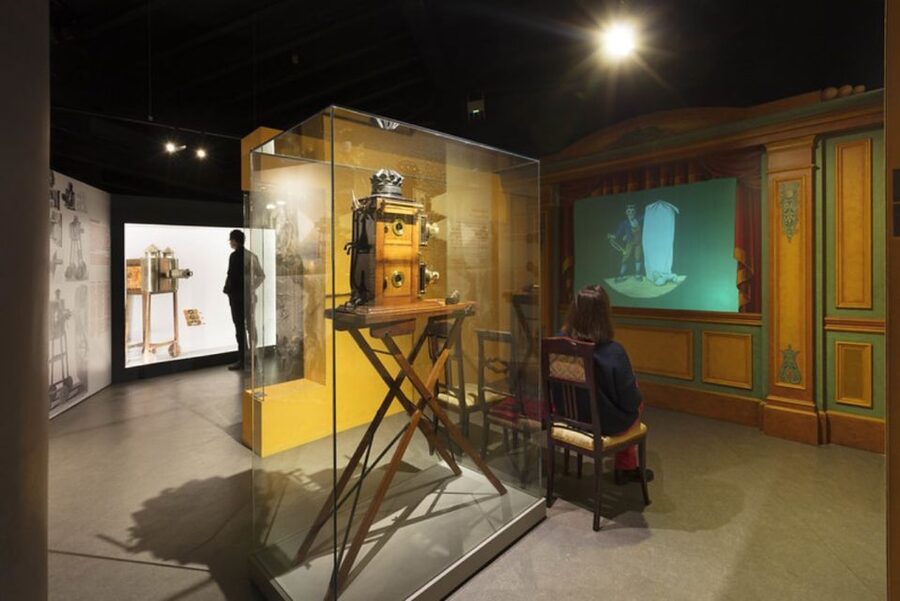
The museum’s central idea is simple and rewarding: cinema did not spring into existence in a single flash of inspiration. Long before films, people experimented with ways to represent images and create the impression of movement. The collection gives you a chance to follow that progression through objects rather than treating the invention of film as an isolated event.
The museum’s mission is to explain the history of the moving image, including how images were represented before cinema and what technical process led to the cinematograph in 1895. That context matters. If you have ever watched an old film and wondered how people arrived at the idea of projecting moving pictures, this visit helps connect the early experiments to the medium you know today.
The collection contains almost 8,000 pre-cinema objects, and its focus is not limited to film cameras or finished films. It is about the devices and ideas that helped people work out how images could appear to move. You can expect a museum experience built around the history of visual technology, not a screening of famous movie scenes.
More Girona trips in Girona:
- Girona & Costa Brava Small-Group Tour with Pickup from Barcelona
★ 5.0 · 6,955 reviews - Montserrat, Girona & Costa Brava Guided Day Trip from Barcelona
★ 5.0 · 5,128 reviews - Girona & Dali Museum Small Group Tour with Pick-up from Barcelona
★ 5.0 · 2,965 reviews
Following the story through the Tomàs Mallol Collection
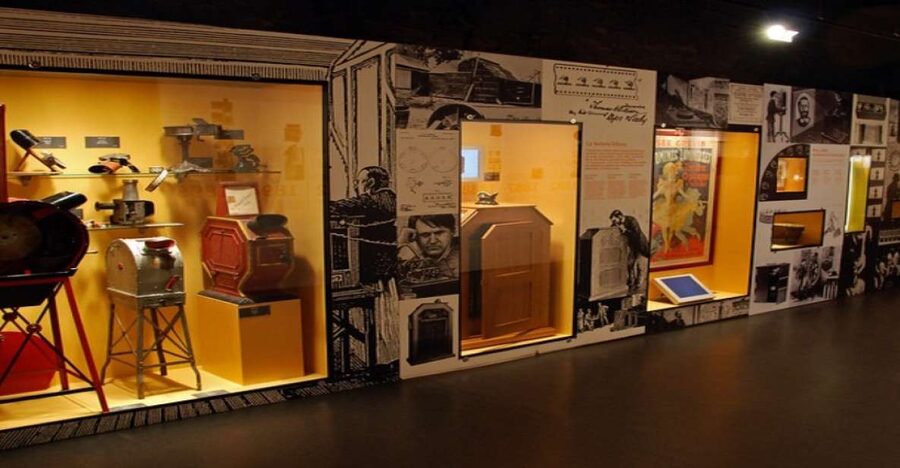
The Tomàs Mallol Collection is the heart of the museum. Girona’s city government acquired it on January 28, 1994, and the collection now forms the basis of this permanent museum. Its objects make an abstract subject more concrete: instead of hearing only that cinema evolved, you can see the kinds of devices that helped make that evolution possible.
The exhibition’s broad arc moves from pre-cinema image-making toward the invention of the cinematograph. That chronological approach is one of its strengths. A visitor who does not arrive with much technical background can follow a clear line from early experiments to cinema, rather than facing a jumble of equipment with no explanation.
I would take the time to read the panels and use the audio guide where possible. A French-speaking visitor found the French information helpful, while an English-language brochure is also available. The audio guide is free through the museum’s website and provides more detail than the panels alone, but it is web-based, so make sure you can access it on your phone. If the guide is awkward to open, the printed explanations still give you a route through the collection.
The available information does not specify the exact order of every gallery or name individual devices. It is best to think of the visit as a historical sequence rather than a fixed, guided itinerary. Let the objects show you how the moving image developed, and give yourself enough time to notice what each stage adds to the story.
Why the objects make the history easier to grasp
The museum’s subject can sound technical, but its value is visual. Reading that image-making changed over several centuries is one thing. Seeing the tools and objects associated with that change gives you a more direct sense of the experiments behind cinema.
That is especially useful if you are visiting with children. The museum offers activities for families, and its interactive elements can help a child stay involved rather than simply moving from label to label. The collection is not described as a children’s museum, so younger visitors may still need an adult to connect the objects to the larger story. But the mix of exhibits and activities gives families more to work with than a room of text panels alone.
Adults can get something different from the same displays. You may find yourself thinking about how people learned to control images, or how a device that once seemed ingenious later became part of a much larger visual culture. The museum’s emphasis on the process, rather than only the end product, gives the visit a useful angle for anyone interested in photography, film, design or technology.
The House of Waters adds a local setting
The museum occupies the former headquarters of Girona’s water company, a late nineteenth-century building known as the House of Waters. That history is a small but worthwhile part of the experience. The museum is not housed in a purpose-built film complex; it has made its home in a building that once served a different civic function.
The museum itself is a permanent, non-profit institution intended to serve the public through cultural, scientific and recreational activity. It also runs ongoing programming and services designed to engage a broad audience, from local visitors to people coming from elsewhere in Spain or abroad. The ticket is for the exhibitions, but the institution’s wider role helps explain why the collection is presented as more than a storehouse of old equipment.
You should not expect the building’s former use to be the main attraction. The focus is cinema history. Still, the setting gives the visit a distinctly Girona address and makes the museum feel connected to the city’s civic life.
More museum visits in Girona:
- From Barcelona: Girona, Figueres, Dalí Museum, and Cadaqués
★ 4.7 · 1,928 reviews - From Barcelona: Girona and Dalí Museum Small-group Day Tour
★ 4.7 · 1,592 reviews - Girona and Dali Museum Full Day tour from Barcelona
★ 4.5 · 996 reviews - From Barcelona: Girona Guided Tour & Dalí Museum in Figueres
★ 4.5 · 339 reviews
The library and temporary exhibition
The museum has a library with more than 4,000 titles, a substantial resource for anyone who wants to go beyond the exhibition. The available ticket information does not say whether library access is included or whether visitors can consult the collection during every visit, so treat it as part of the museum’s broader resources rather than a guaranteed stop on your admission.
Your ticket does include both the permanent and temporary exhibitions. That is useful because the temporary display may add a different perspective to the central collection. Its subject can change, so check what is on before you go if you are especially interested in a particular period or theme.
For a short visit, the permanent collection should be the main draw. If you have a strong interest in cinema or visual culture, the temporary exhibition may be a good reason to allow more time. No fixed visit length is specified, and the ticket is valid for one day, giving you flexibility to plan around the rest of your time in Girona.
Is the $8 ticket good value?
At $8 per person, the ticket is a modest expense for a specialist museum that covers five centuries of visual history. It includes the permanent and temporary exhibitions, a brochure in English, French, Catalan or Spanish, and access to a free audio guide online. The value is strongest if you take time to follow the historical progression rather than rushing through the displays.
The ticket is less compelling if you arrive on a day when admission is free. A visitor who booked for a Sunday found the museum was free on the first Sunday of the month. Before paying, check whether that policy applies to your planned date. The information provided does not confirm the current schedule or whether every first Sunday is free, so verify directly rather than assuming.
There is also a practical distinction between a museum ticket and a guided tour. This is entry to a self-guided experience. No guide names or live guided-tour details are provided. If you prefer a person explaining the exhibits in real time, this may not be the right format. If you like moving at your own pace and using printed or audio information, the ticket offers a straightforward way to see the collection.
Free cancellation up to 24 hours before the visit and a reserve-now, pay-later option are available through the booking offer. The ticket is valid for one day, and availability should be checked for your date. These terms add flexibility, but the free-entry question is the more important value check.
Families, language and access
The museum is designed to appeal to a broad audience, with activities for both adult groups and families. The interactive elements can help make a historical subject more approachable for children, while adults can focus on the development of image-making and cinema technology. It is a sensible choice for a mixed-age group that wants a cultural stop without committing to a full day of activities.
Information is available in English, French, Catalan and Spanish through the brochure. The free audio guide is also a useful option for added explanation, though it is accessed online and may not be as effortless as a dedicated device. If audio is important to your visit, check that you can open the museum’s guide on your phone before you arrive.
The building is prepared for people with reduced mobility and is described as wheelchair accessible. That makes it a practical museum option for visitors who need step-free access, although the available details do not describe specific routes, lifts or facilities. For particular access needs, contact the museum before your visit.
How much time should you set aside?
The ticket is valid for one day, but no set duration for the visit is given. Your timing will depend on how closely you read the exhibition information, whether you use the audio guide, and how much time you spend with the temporary exhibition.
For a focused visit, follow the main story from pre-cinema objects to the cinematograph and give yourself time with the collection’s explanations. If you are traveling with children, allow room for them to stop at interactive displays rather than trying to keep a brisk museum pace. Visitors with a specialist interest in cinema may want to check whether the library or current temporary exhibition adds material worth exploring.
The museum works best as a thoughtful indoor stop, not as a box to tick in a hurry. Its appeal comes from connecting objects to a larger story, and that takes a little attention. You do not need to be a film scholar to follow the basic progression, but the more curious you are about how images work, the more you are likely to get from the visit.
Should you book the Museum of Cinema?
Book it if you are curious about how cinema began, enjoy museums built around objects, or want a family-friendly cultural stop in Girona. The Tomàs Mallol Collection gives the visit a clear purpose, and the progression from pre-cinema devices to the cinematograph offers more substance than a display of film memorabilia alone.
Pause before paying if your date may coincide with a free-entry day, and check that detail with the museum. Also consider that this is a self-guided visit, with the audio guide accessed online rather than a named guide leading you through the exhibits.
At $8, it is a fair-value ticket for a museum with a clear subject, a substantial collection and both permanent and temporary exhibitions. For anyone interested in visual history, the moving image or the early steps toward cinema, it is a worthwhile way to spend part of a day in Girona.
FAQ
What does the Museum of Cinema ticket include?
It includes entry to the permanent and temporary exhibitions, an informative brochure in English, French, Catalan or Spanish, and access to a free web-based audio guide.
How much does admission cost?
The listed price is $8 per person. Check the museum’s current admission information before booking, especially if your visit falls on a possible free-entry day.
How long is the ticket valid?
The ticket is valid for one day.
Is there an audio guide?
Yes. A free audio guide is available through the museum’s website. It provides information beyond the exhibition panels.
What languages are available for the brochure?
The brochure is available in English, French, Catalan and Spanish.
Is the museum suitable for children?
The museum offers activities for families and has interactive elements. These can help children engage with the subject alongside adults.
Is the museum wheelchair accessible?
Yes. The building is prepared for people with reduced mobility and is described as wheelchair accessible.
What is the Tomàs Mallol Collection?
It is the museum’s collection of cinematographic and pre-cinematographic objects, acquired by the City of Girona in 1994. The collection helps explain how images were represented before cinema and how cinema developed.
Can admission be free on some days?
A visitor found admission was free on the first Sunday of the month. The current schedule is not specified here, so check with the museum before paying.
Reviewed this season in Girona
- Private Full-Day Girona & Figueres From Barcelona★ 5.0 · 3 reviews
- Girona: Volcano Area, Besalú, and Banyoles Lake Tour★ 4.9 · 35 reviews
- Girona – Private Historic Walking Tour★ 4.7 · 3 reviews
- Girona: Self-guided Audio City Tour on Your Phone★ 4.0 · 12 reviews
- Girona Morning Food Tour & Local Market★ 5.0 · 16 reviews
- Girona: Private History Tour★ 5.0 · 16 reviews
- Girona: Local Wineries Tour with Breakfast and Wine Tasting★ 4.7 · 3 reviews
- Girona: Montilivi Stadium Guided Tour★ 3.6 · 28 reviews
Girona Tours, compared.

Girona & Costa Brava Small-Group Tour with Pickup from Barcelona
Read our review →
Montserrat, Girona & Costa Brava Guided Day Trip from Barcelona
Read our review →
Girona & Dali Museum Small Group Tour with Pick-up from Barcelona
Read our review →
Girona and Dali Museum Full Day tour from Barcelona
Read our review →
Browse the lists this tour appears in