Reviewed · BARCELONA TOURS
Sant Pau Recinte Modernista Entrance Ticket in Barcelona
Sant Pau is a former hospital built on a grand, human scale: a collection of ornate pavilions linked by underground tunnels, with mosaics, stained glass and sculpted details at every turn. Its architecture is beautiful, but the site is more than a pretty backdrop. The displays trace a hospital story that reaches from 1401 into the 21st century.
I like two things especially: you can explore at your own pace, and the visit connects the striking architecture to the practical history of care. The gardens and quieter setting also offer a welcome change from Barcelona’s more crowded sights.
The main drawback is that this is a self-guided visit, and some signposting can be confusing. An audio guide is not included, and occasional events or closed sections may limit what you can see, so leave room in your plans rather than treating this as a quick photo stop.
A few things to know before you go
- A hospital made of pavilions: Sant Pau’s buildings were designed as a connected medical complex, not as a single monumental block.
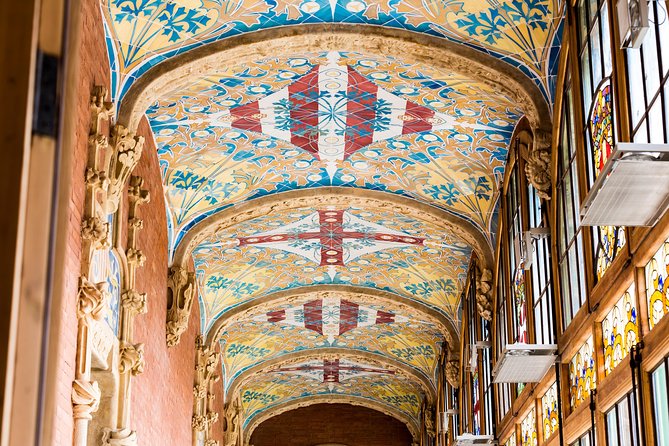
- Look up and look close: Colorful roof tiles, stained glass, mosaics and exterior sculpture reward a slower visit.
- The tunnels tell part of the story: Underground passages linked the pavilions and helped move patients around the site.
- The ticket is self-guided: Your admission includes entry, not a live guide or audio guide.
- Allow about 1 to 2 hours: Many people spend around an hour and a half, especially if they stop to read the exhibits.
- Book ahead for guaranteed entry: The prepaid ticket is useful during busy periods, though it does not necessarily mean you will skip every queue.
A different kind of Barcelona landmark
Barcelona’s Modernisme is often associated with showpiece houses and churches. Sant Pau gives you another angle: an entire hospital complex shaped by the same artistic movement, where beauty and function were meant to work together.
The site’s scale is part of the appeal. Instead of moving through one building room by room, you visit a network of pavilions set among gardens and connected by underground tunnels. The effect is spacious and calm, and it is easier to take your time than at some of the city’s most heavily visited attractions.
The complex also has a long institutional history. Sant Pau’s displays trace the Hospital de la Santa Creu i Sant Pau from its founding in 1401 into the 21st century. That span makes the visit more than a study of decorative architecture: you can see how ideas about hospital care and treatment changed over time.
The attraction is run by the Fundació Privada Hospital de la Santa Creu i Sant Pau. Your admission ticket lets you explore independently, which suits anyone who prefers to linger over details rather than follow a group from room to room.
More tickets in Barcelona:
- Barcelona: Sagrada Familia Entry Ticket with Audio Guide
★ 4.6 · 105,312 reviews - Barcelona: Park Güell Admission Ticket
★ 4.4 · 76,534 reviews - Barcelona Aquarium: Entry Ticket
★ 4.3 · 13,335 reviews
Start at the Administration Pavilion
Begin at the Administration Pavilion, where you can get your bearings and enter the exhibition space. An interactive touch table and a video presentation introduce the site’s medical contribution and artistic heritage. These displays help answer the question that naturally comes up as you admire the buildings: why was a hospital designed this way?
The itinerary also identifies the Sant Salvador Pavilion as the place where the complex’s history is summarised. The exhibition follows the institution from 1401 to the present day, giving you a useful timeline before you head into the wider site. If you want the architecture to make sense as more than ornament, take a few minutes here instead of rushing straight outside.
On the upper floor, look for a contemporary installation shaped to suggest a dragon. It pays tribute to Lluís Domènech i Montaner, the architect closely associated with Catalan Modernisme. It is a distinctive counterpoint to the historic interiors, and a reminder that the site’s story continues beyond the period when its pavilions were built.
Follow the tunnels to the pavilions
The underground tunnels are one of Sant Pau’s most unusual features. They connected the pavilions and were used to move patients between buildings. Walking through them gives you a sense of the complex as a working hospital, not simply a group of beautiful façades arranged for visitors.
From below ground, the buildings above take on a practical logic. The pavilions were separate parts of a larger institution, while the tunnels provided a sheltered route between them. You can also see the tiled passageways as an architectural feature in their own right, with details that make even a functional corridor worth slowing down for.
The tunnels help break up the visit, but keep an eye on the route. The site is large, and wayfinding can feel less obvious in some areas. A paper guide or map from the entrance can help you track which pavilions you have visited. If navigation matters to you, consider renting the audio guide at the entrance; it is not included with admission, and the listed rental price in visitor feedback was €4.
Read the buildings from the outside
Sant Pau’s most immediate pleasure is looking carefully at the architecture. The exteriors bring together stained glass, sculpted decoration, mosaics and domes. Colorful roof tiles and decorative façades give the complex a visual richness that can be missed if you hurry from one interior display to the next.
I would make room for both close looking and a wider view. A detail such as a patch of tile or a piece of stained glass rewards your attention, while stepping back helps you appreciate how the individual pavilions sit within the grounds. The gardens and landscaping add breathing space between buildings, so the visit rarely feels like a march through a series of rooms.
Restoration is another part of the experience. The buildings have been carefully restored, and their decorative work remains a major reason to visit. Some sections may be closed or blocked off at times, including during events. That can affect the route and the amount you can see, so it is sensible to treat the suggested itinerary as a guide rather than a promise that every area will be open.
More tours and experiences in Barcelona:
- Barcelona: Casa Batlló Entry with Self-Audioguide Tour
★ 4.7 · 25,359 reviews - Barcelona: 24 or 48-Hour Hop-On Hop-Off Bus Tour
★ 4.4 · 20,872 reviews - Barcelona: Park Guell Guided Tour with Skip The Line Entry
★ 4.7 · 17,563 reviews - Barcelona in 1 Day: Sagrada Familia, Park Guell,Old Town & Pickup
★ 5.0 · 13,541 reviews
Step inside the restored Sant Rafael Pavilion
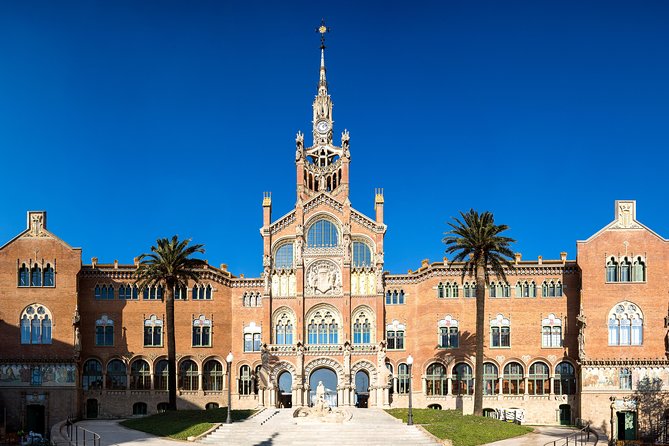
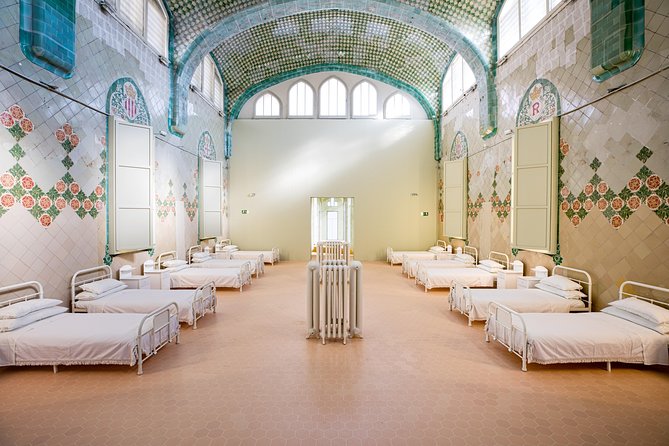
The restored Sant Rafael Pavilion gives the visit a more direct connection to hospital life. You can see how the building’s architecture and design served a medical institution, while displays bring the story of care into focus. The old Surgery Room is another key stop, especially if you are interested in how treatment and medical practice have changed.
The appeal here depends partly on your interests. If you enjoy the history of medicine, these spaces add substance to the architectural tour. If you are mainly drawn to Modernisme, the pavilion still offers a chance to see the buildings from within, but you may want to spend more of your time on the decorative details outside.
The exhibitions are designed to help you follow the site’s development, and information is available in English. Still, a self-guided visit asks you to set your own pace and decide where to linger. If you prefer a clear narrative, the audio guide may be worth the extra cost. The basic ticket does not include a guide.
Pause in the named halls
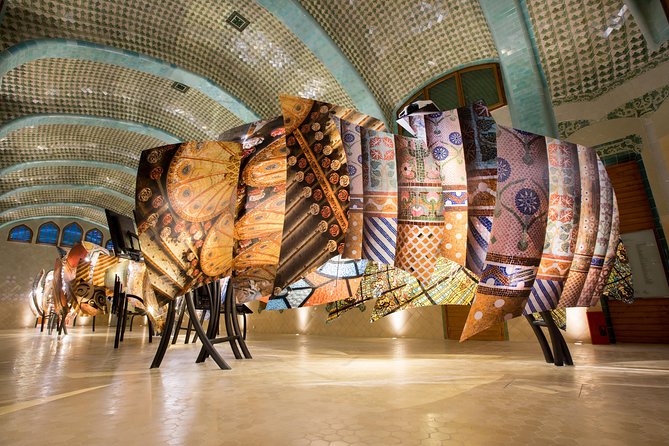
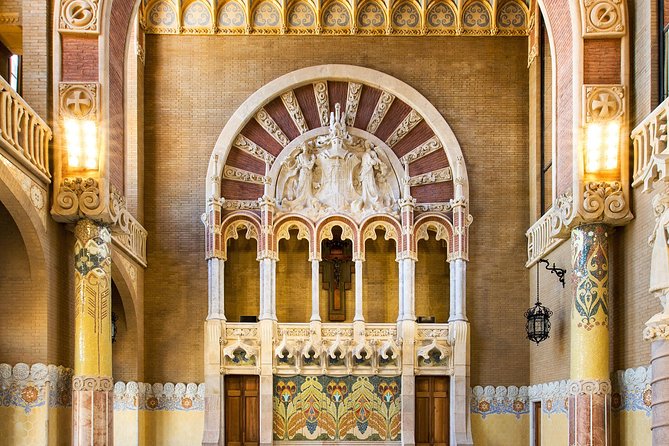
The route also takes in the Lluís Domènech i Montaner Room, the Pau Gil Room and the Main Hall. Their names connect the visit to the people and institutions behind the complex, while the rooms give you a chance to appreciate its interior architecture.
These are good places to slow down and notice how decoration carries through the buildings. The same attention to material and design that appears on the façades continues indoors, although the experience varies from room to room. Some visitors find the self-guided route less clear than they would like, so use the map and keep checking your position rather than assuming every turn is obvious.
A little flexibility helps here. The site can take 1 to 2 hours, and a visit of about an hour and a half gives you time for the main displays, tunnels and buildings without forcing every stop. If you read each exhibit closely or want to take photographs, allow more time.
Finish at the Sant Jordi Pavilion
The Sant Jordi Pavilion hosts rotating temporary exhibitions, so its contents can change. It makes a natural final stop because it adds a contemporary layer to a visit otherwise focused on the hospital’s past and the Modernisme buildings.
Since the exhibitions rotate, I would not plan your whole visit around a particular display unless you have checked what is showing. Instead, treat the pavilion as a useful final look at how the site is presented today. The combination of historic architecture and changing exhibitions keeps Sant Pau from feeling like a preserved shell.
What the ticket price gets you
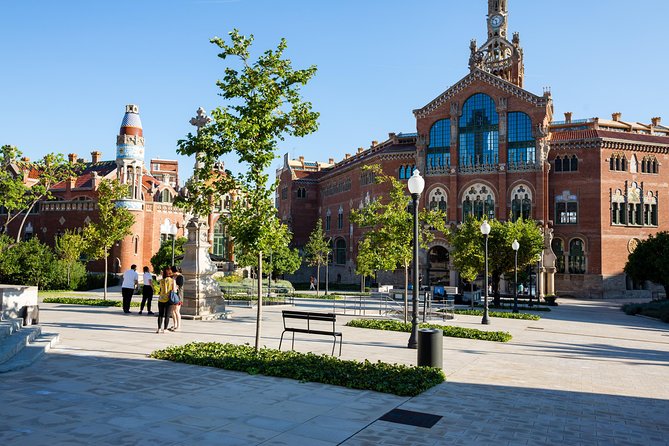
The admission ticket costs $21.78 per person. It includes entry to the Sant Pau Recinte Modernista, but not food, drinks, a guide or an audio guide. For the price, the value comes from access to a substantial architectural site and its exhibitions, rather than from a hosted tour.
Prebooking is most useful as a way to secure entry to a popular attraction. It may also save time at the ticket desk, but do not count on it eliminating every wait. On quieter days, there may be little line to bypass. The attraction is also near public transportation, and a hop-on hop-off bus stop, Green Line stop 12, is reported directly outside.
The ticket is mobile, which makes it easy to show your booking at the entrance. Booking about 18 days ahead is typical, but the right timing depends on your plans and the period you visit. Free cancellation is available up to 24 hours before the experience start time; changes or cancellations made later are not accepted.
Who will get the most from Sant Pau?
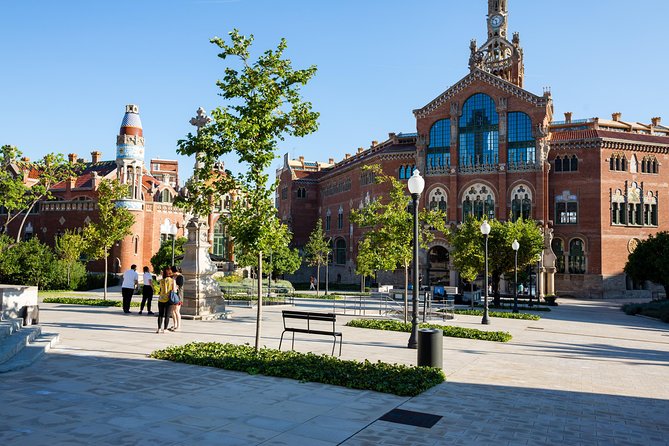
This is a strong choice if you like architecture, hospital history or the story of how medical care developed. It also suits anyone who wants a quieter cultural stop and enjoys exploring independently. The site’s mosaics, stained glass and tiled tunnels give you plenty to look at even if you are not an expert in Modernisme.
It may be less satisfying if you need a guided narrative to make a place meaningful, or if you expect every building and section to be open. The self-guided route can be confusing, and lifts may not be easy to access in every part of the complex. If stairs are a concern, ask staff about access when you arrive rather than assuming every route is step-free.
The site is near public transportation, and it is a short distance from the Sagrada Família, making the two sights possible to pair in a day. But Sant Pau deserves more than a quick detour. Give it at least an hour, and preferably closer to an hour and a half, so you have time to connect the exhibits with the buildings themselves.
Should you book Sant Pau?
Book this ticket if you want a self-paced visit to an unusual Barcelona landmark, especially if architecture and medical history interest you. Its pavilions, gardens and tunnels offer a different experience from the city’s better-known Modernisme stops, and prebooking gives you the reassurance of guaranteed entry.
Think twice if you want a live guide included or need a fully straightforward route. Bring patience for wayfinding, consider the €4 audio guide, and check your expectations: this is a large historic complex, not a tightly timed guided tour. If that suits your style, Sant Pau is a rewarding use of a couple of hours.
FAQ
How long should I allow for the visit?
Plan for about 1 to 2 hours. Around an hour and a half gives you time to see the main pavilions, exhibits and tunnels.
What does the admission ticket include?
It includes admission to Sant Pau Recinte Modernista. Food, drinks and a guide are not included.
Is this a guided tour?
No. The ticket is for a self-guided visit. An audio guide may be rented at the entrance for €4.
Can I show my ticket on my phone?
Yes. The ticket is mobile, and confirmation is provided at booking.
What can I see inside the complex?
The visit includes exhibition spaces, underground tunnels, gardens, restored pavilions, the old Surgery Room, the Main Hall and the Sant Jordi Pavilion, which hosts temporary exhibitions.
Is the visit focused only on architecture?
No. You can explore the architecture and learn about the hospital’s contribution to medicine and its history, from 1401 into the 21st century.
Is Sant Pau near public transportation?
Yes. The site is near public transportation. A hop-on hop-off bus stop, Green Line stop 12, is reported directly outside.
Can I cancel my booking for a refund?
You can cancel for a full refund up to 24 hours before the experience start time. Cancellations or changes made less than 24 hours beforehand are not accepted.
Reviewed this season in Barcelona
- Two Hour Luxury Sailing Experience with Open Bar★ 4.8 · 13 reviews
- Sunset from a private Classic Yacht★ 5.0 · 3 reviews
- Stories, Legends and Mysteries of Barcelona★ 5.0 · 14 reviews
- Skip-the-Line Barcelona & Montserrat Tour with Pick-up★ 4.6 · 47 reviews
- Skip-the-line Montjuïc Castle Tour with a Cable Car Ride★ 4.7 · 7 reviews
- Barcelona Highlights Half Day Small Group Tour★ 5.0 · 4 reviews
- Barcelona: Old Town & Seafront Segway Tour★ 4.9 · 145 reviews
- Shore Excursion of Barcelona★ 4.9 · 4 reviews
Barcelona Tours, compared.
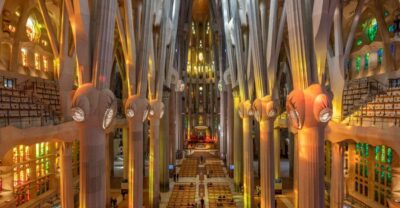
Sagrada Familia Entry Ticket with Audio Guide
Read our review →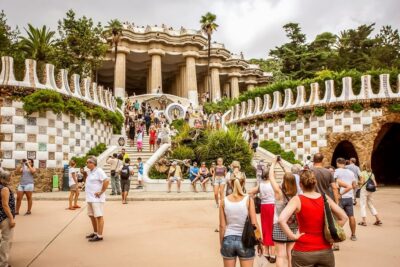


Park Guell Guided Tour with Skip The Line Entry
Read our review →
Barcelona in 1 Day: Sagrada Familia, Park Guell,Old Town & Pickup
Read our review →